Reg No. - CHHBIL/2010/41479ISSN - 2582-919X

CM Helpline 1076 Strengthens Time-Bound Grievance Redressal in Chhattisgarh
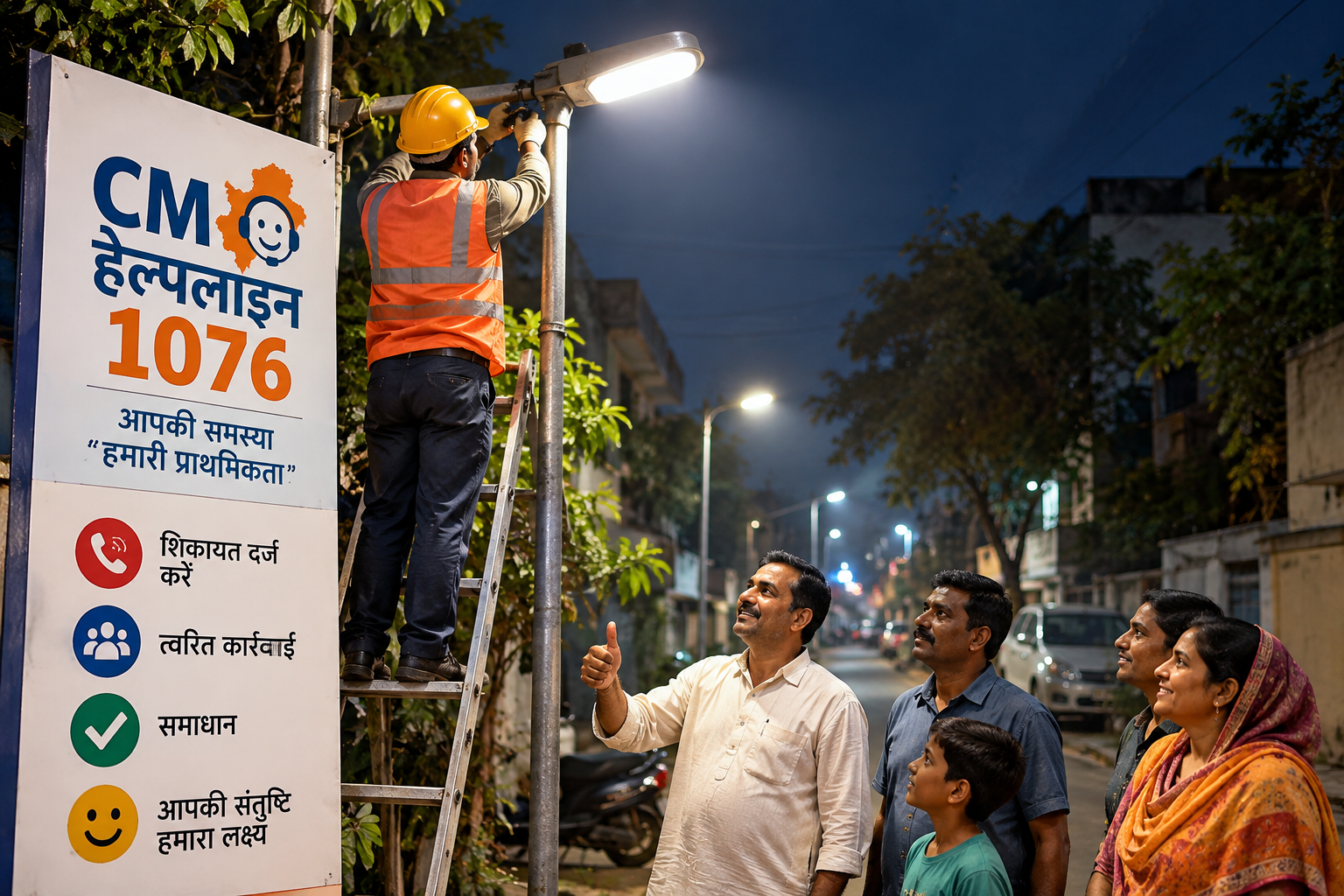
Representational image depicting the restoration of a streetlight following a complaint through CM Helpline 1076. In Korba’s Ward No. 12, a faulty streetlight was repaired after resident Mohammed Riyaz lodged a complaint, and the case was closed after he confirmed his satisfaction with the resolution
Defunct streetlight in Korba restored after citizen’s complaint; case closed only after complainant confirmed satisfaction with the resolution
Key Highlights
- CM Helpline 1076 provides citizens a direct channel to raise grievances with the administration.
- Complaint concerning a non-functional streetlight in Korba was forwarded to the municipal authorities for action.
- Municipal team inspected the site, repaired the faulty streetlight and restored illumination.
- Complainant Mohammed Riyaz confirmed his satisfaction after the problem was resolved.
- Complaints are closed only after feedback is obtained from the citizen.
- System seeks to strengthen administrative accountability through continuous monitoring from complaint to resolution.
Raipur: A complaint about a dark street in Korba and its subsequent resolution demonstrates how CM Helpline 1076 is being used to connect citizens directly with government departments and ensure that grievances are followed through to their conclusion.
The case concerned a non-functional streetlight in Ward No. 12, Nai Basti, Purana Bus Stand area of Korba.
Local resident Mohammed Riyaz registered a complaint with CM Helpline 1076 on September 10, 2026, reporting that the streetlight had stopped functioning. The resulting darkness during night hours was causing inconvenience to residents and making movement through the area difficult.
After the complaint was received, it was forwarded to the concerned municipal administration for necessary action.
A municipal team subsequently inspected the location, identified the problem and repaired the faulty streetlight. The light was restored to operation, addressing the issue raised by the resident.
Significantly, the process did not end with the department reporting that the repair had been completed.
Riyaz was contacted for feedback after the work, and the complaint was closed only after he confirmed that the problem had been resolved and expressed satisfaction with the action taken.
This feedback mechanism is an important element of CM Helpline 1076. Rather than functioning merely as a platform for registering grievances, the system tracks a complaint as it moves to the responsible department, monitors the action taken and seeks confirmation from the complainant after the reported resolution.
The approach creates an additional layer of accountability because disposal of a complaint is linked not merely to an administrative response but also to whether the citizen’s original problem has actually been addressed.
For citizens, such a mechanism can make everyday civic problems — ranging from streetlights and municipal services to other public-service grievances — easier to bring directly to the notice of the responsible authorities.
For the administration, the same process provides a mechanism to track response times, follow pending complaints and obtain feedback about the effectiveness of action taken.
The Korba case illustrates the broader objective behind the initiative: moving from complaint to action, and from action to citizen satisfaction.
Through this chain of registration, departmental action, resolution and feedback, CM Helpline 1076 is emerging as a link between citizens and the administration, with an emphasis on timely grievance redressal and greater accountability in public-service delivery.

YOU MAY LIKE THIS