Reg No. - CHHBIL/2010/41479ISSN - 2582-919X

Under the Leadership of the Prime Minister, the Nation’s Sanatan Culture Has Attained New Glory: Chief Minister Sai
IN Short
- Chief Minister Attends ‘Somnath Swabhiman Parv’ Held in the Capital, Raipur
- 75 Years Ago, on This Very Day, the Reconstruction of the Somnath Temple Was Completed
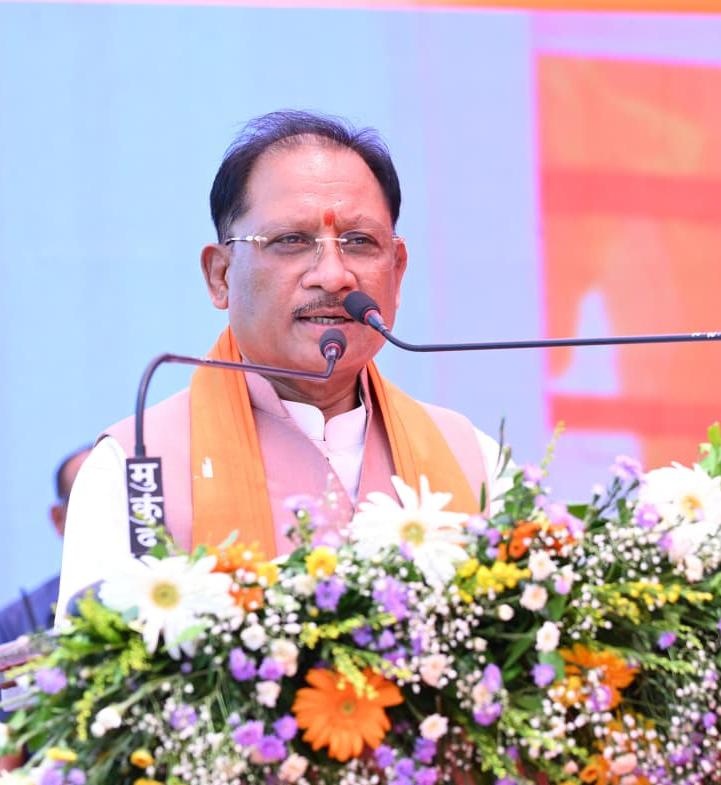
Raipur: Chief Minister Vishnu Deo Sai on Monday May 11, 2026 participated in the “Somnath Swabhiman Parv” (Somnath Self-Respect Festival), organised at the Hatkeshwar Mahadev Temple complex situated at Mahadev Ghat in the capital city, Raipur.
On this occasion, along with public representatives and devotees, he witnessed the puja (worship) performed by Prime Minister Narendra Modi—who joined virtually from the Somnath Temple in Gujarat—and listened to his address. During his address, Prime Minister Narendra Modi shared his thoughts with the citizens on various subjects, including the golden history of the Somnath Temple, the attacks perpetrated by foreign invaders, the journey of the temple’s reconstruction, and the current government’s resolve to preserve and promote centers of faith.
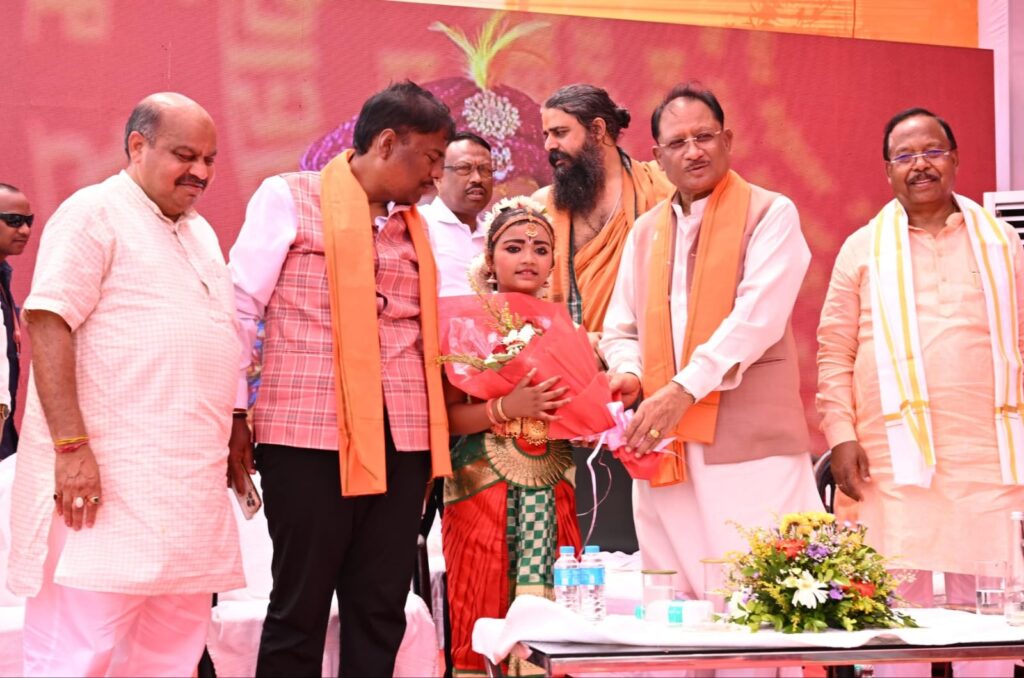
Addressing the gathering, Chief Minister Sai extended his best wishes to the people of the state on the occasion of “Somnath Swabhiman Parv.” He noted that exactly 75 years ago today, the reconstruction work of the Somnath Temple was completed, and this historic occasion is now being celebrated across the country as Swabhiman Parv.
He stated that while the Somnath Temple faced numerous attacks by external invaders, the faith and traditions associated with the temple could never be extinguished.
CM Sai remarked that during the very first invasion, the temple priests and devotees refused to abandon the shrine and instead sacrificed their lives in its defense. The Chief Minister added that their sacrifice remains etched in golden letters in the annals of history to this day.
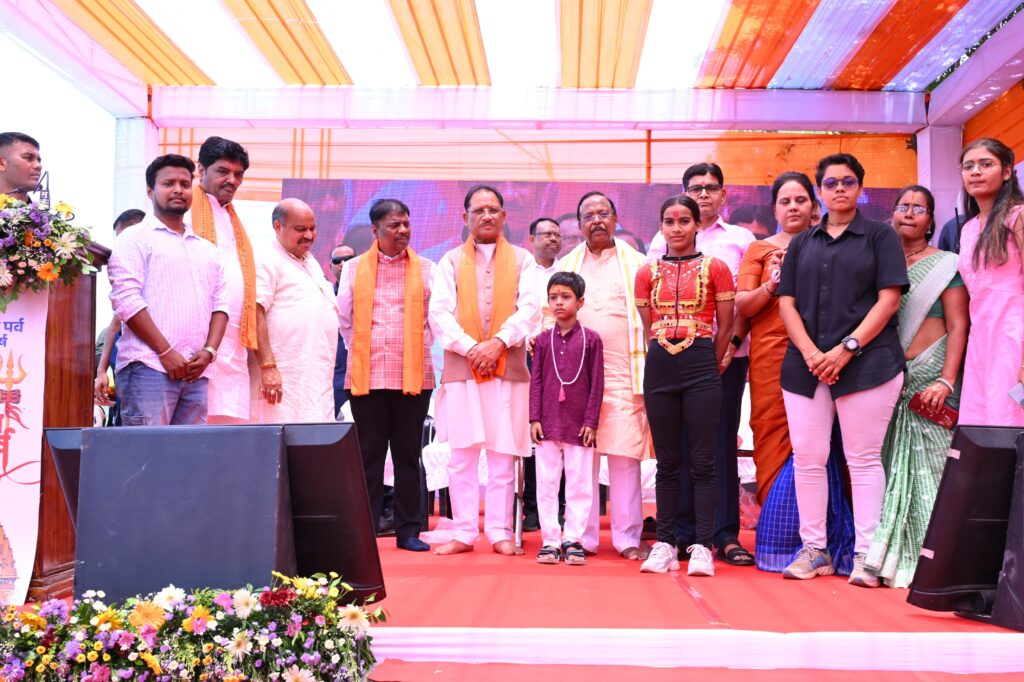
Chief Minister Vishnu Deo Sai further recalled that following the nation’s independence, the then Home Minister—the ‘Iron Man’ Sardar Vallabhbhai Patel—had resolved to undertake the reconstruction of the Somnath Temple.
He noted that, at that time, the country’s first President, Dr. Rajendra Prasad, despite facing significant opposition, personally visited the Somnath Temple to participate in the inauguration ceremony of the reconstructed shrine. Praising Prime Minister Narendra Modi,
Chief Minister Sai asserted that under his leadership, the nation’s Sanatan culture and spiritual traditions have attained a new level of glory. He concluded by observing that, today, major pilgrimage sites, temples, and religious centers across the country are undergoing rapid development.
The Chief Minister stated that extensive development works are being undertaken across a wide spectrum of sites—ranging from the Kashi Vishwanath Temple in Banaras and the Mahakal Temple in Ujjain to the Somnath Temple.
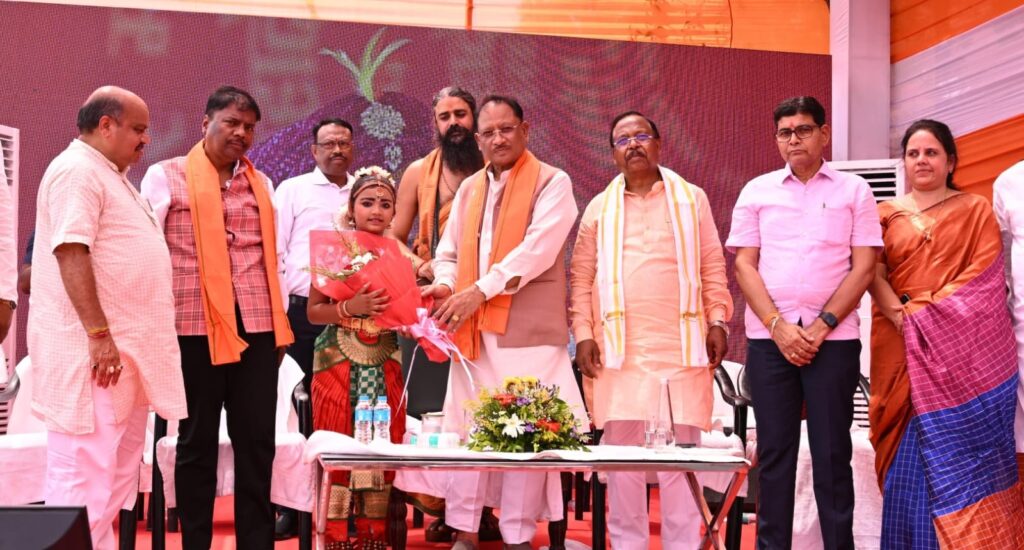
The Chief Minister further remarked that the Chhattisgarh government is also continuously working towards the development of the state’s religious and cultural sites. He highlighted that temples dedicated to the Mother Goddesses within the state are being developed through the ‘Shaktipeeth Scheme.’
Similarly, the Bhoramdev Mahadev Temple, located in the Kabirdham district, has received an allocation of ₹148 crore under the ‘Swadesh Darshan Scheme,’ and works aimed at expanding tourism facilities and beautifying the site are currently underway.
CM Sai noted that Chhattisgarh is the birthplace of Mata Kaushalya and the maternal home of Lord Shri Ram. Following a prolonged struggle by followers of the Sanatan tradition, the Pran Pratishtha (consecration ceremony) of Lord Shri Ramlala has been successfully performed at the temple in Ayodhya. The Chief Minister mentioned that, through the state government’s ‘Shri Ramlala Darshan Scheme,’ more than 40,000 devotees have visited Ayodhya to seek the blessings of Lord Shri Ram so far, and this initiative remains ongoing.
Concluding his address, the Chief Minister called upon everyone to take a pledge to uphold and strengthen the bonds of brotherhood, social harmony, and national unity.
Addressing the gathering, Forest Minister Kedar Kashyap stated that, under the leadership of Prime Minister Narendra Modi, continuous efforts are being made across the country to preserve and promote Sanatan culture and centers of faith.
He added that the state’s leadership is also actively working to preserve religious sites within the state while simultaneously connecting people with their faith through various government schemes. Revenue Minister Tankram Verma remarked that the Somnath Temple stands as a symbol of the nation’s culture, grandeur, and self-respect.
He noted that, under the leadership of Prime Minister Modi, India is in the process of restoring its rich cultural heritage. He further observed that, following the successful eradication of Naxalism in the state, the development of tourism and religious sites has gained fresh momentum.
Agriculture Minister Ramvichar Netam stated that the Somnath Temple serves as a major center of faith for followers of the Sanatan tradition. He asserted that, throughout a history spanning a thousand years—and despite numerous invasions—no force has ever been able to shake the faith inherent in Sanatan culture, nor will any ever succeed in doing so.
Chief Minister Shri Vishnu Deo Sai visited the Hatkeshwar Mahadev Temple, located at Mahadev Ghat in the state capital, Raipur. After offering prayers to Lord Shiva, he prayed for the happiness and prosperity of the people of the state. Present on this occasion were Agriculture Minister Shri Ramvichar Netam, Forest Minister Shri Kedar Kashyap, Revenue Minister Shri Tankram Verma, MLA Shri Purandar Mishra, Chairman of the Chhattisgarh Disabled Persons Finance and Development Corporation Shri Lokesh Kavadiya, Mayor Smt. Meenal Choubey, District Panchayat President Shri Naveen Agarwal, and other public representatives.

YOU MAY LIKE THIS