Reg No. - CHHBIL/2010/41479ISSN - 2582-919X

Beyond Paddy: Fish Farming Opens New Income Stream for Mahasamund Farmers
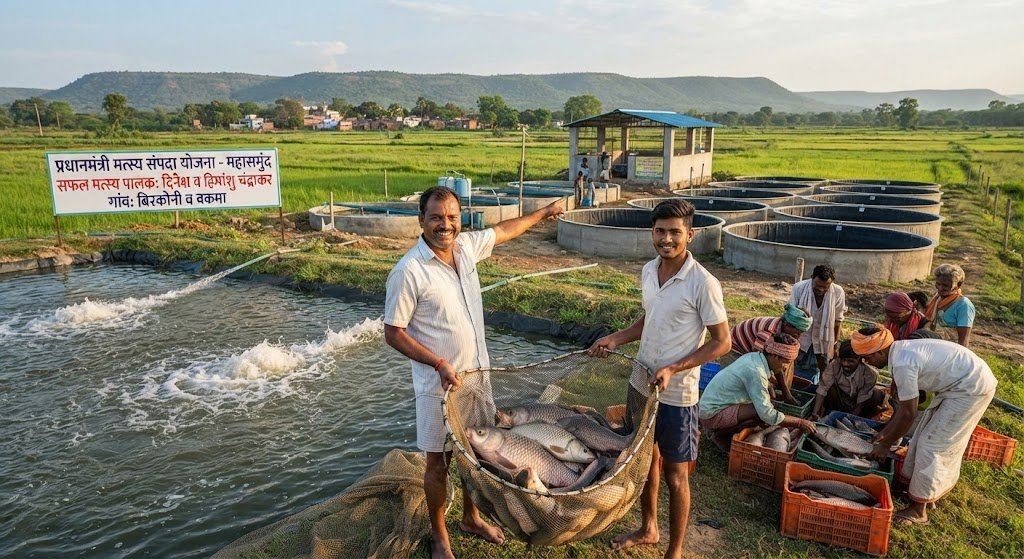
Fish farming under the Pradhan Mantri Matsya Sampada Yojana is emerging as an additional source of income for farmers in Mahasamund district of Chhattisgarh. Mahasamund, September 15, 2026. Photo Credit: primelookindia.com via CG/DPR
PM Matsya Sampada Yojana helps nearly 150 farmers diversify into fisheries, hatcheries and pond-liner units while creating jobs in villages
Key Highlights
- Nearly 150 farmers in Mahasamund have taken up fish farming and allied activities.
- Birkoni farmer Dinesh Chandrakar developed a one-hectare pond and a 20,000-sq-ft fish hatchery.
- His unit produces around 15 tonnes of fish in eight to nine months.
- Production costs are around ₹70–80 per kg, compared with a market price of approximately ₹120–150 per kg.
- Bakma farmer Himanshu Chandrakar invested around ₹28 lakh in two pond-liner units.
- His estimated net annual income after expenses is around ₹3–4 lakh.
- Fisheries activities are providing some local workers with earnings of around ₹9,000 per month.
- PMMSY assistance extends to ponds, biofloc units, hatcheries, cold storage and fish-feed infrastructure.
Raipur For generations, paddy has shaped the agricultural economy of Mahasamund. Now, a growing number of farmers in the Chhattisgarh district are adding another source of livelihood to their fields — fish farming.
Nearly 150 farmers in Mahasamund have taken up fish farming, hatchery operations and pond-liner-based aquaculture under the Pradhan Mantri Matsya Sampada Yojana (PMMSY), opening new avenues of income alongside conventional agriculture.
Government assistance for ponds, hatcheries and other fisheries infrastructure has enabled farmers to diversify without abandoning traditional cultivation. The emerging fisheries activity is also creating work for rural labourers, allowing some families to find regular employment within their own villages.
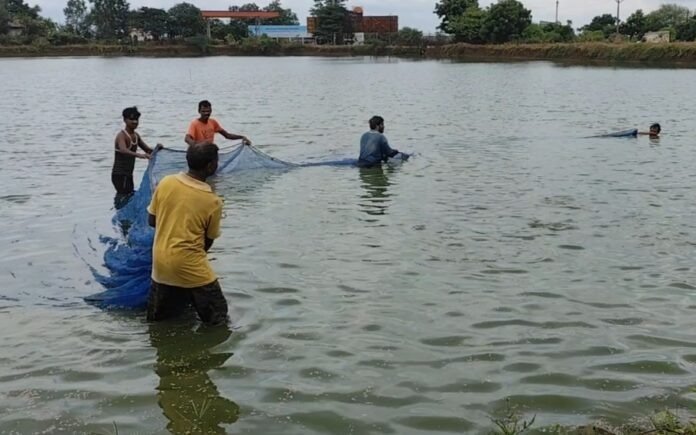
Modern fisheries infrastructure, including ponds, hatcheries and pond-liner units, is helping Mahasamund farmers diversify beyond traditional paddy cultivation. Mahasamund, September 15, 2026. Photo Credit : primelookindia.com via CG/DPR.
The initiative is part of the Centre’s broader effort to strengthen rural livelihoods and create additional income opportunities for farmers through fisheries and allied activities.
From Rising Farm Costs to a New Livelihood
Dinesh Chandrakar of Birkoni is among the farmers who decided to look beyond conventional farming as cultivation costs increased.
Under PMMSY, Chandrakar developed a one-hectare pond at a cost of around ₹7.50 lakh and established a fish hatchery spread over approximately 20,000 square feet with an investment of about ₹14 lakh.
Fish seed produced in the hatchery is transferred to the pond for rearing. In around eight to nine months, the operation yields approximately 15 tonnes of fish.
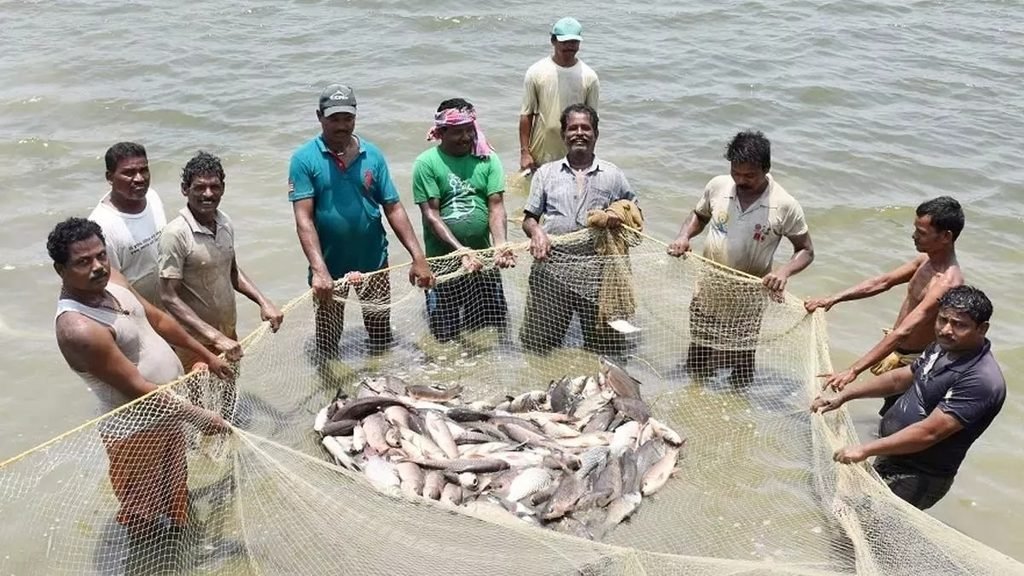
Fish production is creating income for farmers as well as regular employment opportunities for rural workers in Mahasamund district. Mahasamund, September 15, 2026. Photo credit: primelookindia.com via CG/DPR
The economics have made the venture attractive. Production costs are estimated at around ₹70 to ₹80 per kg, while the fish fetch approximately ₹120 to ₹150 per kg in the market, providing Chandrakar with a sizeable margin over production costs.
Another farmer, Himanshu Chandrakar of Bakma village, has developed two pond-liner units at an estimated cost of ₹28 lakh. After receiving 60 per cent assistance under the scheme and meeting operational expenses, he is earning an estimated net annual income of ₹3 lakh to ₹4 lakh from the venture.
PMMSY supports fisheries infrastructure including new ponds, biofloc units, fish-seed hatcheries, cold-storage facilities and fish-feed plants. Under the scheme provisions cited by the district administration, women and beneficiaries belonging to Scheduled Castes and Scheduled Tribes are eligible for assistance of up to 60 per cent, while beneficiaries in the general category can receive assistance of up to 40 per cent.
The impact is extending beyond fish farmers themselves.
Workers in Birkoni say fisheries-related activities are providing employment within the village throughout the year, reducing the need to travel elsewhere in search of work. Some are earning around ₹9,000 a month, giving their families a more regular source of income.
For Mahasamund’s paddy-dependent farming communities, the significance of this shift goes beyond fish production. By combining agriculture with aquaculture, farmers are building a second income stream while generating employment around them — turning village ponds into productive rural enterprises.

YOU MAY LIKE THIS