Reg No. - CHHBIL/2010/41479ISSN - 2582-919X

Trump Strikes Russian Diesel Deal, Eases US Sanctions Despite Recent Crackdown on Moscow
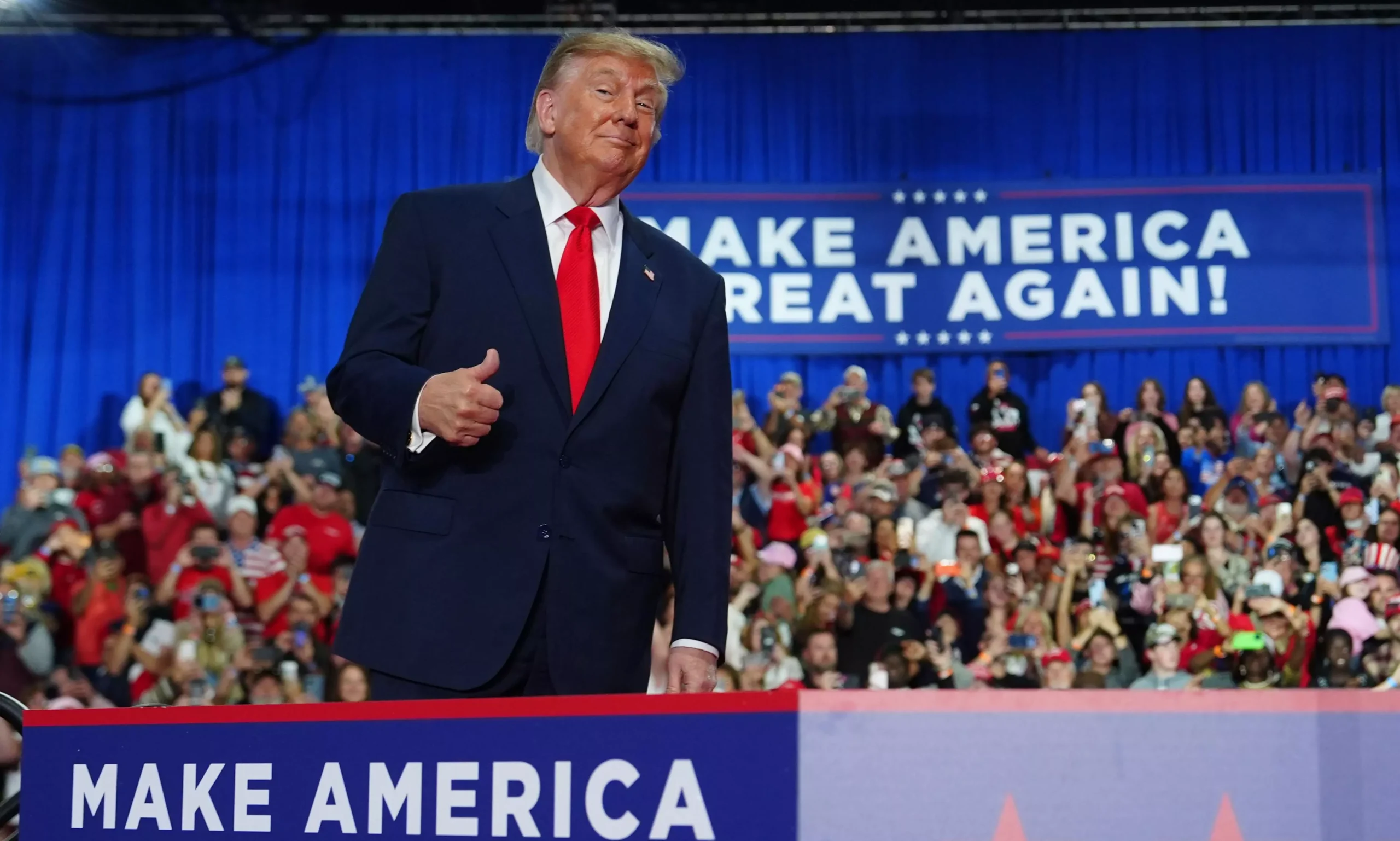
US President Donald Trump gestures towards supporters during a campaign rally beneath a ‘Make America Great Again’ banner. His administration has announced an agreement with Russia to increase diesel supplies while temporarily easing US sanctions on Russian fuel exports. (Photo: AP/Julia Demaree Nikhinson)
Washington Temporarily Relaxes Restrictions on Russian Fuel Exports as Trump Seeks to Lower Soaring Diesel Prices; Ukraine Condemns the Agreement, While Analysts Question Its Long-Term Impact
Key Highlights
- US President Donald Trump announces an agreement with Russian President Vladimir Putin to increase diesel supplies to American and global markets.
- Russia is expected to supply more than 300,000 metric tonnes immediately, with additional shipments planned over the coming months.
- The US Treasury temporarily eases sanctions on Russian diesel exports and imports until April 7, 2027.
- The decision marks a significant reversal after Washington recently strengthened measures targeting Russian energy revenues.
- Ukrainian President Volodymyr Zelenskyy criticises the agreement, warning that easing economic pressure on Moscow could undermine efforts to end the war.
- US diesel prices have surged amid global supply disruptions, placing pressure on businesses, farmers and consumers.
- Energy analysts caution that the additional Russian supplies may provide only limited relief from high fuel prices.
Washington: US President Donald Trump has announced a major agreement with Russian President Vladimir Putin to increase diesel supplies to the United States and international markets, while temporarily easing American sanctions on Russian fuel exports. The decision, announced on Friday, October 9, 2026, represents a striking reversal of Washington’s recent efforts to restrict Moscow’s energy revenues and comes amid mounting economic pressure from soaring diesel prices ahead of the November congressional elections.
The announcement followed a telephone conversation between Trump and Putin, during which the two leaders agreed on a plan to release substantial quantities of Russian diesel into international markets.
Trump described the discussion as highly successful and presented the agreement as an important step towards reducing fuel costs for American consumers and businesses.
The decision has nevertheless raised serious questions about the consistency of US sanctions policy, particularly as Washington had recently intensified its economic pressure on Russia over the continuing war in Ukraine.
Russia Agrees to Supply Millions of Tonnes of Diesel
Under the arrangement announced by Trump, Russia is expected to supply more than 300,000 metric tonnes of diesel immediately to the American and global markets.
An additional 500,000 tonnes are scheduled for November, followed by another one million tonnes shortly afterwards.
Trump also indicated that Russia could release a further three million tonnes, depending on the operational condition of its refineries.
The proposed supply volumes would represent a significant injection of fuel into international markets at a time when diesel availability has become increasingly constrained.
Announcing the agreement, Trump said he had concluded a “highly successful” discussion with Putin.
The US President subsequently thanked the Russian leader for agreeing to make additional diesel available.
“I want to thank President Putin,” Trump told reporters while discussing the agreement.
However, the announced quantities remain subject to refinery capacity, shipping arrangements and actual deliveries.
US Treasury Temporarily Relaxes Russian Fuel Sanctions
Following Trump’s announcement, the US Treasury Department issued a temporary authorisation allowing Russian diesel to be sold and delivered to international markets, including the United States.
The authorisation, issued through the Office of Foreign Assets Control, permits specified transactions involving Russian diesel until April 7, 2027.
The measure effectively creates a temporary exception to restrictions intended to limit Russia’s ability to generate revenue from energy exports.
The sanctions relief is particularly significant because the Trump administration had previously supported stronger economic measures against Moscow.
Only weeks before announcing the diesel arrangement, Trump had signed legislation aimed at tightening pressure on countries purchasing Russian energy.
The latest decision therefore represents a substantial policy shift, placing immediate concerns over fuel affordability alongside the administration’s earlier objective of restricting Russian energy revenues.
Rising Diesel Prices Put Pressure on American Economy
The agreement comes at a time when diesel prices in the United States have climbed to exceptionally high levels.
According to the American Automobile Association, the average US diesel price reached approximately $6.28 per gallon on Thursday, October 8.
The increase has affected several important sectors, including agriculture, road transport, construction and manufacturing.
Unlike petrol, which is primarily associated with private vehicles, diesel plays a central role in moving commercial goods, operating agricultural machinery and supporting industrial activity.
Consequently, higher diesel prices can increase transportation expenses, food production costs and the prices consumers pay for essential commodities.
The ongoing conflicts involving Iran and Ukraine have further disrupted global energy supplies, adding to the pressure on fuel markets.
Trump has repeatedly emphasised the importance of reducing energy costs, particularly for farmers, ranchers and truck operators.
In announcing the Russian diesel agreement, he described lower prices for these groups as his “Greatest Priority.”
The administration hopes that additional supplies will ease pressure on diesel markets and provide relief to households and businesses struggling with rising costs.
Ukraine Condemns Sanctions Relief as Moscow Continues War
The agreement has drawn criticism from Ukrainian President Volodymyr Zelenskyy, who questioned the decision to ease economic restrictions on Russia while the war in Ukraine continues.
Zelenskyy described the announcement as a “weak decision on the part of strong partners.”
He argued that relaxing pressure on Moscow could provide additional financial resources to support Russia’s military operations.
The Ukrainian President also warned that economic concessions were unlikely to persuade Moscow to abandon its military campaign.
The criticism reflects Kyiv’s longstanding position that international sanctions are an important instrument for limiting Russia’s capacity to finance the war.
The timing of the agreement is particularly sensitive because Ukrainian representatives have been engaged in discussions with American officials concerning possible pathways towards ending the conflict.
The latest development has raised concerns that differences over sanctions and energy policy could complicate those diplomatic efforts.
Criticism Emerges Within Trump’s Own Republican Party
The agreement has also generated criticism within the United States, including from members of Trump’s Republican Party.
Republican Representative Don Bacon questioned the decision to relax sanctions rather than intensify economic pressure on Russia.
He argued that the United States should use its sanctions framework to constrain Moscow’s military capabilities instead of creating opportunities for additional energy revenue.
The disagreement highlights a broader policy dilemma confronting Washington.
On one side is the immediate need to address high domestic fuel prices and their consequences for the American economy.
On the other is the objective of maintaining economic pressure on Russia over its invasion of Ukraine.
The administration’s decision suggests that immediate energy-market concerns have become an increasingly important factor in its foreign-policy calculations.
Energy Experts Doubt Deal Will Deliver Lasting Price Relief
Despite the administration’s expectations, energy analysts have questioned whether the announced diesel supplies will be sufficient to produce a sustained reduction in prices.
Russia’s refining industry has suffered significant disruption from Ukrainian attacks, raising uncertainty over how quickly Moscow can fulfil the proposed commitments.
Analysts also point out that diesel shortages are connected to wider global refining constraints and disruptions in international energy trade.
Simply redirecting existing supplies between markets may not resolve the underlying shortage.
Following Trump’s announcement, US diesel futures declined by nearly five per cent, indicating an immediate market reaction.
However, specialists cautioned that short-term movements in futures prices did not necessarily guarantee lasting reductions at the pump.
The ultimate effect will depend on whether Russia can deliver the promised quantities and whether broader supply conditions improve.
Washington Considers Additional Measures to Boost Domestic Fuel Production
Alongside the Russian diesel agreement, the Trump administration is reportedly examining additional measures to expand domestic energy production and refining capacity.
These include possible use of the Defense Production Act, which provides the federal government with special powers to support production considered important for national security.
Administration officials are also examining ways to address regulatory barriers affecting energy infrastructure and fuel supplies.
Industry representatives have suggested that improving the efficiency and capacity of existing refineries may deliver quicker results than constructing entirely new facilities.
The proposed measures reflect growing concern within Washington about the economic consequences of prolonged energy shortages.
With congressional elections scheduled for November 3, fuel affordability has also become an important political issue for the administration and Republican lawmakers.
Diesel Agreement Raises Questions Over US-Russia Relations
Beyond its immediate economic implications, the agreement has renewed debate over the direction of relations between Washington and Moscow.
For several years, sanctions targeting Russian energy exports have been central to Western efforts to pressure Russia over the war in Ukraine.
The decision to temporarily permit Russian diesel imports introduces a new element into that strategy.
While the Trump administration presents the arrangement as a practical response to high fuel prices, critics fear that increased energy revenues could weaken the financial pressure imposed on Moscow.
The agreement also demonstrates how energy security, domestic economic priorities and international diplomacy are increasingly interconnected.
Whether the policy shift leads to lower diesel prices, greater diplomatic engagement or further controversy will depend on developments in the coming weeks.
For now, Trump’s announcement has placed Russian diesel at the centre of a wider debate over America’s economic priorities, sanctions policy and approach to the war in Ukraine.

YOU MAY LIKE THIS