Reg No. - CHHBIL/2010/41479ISSN - 2582-919X

CJP Protest Triggers Widespread Train Cancellations as Party Accuses Centre of Suppressing Youth Voices
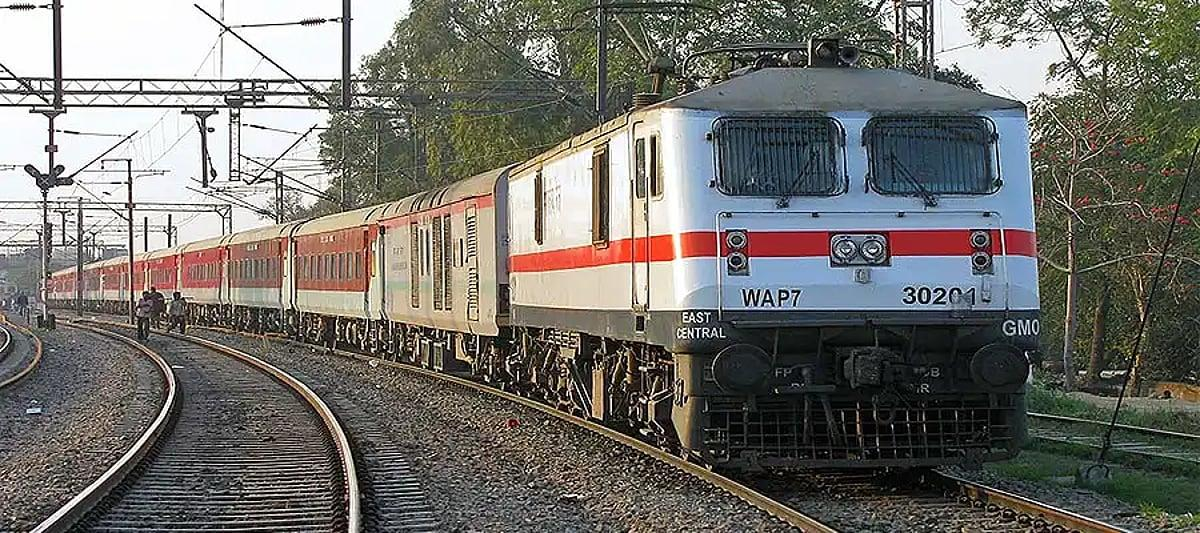
A view of the Mumbai Central–New Delhi Rajdhani Express (12951). Western Railway rescheduled the train by five hours on Friday, October 9, 2026, ahead of anticipated congestion in Delhi on Saturday. (Representational photograph: Pratik12951/Wikimedia Commons)
Railways cite anticipated congestion around Delhi’s major stations ahead of Saturday’s Jantar Mantar demonstration; CJP founder Abhijeet Dipke questions restrictions as thousands of passengers face travel disruptions.
Key Highlights
- Several Delhi-bound trains cancelled or rescheduled ahead of the October 10 protest organised by the Cockroach Janta Party (CJP).
- Mumbai Central–New Delhi Rajdhani and August Kranti Rajdhani rescheduled by five hours.
- Railway restrictions affect services connecting Delhi with Maharashtra, Madhya Pradesh, Rajasthan and Uttar Pradesh.
- CJP founder Abhijeet Dipke accuses the Centre of attempting to discourage young protesters.
- The demonstration seeks the resignation of Chief Election Commissioner Gyanesh Kumar over alleged irregularities in electoral roll revisions.
- Railway authorities cite anticipated traffic congestion, while questions emerge over the proportionality of restrictions affecting ordinary passengers.
Mumbai : The cancellation and rescheduling of several long-distance trains connecting Mumbai and other major cities with the national capital have triggered a political controversy ahead of the Cockroach Janta Party’s (CJP) proposed demonstration at Jantar Mantar on Saturday, October 10, with the party accusing the Central government of attempting to prevent young protesters from reaching Delhi.
Indian Railways announced substantial changes to passenger services on Friday, citing anticipated severe traffic congestion around New Delhi and Hazrat Nizamuddin railway stations.
The decision has affected thousands of passengers, including those travelling for business, education, medical appointments and other commitments.
Western Railway confirmed that the Mumbai Central–New Delhi Rajdhani Express (12951) and Mumbai Central–Hazrat Nizamuddin August Kranti Rajdhani Express (12953) had been rescheduled by five hours.
The Bandra Terminus–Hazrat Nizamuddin Express (12247) was cancelled, along with several other services originating from different parts of the country.
The cancellations also included the Dr Ambedkar Nagar–New Delhi Express (20155), Indore–Hazrat Nizamuddin Express (09309), Indore–New Delhi Express (12415) and Sabarmati–New Delhi Express (12957).
The Railway Board’s instructions covered selected Mail and Express trains scheduled to arrive at New Delhi and Hazrat Nizamuddin stations between 4 am and 2 pm on October 10, subject to specified departure conditions.
Railway Disruptions Extend Beyond Mumbai
The operational changes were not confined to Western Railway.
North Western Railway announced cancellations affecting services between Delhi and destinations including Udaipur, Sriganganagar, Bhiwani, Rewari and Hisar.
West Central Railway also cancelled five Delhi-bound services for one day, including trains connecting the national capital with Jabalpur, Bhopal and Kota.
The Chhatrapati Shivaji Maharaj Terminus–Hazrat Nizamuddin Rajdhani Express was among the services cancelled by Central Railway.
The widespread changes have raised concerns about the disruption of essential public transport during a politically sensitive period.
Railway officials maintained that the measures were necessary to address anticipated congestion and operational difficulties.
West Central Railway’s chief public relations officer, Madhur Verma, said his office had received no communication explicitly linking its cancellations to the protest, maintaining that anticipated congestion was the reason for the decision.
CJP Founder Questions Government’s Intentions
CJP founder Abhijeet Dipke strongly criticised the restrictions, alleging that the authorities were attempting to prevent young people from participating in a democratic demonstration.
Dipke questioned why train services, Metro operations and road access were being restricted ahead of the protest.
“What is this fear? Why are you this scared? You are scared of the youth in the country,” he said while challenging the government’s approach.
The CJP leader argued that cancelling public transport services would inconvenience ordinary citizens and questioned whether such restrictions were justified merely because a political demonstration had been announced.
He maintained that the protest would proceed despite Delhi Police denying permission for the gathering at Jantar Mantar.
Dipke also indicated that party members were prepared to face detention or arrest rather than abandon their demonstration.
Protest Linked to Electoral Roll Controversy
The planned demonstration centres on allegations concerning the Special Intensive Revision (SIR) of electoral rolls and demands for the resignation of Chief Election Commissioner Gyanesh Kumar.
The CJP and other critics have raised questions about the transparency and fairness of the revision process, particularly regarding the deletion of names from electoral registers.
Opposition parties have argued that the exercise could affect legitimate voters, while the authorities maintain that electoral roll verification is necessary to preserve the integrity of elections.
The allegations remain politically contested and should not be regarded as established findings of wrongdoing.
The controversy has nevertheless developed into a wider debate about electoral accountability, the independence of democratic institutions and the right of citizens to question administrative decisions.
The CJP has attempted to mobilise young voters around these concerns, making the October 10 demonstration a significant test of its organisational reach.
Public Convenience Versus Security Concerns
The railway restrictions have introduced another dimension to the controversy: whether anticipated public demonstrations justify extensive changes to essential transport services.
Authorities have a responsibility to maintain law and order, protect passengers and prevent dangerous overcrowding around major transport terminals.
However, the cancellation of trains serving several states also raises legitimate questions about the necessity and proportionality of preventive measures.
A passenger travelling from Mumbai to Delhi for a medical appointment or an examination may have no connection with the proposed protest.
For such travellers, a cancellation represents a personal and financial disruption rather than a political issue.
Reports indicate that affected passengers are eligible for refunds under the applicable railway arrangements, with online bookings generally processed through the original payment channel.
Passengers have been advised to verify their train status through official railway services before beginning their journeys.
Delhi Prepares for Heightened Security
Security arrangements in the national capital have also been intensified ahead of Saturday’s demonstration.
Police and paramilitary personnel are being deployed as authorities prepare for the possibility of large gatherings and movement restrictions in sensitive areas.
The authorities have expressed concern about maintaining public order, while protest organisers insist that their supporters intend to exercise their democratic rights.
The disagreement reflects a broader challenge confronting governments in democratic societies: balancing public safety with freedom of expression and peaceful assembly.
While demonstrations must comply with lawful restrictions, preventive administrative decisions must also remain reasonable and proportionate to the risks involved.
A Test of Democratic Accountability
The controversy surrounding the CJP demonstration extends beyond the cancellation of railway services.
It raises questions about how public institutions respond when citizens mobilise against decisions they consider unjust.
The right to peaceful protest is an important democratic freedom, but it exists alongside the government’s responsibility to protect public safety and maintain essential services.
Neither responsibility can be considered in isolation.
Political organisations must ensure that demonstrations remain peaceful, while authorities must be able to explain why particular restrictions are necessary.
For the thousands of railway passengers affected by the changes, the immediate concern is simpler: reaching their destinations without unnecessary inconvenience.
The events leading up to the October 10 demonstration will therefore be closely watched, not only for their political consequences but also for their implications for public administration and civil liberties.
Ultimately, the strength of a democracy is measured not merely by its ability to maintain order, but also by its willingness to accommodate peaceful dissent without unnecessarily disrupting the lives of ordinary citizens.

YOU MAY LIKE THIS