Reg No. - CHHBIL/2010/41479ISSN - 2582-919X

Trump Weighs Tariffs on Russian Oil Buyers as Rubio Calls India an Important US Partner
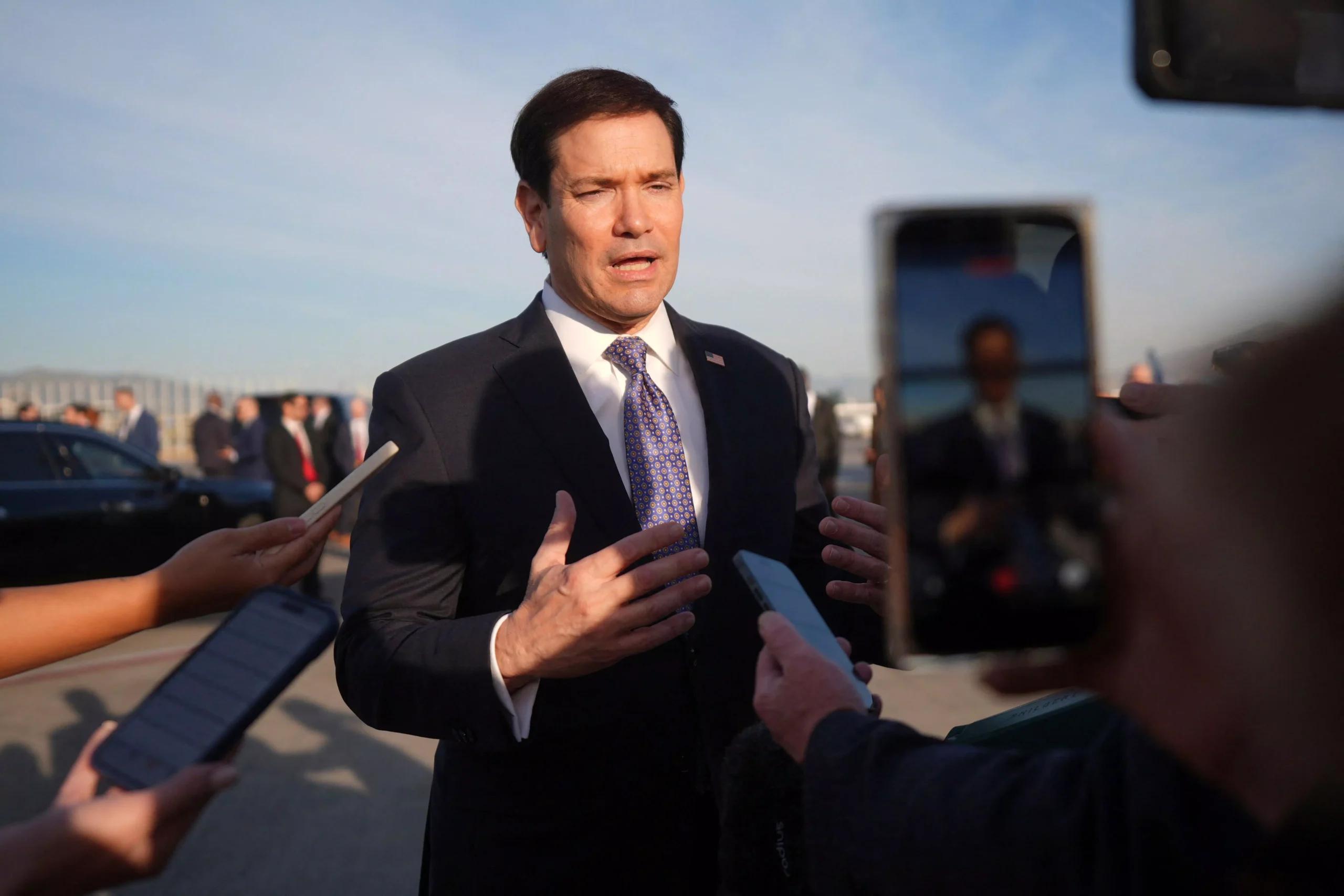
US Secretary of State Marco Rubio, pictured in an agency photograph, said in Washington on Saturday, October 17, 2026, that President Donald Trump would assess the economic consequences of sanctions against Russia and punitive tariffs on countries purchasing Russian energy over a 60-day period. Rubio acknowledged India’s substantial energy requirements and described the country as an important American partner ahead of his diplomatic visit. Photo: channel24india.com via AFP
Washington grants temporary relief from punitive tariffs under the Graham Act as President Donald Trump orders a 60-day assessment of the economic consequences of sanctions on Russia and countries purchasing its energy
Key Highlights
- President Donald Trump wants 60 days to assess the global and domestic economic consequences of sanctions and tariffs.
- Washington waives key provisions of the Graham Act, providing immediate relief to India from proposed punitive tariffs.
- Secretary of State Marco Rubio acknowledges India’s efforts to diversify energy imports and the difficulty of rapidly replacing Russian oil.
- The proposed measures include additional tariffs of 100 per cent on goods from major purchasers of Russian energy.
- Rubio’s visit to India places energy cooperation, bilateral trade and strategic relations under renewed diplomatic focus.
Washington: US President Donald Trump’s decision to temporarily suspend sweeping sanctions against Russia and punitive tariffs on countries purchasing Russian energy has provided significant relief to India, even as Washington prepares to reassess its economic pressure strategy over the next 60 days. US Secretary of State Marco Rubio said on Saturday, October 17, that the American administration needed time to examine how the proposed restrictions could affect international energy markets, the global economy and the United States itself, particularly at a time when conflicts in Ukraine and the Middle East are disrupting energy supplies and increasing economic uncertainty.
Trump Seeks 60 Days to Assess Economic Consequences
Speaking to reporters before departing for a diplomatic tour of Uzbekistan and India, Rubio explained that the administration was evaluating the wider consequences of imposing sanctions on Moscow while simultaneously penalising countries that continued purchasing Russian oil and natural gas.
Rubio said:
“I think the president wants to take the 60-day period of time to sort of analyse what imposing both sanctions and tariffs will mean to the global economy, and even to the US economy.”
His remarks followed Trump’s executive order issued on Friday, October 16, waiving several provisions of the Lindsey O. Graham Sanctioning Russia and Iran Act of 2026.
The legislation, signed into law on September 18, authorises economic restrictions designed to increase pressure on Russia over its continuing war in Ukraine.
However, the proposed measures extend beyond Russia itself, potentially affecting major economies that maintain substantial energy trade with Moscow.
India Receives Relief as Washington Recognises Energy Realities
India has emerged as one of the countries most directly affected by the proposed tariff provisions because of its substantial purchases of Russian crude oil.
Rubio acknowledged that India has already taken steps to diversify its energy supplies but cannot abruptly replace established sources without considering the economic and logistical consequences.
Referring specifically to India’s position, Rubio observed:
“Then you’ve got countries like India, for example, that have voluntarily diversified their energy portfolio, but are still getting a substantial amount of energy from Russia because it’s hard to pivot from one day to the next.”
His statement reflects Washington’s recognition that energy diversification requires time, infrastructure, commercial arrangements and dependable alternative suppliers.
Rubio also described India as an important American ally and partner, indicating that the administration must consider the broader strategic relationship while determining its sanctions policy.
Graham Act Provides for Severe Tariffs on Russian Energy Buyers
The Graham Act establishes a framework for imposing substantial economic penalties on Russia and countries maintaining specified commercial relationships with it.
Under Trump’s October 16 executive order, the proposed measures include a 500 per cent additional duty on certain Russian goods and a 100 per cent additional duty on goods from the five largest importers of Russian-origin crude oil and natural gas, subject to statutory conditions and exemptions.
The order also provides for additional duties targeting major facilitators of Russian oil sanctions evasion.
Crucially, however, Trump exercised the waiver authority available under the legislation, preventing the immediate application of the specified sanctions and tariffs.
The executive order states that these waivers will remain effective until the President or Secretary of State, following the required consultations, determines that further action is appropriate.
Therefore, although Rubio has described a 60-day review period, the executive order does not establish an automatic expiry of the waivers after 60 days.
Global Energy Crisis Complicates American Sanctions Strategy
The Trump administration’s decision comes against a complicated international energy environment.
The continuing Russia-Ukraine conflict, the war involving Iran and disruptions affecting energy supplies in the Middle East have created serious challenges for countries dependent on imported oil and natural gas.
Rubio indicated that Washington must evaluate these overlapping developments rather than examine Russian sanctions in isolation.
The concern is that imposing extensive trade restrictions while global energy supplies are already under pressure could increase prices, disrupt established supply chains and create additional difficulties for American consumers and businesses.
The administration must therefore balance its objective of increasing economic pressure on Moscow against the possibility of aggravating inflation and energy insecurity.
The challenge is especially significant because higher international oil prices can affect transportation, manufacturing, agricultural production and household expenditure across multiple economies.
India’s Energy Security Remains a Strategic Priority
For India, access to reliable and competitively priced crude oil remains an important element of national economic policy.
As one of the world’s largest oil-importing economies, India must manage the competing demands of energy security, domestic affordability and international diplomatic relationships.
Russian oil has become an important component of India’s energy import portfolio, particularly since Western sanctions reshaped international crude trading following the outbreak of the Ukraine war in 2022.
A sudden disruption in these supplies could require Indian refiners to secure alternative shipments under potentially different pricing and contractual arrangements.
Such changes could influence India’s import expenditure, refining costs and wider economic stability.
Rubio’s acknowledgement of these difficulties suggests that Washington recognises the practical limitations facing major energy-importing countries.
Nevertheless, the temporary waiver should not be interpreted as a permanent exemption from possible future American trade restrictions.
Rubio’s India Visit Gains Diplomatic Significance
The developments come ahead of Rubio’s scheduled engagements in India during his diplomatic tour, which also includes Uzbekistan.
According to the US State Department’s announced programme, the Secretary of State is expected to hold discussions with Indian officials on regional and international developments and opportunities for stronger energy cooperation.
The visit takes place against the background of continuing difficulties in India-US trade negotiations.
Earlier this month, Indian Finance Minister Nirmala Sitharaman acknowledged that bilateral trade discussions had reached a difficult stage, with limited room remaining for additional concessions.
The latest American decision to suspend punitive tariff provisions could therefore create some diplomatic space for discussions on energy cooperation and broader economic relations.
However, the waiver does not itself resolve the outstanding differences in bilateral trade negotiations.
Ukraine Voices Concern Over Trump’s Decision
Trump’s decision has also drawn criticism from Ukraine, which has consistently sought stronger international economic pressure on Moscow.
Ukrainian President Volodymyr Zelenskyy warned that relaxing the proposed restrictions could strengthen Russia’s position and prolong the conflict.
The criticism highlights a fundamental dilemma facing Washington: sanctions are intended to constrain Russia’s economic capacity, but their application can also produce consequences for countries maintaining legitimate energy requirements and commercial relationships.
Within the United States, the waiver has similarly prompted disagreement among political figures who favour maintaining maximum economic pressure on Moscow.
Trump’s Final Decision Could Shape Global Trade Relations
The next phase of Washington’s policy review will be closely watched by India and other countries dependent on Russian energy.
The administration must determine whether imposing additional tariffs would meaningfully advance its strategic objectives or create economic costs that outweigh the intended benefits.
For New Delhi, the immediate suspension provides an opportunity to continue managing its energy requirements while engaging Washington on trade and strategic issues.
The broader question is whether the United States can pursue its sanctions objectives without undermining economic relations with important international partners.
Trump’s 60-day assessment may therefore become a defining exercise in balancing geopolitical pressure against economic pragmatism. For India, the immediate tariff threat has eased, but the long-term challenge of safeguarding energy security while maintaining a stable relationship with Washington remains unresolved.