Reg No. - CHHBIL/2010/41479ISSN - 2582-919X

I Swear-By Kumar Bahukhandi
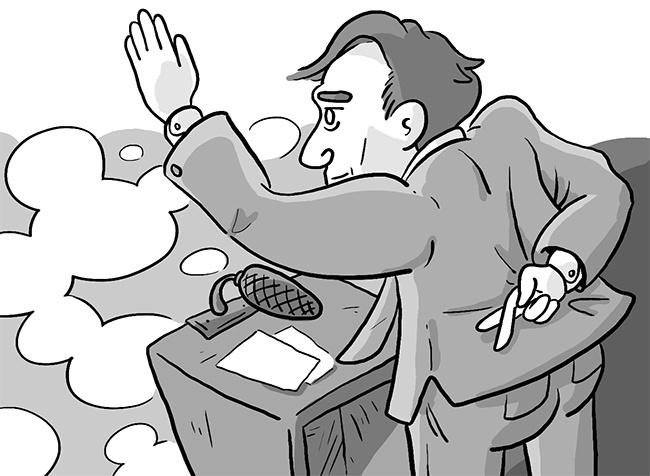
I swear there is nothing anomalous about swearing.
Animal lovers, for years, have been bullying the yesteryear He-Man of Bollywood and calling him names, thanks to his rather extraordinary soft spot for canines. The man is only culpable of relieving his stress and anxiety through a medium considered perfectly acceptable for grown, full-blooded characters who cannot possibly be caught crying or snivelling on screen.
After all, imagine a man who can uproot a hand pump, thrash an entire army of villains and make the earth tremble with the sheer force of his anger suddenly sitting in a corner and weeping over life’s little disappointments. It would be a tragedy for Indian cinema, not to mention the millions of admirers who have grown up believing that a real man must occasionally raise his voice, his fist and, when absolutely necessary, the standard of his vocabulary.
Tears, apparently, are for lesser mortals. A few colourful expressions, however, can preserve a man’s reputation for generations.
The most recent to join the bandwagon, of course, is Mr Perfectionist and his little nephew.
Some D. K. Boses have reconciled themselves to the duo, keeping in mind the new outlook that the song from the film has given to their name. A perfectly respectable name, carried with dignity for years, has suddenly acquired a musical identity that its owners may never have requested.
Imagine introducing yourself at a formal gathering.
“Good evening, I am D. K. Bose.”
And before you can mention your profession, qualifications or distinguished family background, somebody begins humming a tune.
The tragedy is not that people have forgotten their manners. The tragedy is that they remember the lyrics.
Many of those who love to hear their partners talk dirty in bed have probably been spotted looking rather satiated and smirking like Cheshire cats. Apparently, what is objectionable in polite society can become highly desirable behind closed doors.
Human beings are wonderfully inconsistent creatures.
We condemn certain words in public, whisper them in private, laugh at them in films and occasionally pay good money to hear them delivered by somebody famous.
So, it is absolutely normal.
We all do it once in a while, in public or private. Some … of … us … more often than … others.
We do it to establish group identity, express trust, register shock, add humour, defend our insecurities or simply out of habit.
A man may swear because he is angry, because he is happy, because he has lost his wallet or because he has found it. A student may swear after failing an examination, while another may use precisely the same vocabulary after passing with flying colours.
A motorist may swear at a traffic jam, a pedestrian at the motorist and the traffic policeman at both.
The words change. The emotion remains remarkably democratic.
But some people attract more attention than others.
For instance, if you drop the F-bomb when your name is Joe Biden and you accidentally happen to be the Vice President of a country called the United States of America, it is indeed a “big f***** deal”*.
The ordinary citizen can spend an entire afternoon experimenting with the limits of acceptable language without attracting anything more serious than a disapproving glance from the neighbours.
A politician, however, has no such luxury.
One unfortunate remark, one microphone left switched on, one expression spoken under the mistaken impression that nobody is listening, and the entire world begins discussing the vocabulary of a man who was supposed to be discussing public policy.
In politics, even an accidental whisper can become an international announcement.
That is the price of being important.
Or perhaps the price of forgetting that microphones are often more trustworthy than political colleagues.
Talking of swearing and politicians, a lot of ministers were caught swearing recently.
Nope, I am not talking about the lack of confidence, emotional insecurity or anxiety-related activity we have been discussing.
Or am I?
Anyway, what I meant was the oath of office administered to the new Cabinet ministers.
In an endeavour to remove the blemishes from the face of the government, our Sardar ji commenced a tried-and-tested operation called reshuffling.
It is an interesting operation, this reshuffling business.
When the furniture in a drawing room begins to look old, we move the sofa near the window, shift the chairs to the opposite wall and convince ourselves that the entire room has acquired a new personality.
Governments appear to believe in the same philosophy.
The difference is that furniture seldom complains about being moved.
Ministers do.
A minister shifted from one department to another may discover that his talents have suddenly been recognised, underestimated or entirely misunderstood, depending on whether the new ministry comes with greater influence, a larger office or a more impressive collection of official vehicles.
Some describe the change as a promotion.
Others call it an opportunity to serve the nation in a different capacity.
A few discover an urgent need for rest, reflection or renewed contact with the people.
And the people, who were never consulted about the arrangement in the first place, are expected to applaud the wisdom of the exercise.
The reshuffle promises, among other things, to empower the common man to use the words Indian Railways yet again instead of West Bengal Railways.
A remarkable achievement, considering that railway tracks have traditionally displayed little interest in state boundaries or political affiliations.
Trains, unlike politicians, are expected to travel beyond their constituencies.
A passenger boarding a train in Delhi generally hopes to reach his destination on time. He is unlikely to be deeply concerned about which political party considers the ministry an extension of its regional ambitions.
Unfortunately, the political imagination often travels in directions that railway passengers cannot afford.
A certain minister who wanted to save the earth but kept locking horns with powerful interests will now ensure that rural India shines.
A crucial move, keeping in mind that strenuous national workout called elections.
Environmental protection, rural development and electoral arithmetic may appear to be unrelated subjects to the untrained mind. But politics has always possessed the extraordinary ability to connect things that ordinary logic insists on keeping apart.
One day, a minister is defending forests, wildlife and the future of the planet. The next, he is expected to defend the prospects of villages, farmers and rural employment.
Perhaps the forests will miss him.
Perhaps the villages will welcome him.
Perhaps both will wait to discover whether changing a minister can change their fortunes.
Sonny boy has succeeded daddy, and a cricket big shot has made his debut.
Dynastic succession, it seems, is not merely a subject for history books. It remains a perfectly respectable political arrangement, provided it is accompanied by the appropriate explanation about experience, continuity and public service.
In ordinary households, a son inheriting his father’s business is considered a family affair.
In politics, it becomes a matter of national importance.
The family resemblance may be obvious, but we are assured that the appointment has everything to do with individual merit and absolutely nothing to do with the surname.
We must believe this.
After all, politicians are honourable people.
They swear to it.
As for the cricketing heavyweight, his arrival introduces another fascinating dimension to the Cabinet.
Cricket and politics have always enjoyed a close relationship in India.
Both attract enormous crowds, inspire fierce loyalties, generate endless arguments and provide spectacular opportunities for blaming somebody else when things go wrong.
In cricket, a poor performance may cost a player his place in the team.
In politics, a poor performance may earn him a different portfolio.
A batsman can be dismissed by a good delivery. A minister, however, may survive several bad ones, provided he knows how to negotiate with the captain.
And while a cricket match eventually produces a result, political innings can continue for years without anybody being quite certain who is winning.
The similarities are too numerous to ignore.
Both games have captains, selectors, spectators, commentators and people who insist they could have done a better job if only somebody had given them a chance.
Both also have a remarkable capacity to turn yesterday’s hero into today’s disappointment and today’s reserve player into tomorrow’s indispensable performer.
But cricket has one advantage.
At least the scoreboard tells us what happened.
In politics, even the scoreboard is open to interpretation.
However, it seems those who have missed the bus or dropped off the wagon are yet to offer an official comment.
At least, not before the fate of their loved ones behind bars is decided.
Until then, one can only imagine how they are letting off steam.
Some may be expressing their disappointment in language unsuitable for parliamentary records. Others may be consulting astrologers, lawyers, party colleagues or anyone willing to assure them that their political future remains exceptionally bright.
A few may already be explaining to journalists that they had personally requested relief from ministerial responsibilities in order to devote more time to organisational work.
This is another wonderful feature of Indian politics.
Nobody is ever really dropped.
He is relieved.
Nobody is ignored.
He is being considered for a more important responsibility.
Nobody loses influence.
He merely enters a period of political introspection.
And nobody is angry.
He is simply disappointed that the party leadership has not fully appreciated his contribution.
The vocabulary is exquisite.
A reshuffle, in fact, offers a valuable lesson in the art of political communication.
If a minister is retained, it demonstrates the leadership’s confidence in him.
If he is transferred, it demonstrates the leadership’s confidence in his ability to handle new challenges.
If he is removed, it demonstrates the leadership’s determination to strengthen the organisation.
And if he returns a few months later, it demonstrates the leadership’s remarkable ability to recognise experience.
Under such circumstances, it is almost impossible for a government to make a mistake.
Every decision is correct.
Every change is necessary.
Every appointment is historic.
Every departure is voluntary.
The common man, meanwhile, continues his daily struggle with inflation, unemployment, public services and the extraordinary patience required to deal with government offices.
He watches ministers take their oaths, exchange portfolios, offer congratulations and promise a fresh beginning.
He has heard these promises before.
He has also heard that the next reshuffle will bring better coordination, greater efficiency and a renewed commitment to the welfare of ordinary citizens.
He would probably be delighted if the trains ran on time, the roads remained usable and public offices treated him as a citizen rather than an interruption.
But such modest expectations may be considered insufficiently ambitious for a great democracy.
We must think bigger.
We must celebrate the reshuffle.
We must admire the ceremony.
We must appreciate the solemnity with which public figures place their hands upon the Constitution, or otherwise affirm their allegiance to it, and promise to discharge their duties faithfully.
There is something deeply reassuring about an oath.
It transforms an ordinary political appointment into a moment of constitutional dignity.
For a few minutes, personal ambitions, party calculations, regional pressures and political rivalries appear to disappear beneath the weight of public responsibility.
The words are carefully chosen.
The expressions are serious.
The cameras are attentive.
Everybody looks suitably committed to the national interest.
And then the ceremony ends.
The real work begins.
Or, depending on one’s experience of politics, the real negotiations resume.
The newly appointed ministers settle into their offices, inspect their surroundings, meet senior officials and begin discovering the remarkable number of files that require urgent attention.
Some files may have been waiting for months.
Others may have been waiting for a minister who understands them.
Still others may continue waiting, because patience is perhaps the most highly developed quality of the Indian administrative system.
The departing ministers pack their belongings and prepare to explain the significance of their new responsibilities, or the absence of them.
The journalists prepare their analyses.
The television studios prepare their debates.
Political spokespersons prepare their explanations.
And the common man prepares for another working day.
There is, of course, nothing wrong with changing ministers.
A government must have the freedom to assess performance, distribute responsibilities and bring new people into administration.
A reshuffle can be necessary. It can even be beneficial.
But it becomes an exercise in public relations when the ceremony receives more attention than the results.
Changing the person occupying a chair is not the same as changing the institution.
A new minister cannot automatically repair an inefficient system merely by occupying the office of his predecessor.
Nor can a new nameplate erase years of administrative neglect.
Governance demands something more demanding than rearranging portfolios.
It requires competence, accountability, continuity and the uncomfortable habit of accepting responsibility when things go wrong.
Unfortunately, accountability is one of those expressions that politicians pronounce beautifully but occasionally struggle to recognise in practice.
The same applies to transparency.
And integrity.
And public service.
All magnificent words.
All indispensable to democracy.
All frequently heard at official functions.
Their only disadvantage is that they are considerably more difficult to practise than to pronounce.
Perhaps this explains why swearing has become such an essential part of political life.
A film star swears to entertain us.
A frustrated citizen swears to relieve his anger.
A politician swears to uphold the Constitution.
And a disappointed minister may swear because he has lost his portfolio.
The same activity, four entirely different purposes.
One wonders whether the English language ever anticipated such versatility.
The irony is that ordinary citizens are often criticised for the language they use, while politicians are judged by the promises they make.
Yet an angry word spoken in a moment of frustration may cause less lasting damage than a solemn promise made without the intention of keeping it.
A swear word may offend the ears.
A broken oath can offend the conscience of a nation.
Perhaps we have been worrying about the wrong kind of swearing all along.
We become terribly concerned when an actor uses a colourful expression on screen, when a singer plays with a suggestive phrase or when a public figure forgets that a microphone is switched on.
But when a politician takes an oath and subsequently forgets its meaning, we tend to wait patiently for the next election.
That, surely, deserves some reflection.
After all, the Constitution does not demand that a minister possess an impressive vocabulary, deliver memorable speeches or demonstrate exceptional skill in surviving Cabinet reshuffles.
It demands fidelity to constitutional responsibility.
The public, too, has a simple expectation.
When ministers swear to serve the people, the people expect them to mean it.
Not merely while the cameras are rolling.
Not merely until the next reshuffle.
And certainly not only until the next election.
So, let the film stars swear.
Let the frustrated citizens occasionally let off steam.
Let the comedians make jokes, the lyricists experiment with words and the politicians take their solemn oaths.
There is nothing particularly anomalous about any of it.
But perhaps we should begin distinguishing between the people who swear because they cannot control their emotions and those who swear because they are about to assume responsibility for millions of lives.
The former may need a little self-control.
The latter need something far more important.
They need to keep their word.
Because, when all is said and done, the real scandal is not that our politicians swear.
It is what happens after they have sworn.
I swear.

YOU MAY LIKE THIS