Reg No. - CHHBIL/2010/41479ISSN - 2582-919X

India Rejects UN Human Rights Concerns Over Delhi Protest Detentions, Calls Remarks ‘Misplaced’
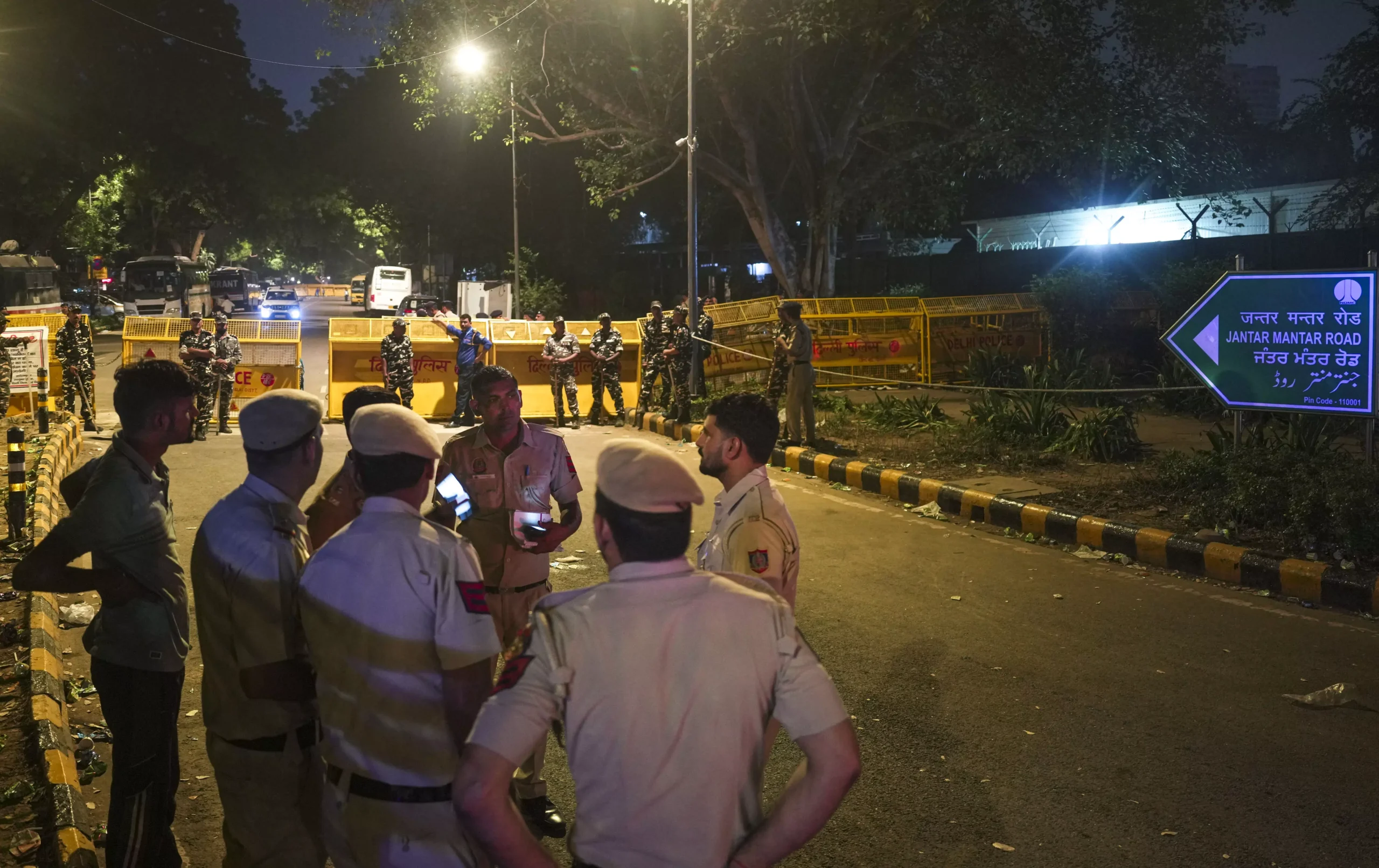
Cockroach Janta Party (CJP) against Chief Election Commissioner Gyanesh Kumar over alleged electoral roll irregularities. The reported detention of protesters subsequently drew concerns from the UN Human Rights Office, which India rejected as misplaced and an unwarranted interference in its internal affairs.Photo: PTI / Karma Bhutia
New Delhi defends constitutional safeguards for peaceful assembly and describes UN human rights office’s intervention as unwarranted interference in India’s internal affairs
Key Highlights
- India rejects concerns reportedly raised by the UN Human Rights Office over detentions during the CJP protests in New Delhi.
- India’s Permanent Mission in Geneva describes the concerns as “misplaced” and an “unwarranted interference” in domestic affairs.
- The diplomatic response follows security restrictions and reported detentions connected with demonstrations against Chief Election Commissioner Gyanesh Kumar.
- India emphasises constitutional protection for peaceful assembly, an independent judiciary and a free media.
- The controversy brings international attention to the balance between public order and the right to protest.
India Issues Firm Response to UN Human Rights Office
Geneva: India has rejected concerns expressed by the Office of the United Nations High Commissioner for Human Rights (OHCHR) over reported detentions during protests in New Delhi, describing the remarks as misplaced and an unwarranted intervention in the country’s internal affairs. In a statement shared on X on Saturday, October 10, 2026, India’s Permanent Mission in Geneva defended the country’s constitutional framework and maintained that the right to peaceful assembly was protected by democratic institutions, an independent judiciary and a free media.
The response came amid controversy surrounding demonstrations organised by the Cockroach Janta Party (CJP) against Chief Election Commissioner Gyanesh Kumar over allegations relating to electoral roll irregularities.
Security arrangements in the national capital, including restrictions around protest locations, had already attracted attention following reports of widespread detentions.
India’s response to the UN human rights office introduced a diplomatic dimension to a dispute that had primarily concerned domestic political protests and policing.
‘Misplaced’ and ‘Unwarranted Interference,’ Says India
India’s Permanent Mission in Geneva challenged the concerns attributed to the UN human rights office.
In its response, India characterised the remarks as “misplaced” and an “unwarranted interference” in the country’s internal affairs.
The language reflected New Delhi’s objection to what it regarded as external commentary on the handling of domestic demonstrations.
India also defended the institutional safeguards available to citizens exercising their constitutional freedoms.
According to the statement, the right to peaceful assembly is guaranteed under India’s constitutional system and supported by independent democratic institutions.
The response emphasised the country’s judiciary and media as important mechanisms for protecting rights and ensuring accountability.
Constitutional Right to Peaceful Assembly at Centre of Debate
India’s Constitution guarantees citizens the right to assemble peacefully and without arms under Article 19(1)(b).
That right is subject to reasonable restrictions permitted under Article 19(3), including those concerning public order and India’s sovereignty and integrity.
The existence of constitutional protection does not mean every gathering is exempt from lawful regulation.
Equally, restrictions on demonstrations must remain consistent with applicable law and constitutional requirements.
The controversy over the Delhi protests has therefore raised questions about the extent of police powers, the treatment of demonstrators and the circumstances under which preventive restrictions may be imposed.
India’s diplomatic response focused on the availability of domestic institutions to address such questions.
Delhi Protests Trigger Security Restrictions
The controversy followed a protest call by the CJP against Chief Election Commissioner Gyanesh Kumar.
The party’s demonstrations were connected with allegations concerning electoral roll irregularities.
Security personnel were deployed around sensitive locations in New Delhi, including the Jantar Mantar area, where police barricades and restrictions were put in place.
Reports of protesters being detained during the demonstrations subsequently became the subject of political debate.
The reported detentions also prompted concerns about the ability of citizens to exercise their right to peaceful protest.
However, the circumstances of individual detentions, including whether particular restrictions were legally justified, require assessment on the basis of the relevant facts and applicable legal provisions.
UN Human Rights Office and India’s Objection
The Office of the United Nations High Commissioner for Human Rights is responsible for promoting and protecting human rights internationally.
Its mandate includes raising concerns about alleged restrictions on fundamental freedoms, including peaceful assembly and expression.
Governments may disagree with its assessments, challenge the information on which they are based or object to statements they consider insufficiently informed.
India’s response reflects such a disagreement over the UN office’s reported observations concerning the Delhi demonstrations.
The available account does not reproduce the full original OHCHR statement, making it necessary to distinguish India’s description of the UN remarks from the precise wording used by the UN office.
Independent Judiciary and Free Media Cited as Safeguards
In defending India’s democratic framework, the country’s mission in Geneva pointed to constitutional protections and the role of independent institutions.
The judiciary provides mechanisms through which citizens may challenge government action and seek remedies for alleged violations of their rights.
The media also plays an important role in reporting public demonstrations, examining official actions and bringing matters of public concern into wider debate.
India’s statement relied on these institutional safeguards to counter the concerns raised by the UN human rights office.
Nevertheless, the legal validity of any particular detention or restriction depends on its specific circumstances and cannot be determined solely by the existence of constitutional protections.
Diplomatic Disagreement Highlights Wider Rights Debate
The exchange highlights a recurring question in international relations: how governments respond when international human rights institutions comment on domestic law enforcement and political developments.
India has maintained that its constitutional and democratic institutions provide safeguards for citizens’ fundamental rights.
International human rights bodies, meanwhile, regard the protection of peaceful assembly as a legitimate subject of scrutiny under international human rights standards.
These positions need not be treated as mutually exclusive in every circumstance.
The central issue is whether specific actions taken during the protests complied with applicable domestic law and relevant human rights obligations.
Focus Remains on Protest Rights and Accountability
India’s rejection of the UN human rights office’s concerns adds another dimension to the controversy surrounding the Delhi demonstrations.
While the government has defended the country’s constitutional institutions and rejected external interference, questions concerning individual detentions and restrictions remain matters for factual and legal examination.
The episode also underlines the importance of distinguishing between allegations, official responses and judicial findings.
The larger test of democratic accountability lies in ensuring that public order is maintained without unnecessarily restricting lawful and peaceful dissent, while any allegations of excessive or unlawful action receive appropriate scrutiny.

YOU MAY LIKE THIS