Reg No. - CHHBIL/2010/41479ISSN - 2582-919X

‘Gen Z Deserves Better Than an Undeclared Emer-GenZ’: Shashi Tharoor Slams Modi Government
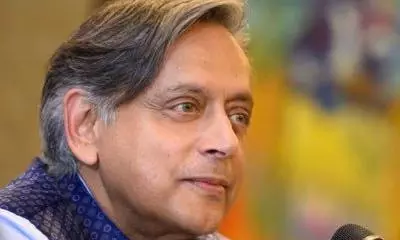
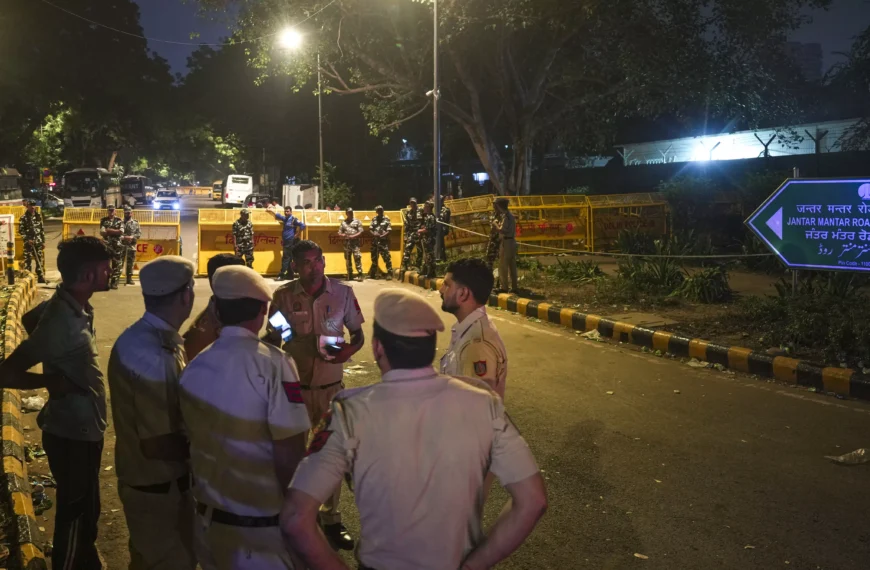
Congress MP Shashi Tharoor has criticised the Modi government’s handling of protests in New Delhi, describing the heavy security arrangements as a “war-like deployment” and arguing that Generation Z deserves better than an undeclared “Emer-GenZ”. He also invoked Prime Minister Narendra Modi’s 2015 remarks on the Emergency while calling for democratic dialogue rather than repression. Photo: Courtesy / X
Congress MP questions heavy security deployment in Delhi amid CJP protests, invokes Prime Minister Narendra Modi’s 2015 Emergency remarks and calls for answers instead of police action against demonstrators
Key Highlights
- Congress leader Shashi Tharoor criticises the Modi government over security arrangements and restrictions during protests in Delhi.
- Tharoor describes the situation as a “war-like deployment” and coins the expression “undeclared Emer-GenZ.”
- Congress MP invokes Prime Minister Narendra Modi’s 2015 social media post concerning the Emergency.
- Tharoor demands that the government respond to young people’s concerns through dialogue rather than coercive measures.
- His criticism comes amid political controversy over the treatment of demonstrators protesting against Chief Election Commissioner Gyanesh Kumar.
- The remarks intensify the debate over democratic freedoms, the right to peaceful assembly and the use of police powers.
Tharoor Questions Heavy Security Deployment in National Capital
New Delhi: Congress MP Shashi Tharoor has launched a sharp criticism of the Narendra Modi government over the security arrangements surrounding demonstrations in the national capital, alleging that Delhi is witnessing a “war-like deployment” and warning that India’s younger generation deserves better than what he described as an undeclared “Emer-GenZ”. In a series of posts on X on Saturday, October 10, 2026, Tharoor questioned the government’s response to the protests and invoked Prime Minister Modi’s earlier criticism of the Emergency to draw attention to what he regarded as restrictions on democratic expression.
The remarks came against the backdrop of heightened security arrangements and reported detentions associated with demonstrations in Delhi.
Tharoor’s criticism focused on the government’s approach to dissent, particularly when young people seek to raise political and institutional concerns.
His statements added to the growing political debate over the extent to which security measures should be used during public protests.
‘Our Gen Z Deserves Better Than an Undeclared Emer-GenZ’
Tharoor used a pointed play on words to compare the present situation with the historical memory of the Emergency.
“Our GenZ deserves better than an undeclared Emer-GenZ,” he wrote, criticising what he described as a “war-like deployment” in Delhi.
The expression combines the term Generation Z with a reference to the Emergency, suggesting that the government’s handling of demonstrations risks creating an atmosphere of excessive restriction.
His remarks were political criticism, rather than a claim that a constitutional Emergency had formally been proclaimed.
The Emergency imposed in India between 1975 and 1977 remains one of the most debated periods in the country’s democratic history, particularly concerning restrictions on civil liberties, political opposition and press freedom.
By invoking that period, Tharoor sought to emphasise the importance of protecting constitutional freedoms even during politically contentious demonstrations.
Tharoor Invokes Modi’s 2015 Post on the Emergency
The Congress leader also referred to an earlier social media post by Prime Minister Narendra Modi concerning the Emergency.
Tagging Modi’s 2015 remarks, Tharoor wrote:
“Thanks for teaching today’s youngsters many of the same lessons, Modiji!”
The comment was a sarcastic reference to the Prime Minister’s earlier criticism of restrictions imposed during the Emergency.
Tharoor’s argument was that the government should uphold the democratic principles it has publicly defended when discussing that historical period.
The reference added a political dimension to his criticism by contrasting the government’s stated commitment to democratic freedoms with the police measures being questioned by opposition leaders.
However, the comparison represents Tharoor’s political assessment and does not, by itself, establish that current circumstances are legally equivalent to the Emergency.
‘Answers, Not Lathis; Expression, Not Repression’
In an earlier post, Tharoor argued that the government should respond to the concerns of demonstrators through engagement rather than force.
He called for “answers, not lathis; expression, not repression.”
The statement reflected his objection to what he viewed as an excessively restrictive response to public demonstrations.
The Congress leader’s remarks placed particular emphasis on the need for governments to remain open to questions, criticism and peaceful dissent.
His criticism also raised a broader question about whether public grievances are better addressed through institutional dialogue than through security restrictions.
Delhi Protests Bring Police Measures Under Scrutiny
The political controversy followed demonstrations associated with the Cockroach Janta Party (CJP), which had called for protests against Chief Election Commissioner Gyanesh Kumar over allegations concerning electoral roll irregularities.
Security arrangements were strengthened in parts of Delhi, particularly around areas associated with planned demonstrations.
Reports of detentions and restrictions subsequently drew criticism from opposition leaders.
The precise circumstances of individual police actions remain important in assessing whether restrictions were justified under applicable law.
The existence of a protest does not automatically make every police restriction unlawful, just as public order concerns do not remove the constitutional protections available to peaceful demonstrators.
Constitutional Right to Protest Remains Central to Debate
Article 19(1)(a) of the Constitution guarantees freedom of speech and expression, while Article 19(1)(b) protects the right of citizens to assemble peacefully and without arms.
Both rights are subject to constitutionally permitted reasonable restrictions.
The legal question in cases involving public demonstrations is therefore whether restrictions are justified, proportionate and consistent with applicable law.
Tharoor’s statements reflect the opposition’s concern that extensive security measures could discourage political participation and peaceful expression.
Authorities, meanwhile, have responsibilities relating to public safety, traffic movement and the prevention of violence.
A fair assessment of the controversy requires consideration of both constitutional freedoms and the specific circumstances confronting law enforcement agencies.
Political Disagreement Over Democratic Accountability
Tharoor’s intervention also highlights the continuing disagreement between the government and opposition over the handling of public protests.
Opposition leaders have criticised restrictions they consider excessive, while the broader question of public order remains a responsibility of the administration.
The Congress MP’s use of the phrase “Emer-GenZ” was intended to draw attention to the expectations of younger citizens who increasingly participate in political discussions and public demonstrations.
His criticism suggested that democratic institutions should respond to this generation through openness, accountability and engagement.
At the same time, the legitimacy of any particular allegation against the authorities requires independent examination rather than reliance solely on political statements.
Tharoor’s Remarks Add to Wider Debate on Civil Liberties
By invoking the Emergency and quoting Prime Minister Modi’s earlier comments, Tharoor sought to frame the Delhi protests as a test of the government’s commitment to democratic principles.
His criticism centred on the argument that citizens, particularly younger generations, should be able to question public institutions without facing disproportionate restrictions.
The controversy has brought renewed attention to the relationship between law enforcement, political dissent and constitutional safeguards.
Tharoor’s central message was that a democratic government should answer questions raised by its citizens rather than allow public disagreements to become confrontations between protesters and security agencies.

YOU MAY LIKE THIS