Reg No. - CHHBIL/2010/41479ISSN - 2582-919X

US Slaps 50% Tariffs on Canadian Goods as Trade Talks Collapse
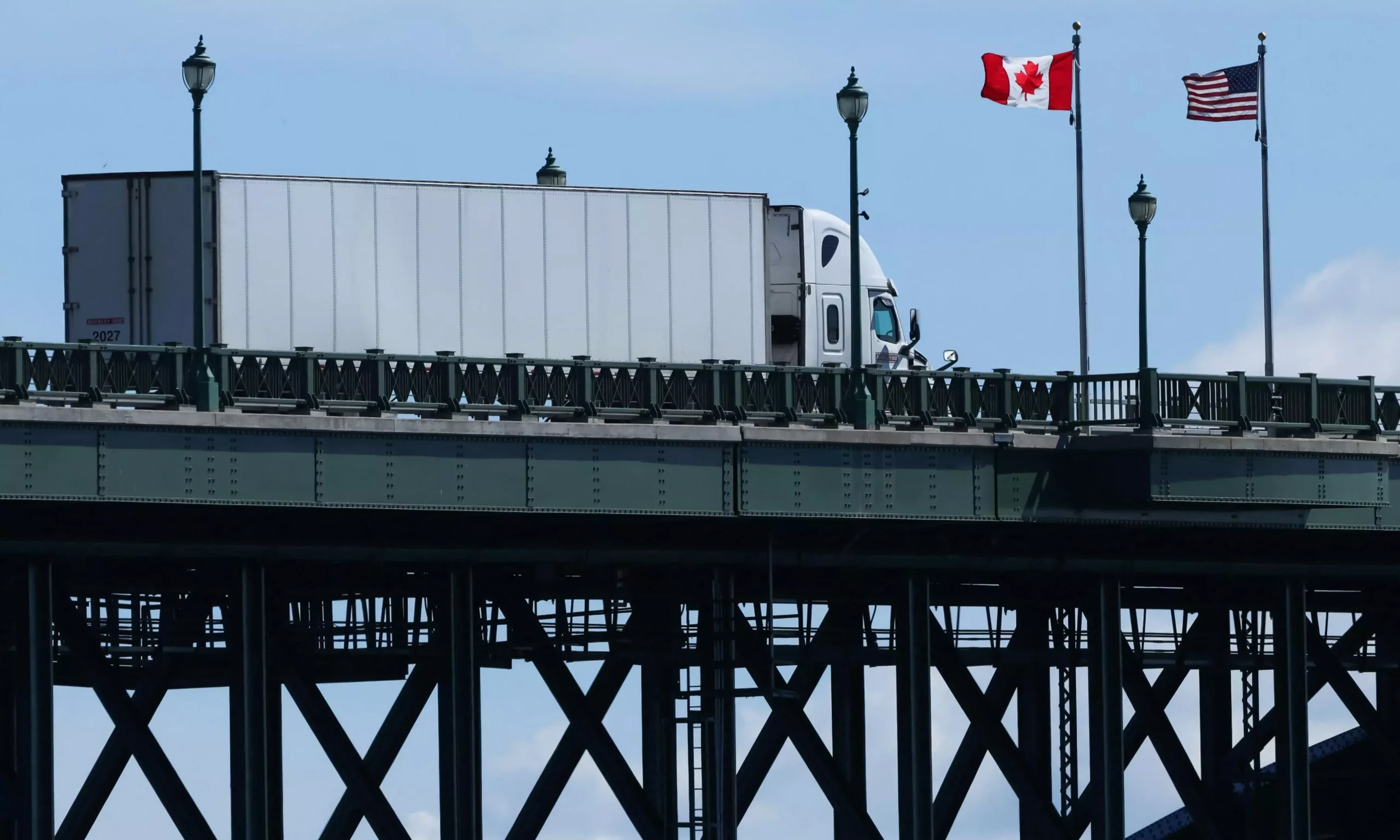
A truck crosses a bridge between Canada and the United States as the Canadian and American flags fly overhead. The United States imposed 50% tariffs on around $20 billion worth of Canadian goods on Saturday, August 22, 2026, after last-minute trade negotiations collapsed, prompting Canada to announce dollar-for-dollar retaliation-Photo Credit :AP
anada vows dollar-for-dollar retaliation after last-minute negotiations fail, deepening an extraordinary trade rift between the longtime North American allies
Key Highlights
- New 50% US tariffs cover around $20 billion worth of Canadian products
- Prime Minister Mark Carney says Canada will retaliate “dollar for dollar”
- Washington and Ottawa blame each other for the collapse of negotiations
- Tariffs affect about 5% of Canada’s annual exports to the United States
- Escalating dispute adds uncertainty to the future of the USMCA trade relationship
Washington: The United States imposed sweeping 50% tariffs on around $20 billion worth of Canadian products on Saturday, August 22, 2026, after last-minute negotiations between Washington and Ottawa collapsed, triggering immediate retaliation from Canada and opening a new and potentially damaging phase in relations between the two longtime allies.
The tariffs, imposed by President Donald Trump’s administration, affect a range of Canadian products and represent roughly 5% of Canada’s annual exports to the United States.
Canadian Prime Minister Mark Carney responded by announcing that Ottawa would match the American tariffs “dollar for dollar”, while accusing Washington of changing the proposed terms of an emerging agreement at the last moment.
“Last-minute changes in the U.S. proposed terms were unfair, uneconomic, and called into question the reliability of any deal,” Carney said.
The United States presented a sharply different account.
US Trade Representative Jamieson Greer said Canada had declined to finalise an agreement under terms negotiated earlier in the week and accused Ottawa of introducing new demands and reversing earlier commitments.
The breakdown came despite an eleventh-hour attempt to prevent the tariffs. Trump had delayed their implementation for three days after indicating earlier in the week that Washington and Ottawa were moving towards an agreement.
That optimism evaporated as negotiators failed to bridge differences over major sectors including steel, aluminium, automobiles and lumber.
Trade Dispute Tests One of World’s Closest Economic Relationships
The economic consequences could extend well beyond the approximately $20 billion in Canadian products immediately affected.
The United States and Canada have one of the world’s most deeply integrated trading relationships, with supply chains in automobiles, manufacturing, agriculture and energy frequently crossing the border multiple times before finished products reach consumers.
Canada is particularly exposed to any prolonged confrontation because the United States receives nearly three-quarters of its merchandise exports.
The consequences, however, will not necessarily be confined to Canada. American companies importing affected Canadian products will have to absorb the higher duties or pass some of the additional costs on to businesses and consumers.
The escalating confrontation also comes at a sensitive moment for the United States-Mexico-Canada Agreement, or USMCA, the trade framework governing much of North American commerce.
Washington has already begun formal discussions with Mexico over the future of the agreement, while the increasingly acrimonious dispute with Canada introduces another layer of uncertainty.
For decades, Washington and Ottawa managed recurring disagreements over issues including Canadian softwood lumber, dairy-market access and other trade barriers without allowing them to fundamentally undermine the broader bilateral relationship.
The latest confrontation is markedly different.
Trump has pursued tariffs as a central instrument of his economic policy, arguing that higher import duties can encourage manufacturing and investment inside the United States. Canada, meanwhile, has increasingly signalled that it is prepared to retaliate rather than accept American trade measures without response.
With Canada now preparing matching tariffs and no immediate new negotiations announced, both governments face growing pressure to find a way back to the negotiating table before the dispute begins inflicting broader damage on businesses, workers and consumers on both sides of the border.