Reg No. - CHHBIL/2010/41479ISSN - 2582-919X

Air India Captain’s Initial Drug Screen Raises Fresh Questions After Phuket-Delhi Altitude Drop
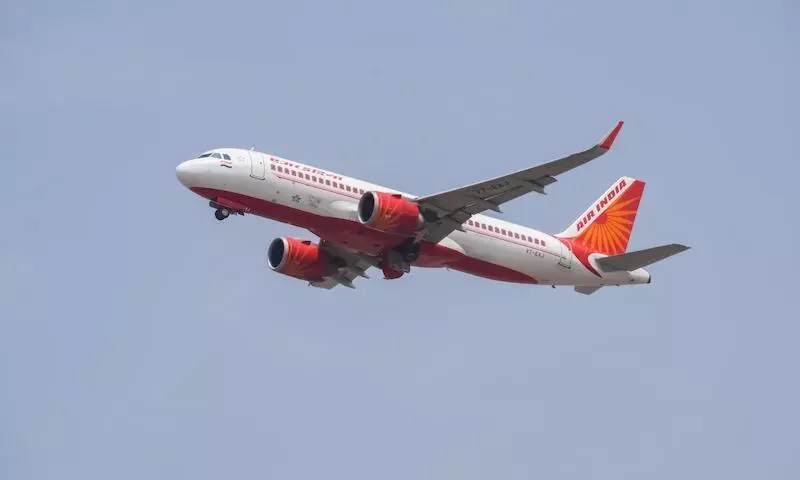
An Air India aircraft in flight. Aviation authorities have taken both pilots of flight AI2379 off the roster after the Phuket-Delhi service experienced a sudden altitude loss on August 4, 2026, while a confirmatory test is awaited following the Pilot-in-Command’s initial psychoactive-substance screening. (File Photo)
Confirmatory laboratory test awaited; both pilots taken off flying duties as AAIB investigates the occurrence as a “serious incident”
New Delhi: The pilot-in-command of an Air India flight from Phuket to Delhi that suffered a sudden loss of altitude has returned an initial screening result indicating the need for further testing for psychoactive substances, prompting aviation authorities to order a confirmatory laboratory examination.
The development adds another dimension to the investigation into Air India flight AI2379, which encountered severe turbulence and suddenly lost around 300 feet of altitude during cruise on August 4. The aircraft subsequently stabilised and landed safely in Delhi.
The Ministry of Civil Aviation said that, in accordance with the Standard Operating Procedures applicable after such an occurrence, both members of the flight crew underwent prescribed screening for psychoactive substances.
The screening result of the Pilot-in-Command, however, was not conclusive and required confirmatory testing. The sample has consequently been sent to a designated laboratory and the final report is awaited.
This distinction is important. At this stage, it would not be accurate to state as an established fact that the pilot “tested positive” for drugs. The initial screening has raised a flag requiring confirmation; only the laboratory test can establish the final result. The government has also not disclosed what substance, if any, was indicated by the preliminary screening.
Pending completion of the investigation and testing process, the Directorate General of Civil Aviation (DGCA) has taken both pilots off the flying roster.
The Aircraft Accident Investigation Bureau (AAIB) has classified the occurrence as a “serious incident” and is investigating the circumstances surrounding the sudden altitude loss.
Air India, meanwhile, has said it was aware that the crew underwent post-flight screening in accordance with the applicable protocols but had not been informed of the results.
The aircraft involved, an Airbus A320 registered VT-EXO, was carrying 137 passengers, including three infants, and eight crew members — two pilots and six cabin crew — according to the information released following the incident.
The flight experienced the sudden altitude change while cruising between Phuket and Delhi. Passengers and cabin crew were injured during the turbulence, although the aircraft was able to continue its journey and land safely in the national capital.
The investigation will now have two important strands. The AAIB will have to establish the circumstances that caused the aircraft’s sudden loss of altitude and examine the crew’s response, while the confirmatory laboratory test will determine whether the preliminary screening result involving the captain has any substance.
Until those findings are available, drawing a connection between the pilot’s screening result and the aircraft’s altitude loss would be premature.
The episode nevertheless places renewed focus on aviation safety procedures, particularly the mechanisms designed to ensure that flight crew remain medically and professionally fit for duty. The DGCA’s decision to remove both pilots from the roster pending investigation reflects the precautionary approach prescribed in a case involving passenger safety.
Further regulatory action, if any, will depend on the AAIB investigation and the final laboratory report.

YOU MAY LIKE THIS