Reg No. - CHHBIL/2010/41479ISSN - 2582-919X

EXCLUSIVE | Centre’s New Anti-Cheating Bill Brings India’s Toughest Crackdown on Exam Frauds
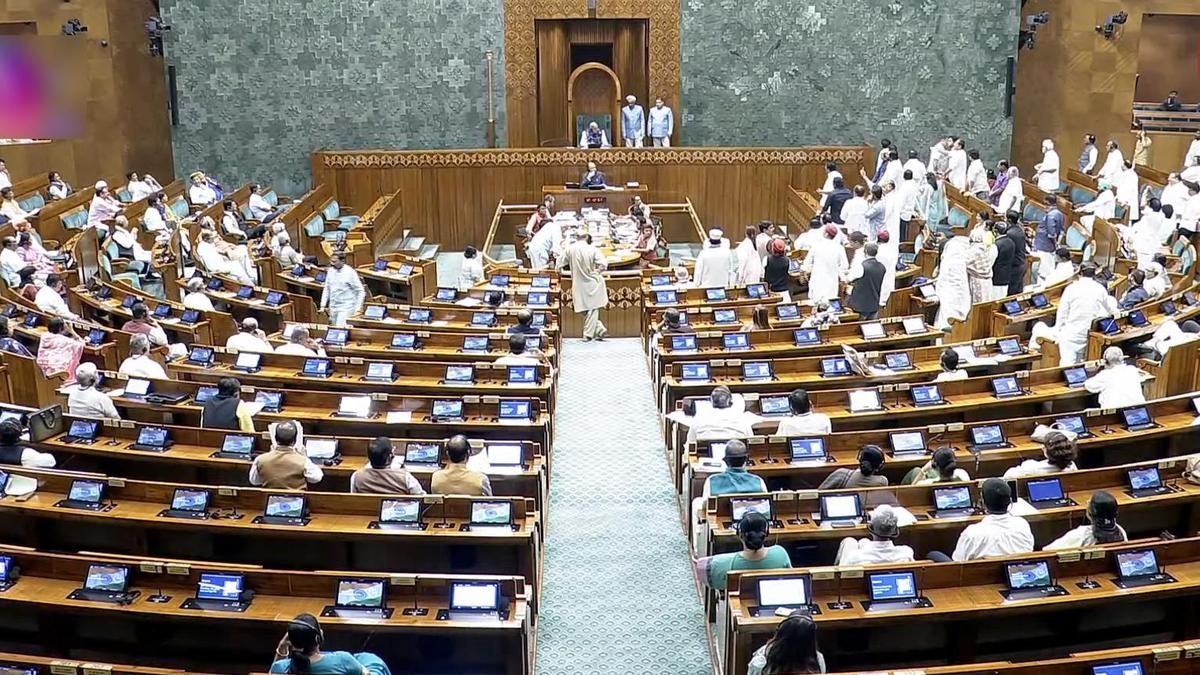
The Union Government is set to introduce the Public Examinations (Prevention of Unfair Means) Amendment Bill, 2026, in Parliament, proposing fast-track courts, 60-day investigations, three-month trials, and penalties of up to ₹10 crore to combat paper leaks and examination fraud across India-Photo Credit -Sansad TV/ANI Video Grab
₹10 Crore Fine, 10-Year Jail, 60-Day Probe, Fast-Track Courts and Three-Month Trials Proposed in Major Overhaul
New Delhi: In one of the most sweeping legal reforms aimed at protecting the integrity of India’s public examination system, the Union Government has proposed the Public Examinations (Prevention of Unfair Means) Amendment Bill, 2026, introducing unprecedented punishments, strict timelines for investigations and trials, and a dedicated judicial mechanism to tackle paper leaks and examination fraud.
The proposed legislation, circulated among Members of Parliament on Saturday July 25, is expected to be introduced during the Monsoon Session on July 27. The Bill substantially strengthens the Public Examinations (Prevention of Unfair Means) Act, 2024, following repeated incidents of paper leaks that have shaken public confidence in competitive examinations across the country.
Time-Bound Justice Becomes the Centrepiece
One of the most significant reforms in the Amendment Bill is the introduction of a legally binding timeline for every stage of investigation and trial.
Under the proposed law:
- All investigations, whether conducted by State Police, Central Investigating Agencies, or Special Investigation Teams (SIT/STF), must be completed within 60 days.
- State Governments and Union Territories will designate Special Sessions Courts to hear examination fraud cases on a continuous day-to-day basis.
- Trials must conclude within three months from the date the chargesheet is filed.
- Appeals before the High Courts will be heard by a Division Bench of two judges and are also required to be disposed of within three months.
The proposed provisions are intended to eliminate the prolonged legal delays that have often weakened prosecution in major examination fraud cases.
No Endless Adjournments
To ensure uninterrupted proceedings, the Amendment Bill introduces Sections 12A and 12B, creating what officials describe as a continuous judicial pipeline.
Under these provisions:
Punishments Become Much Tougher
- Courts will not be permitted to grant adjournments beyond the following day unless exceptional reasons are recorded in writing.
- Every pending case registered under the 2024 Act will automatically be transferred to the newly designated Special Fast Track Courts, where the trial must conclude within three months of transfer.
The Amendment Bill proposes a dramatic increase in imprisonment terms and financial penalties.
Current Law
Section 10(1): General Offences
- 3 to 5 years imprisonment
- Fine up to ₹10 lakh
Proposed Amendment
- 5 to 10 years imprisonment
- Fine up to ₹50 lakh
Section 10(2): Service Providers
- Current Law
- Fine up to ₹1 crore
Proposed Amendment
- Fine up to ₹5 crore
Section 10(2): Directors and Management of Service Providers
Current Law
- 3 to 10 years imprisonment
- Fine up to ₹1 crore
Proposed Amendment
- 3 to 10 years imprisonment
- Fine up to ₹5 crore
Section 10(3): In-Charge Personnel
Current Law
- 3 to 10 years imprisonment
- Fine up to ₹1 crore
Proposed Amendment
- 5 to 10 years imprisonment
- Fine up to ₹5 crore
Section 11(1): Organised Crime
Current Law
- Minimum 5 years imprisonment
- Fine up to ₹1 crore
Proposed Amendment
- Minimum 7 years imprisonment
- Fine up to ₹10 crore
The proposed penalties make examination fraud one of the costliest white-collar offences under Indian criminal law.
Special Public Prosecutors Mandatory
To strengthen prosecution, every State and Union Territory will be required to appoint Special Public Prosecutors under the Bharatiya Nagarik Suraksha Sanhita (BNSS), 2023 exclusively for cases under the Act.
These prosecutors will handle paper leak and examination fraud trials before the designated Special Courts.
Strict Appeal Timeline
The Bill also tightens appellate procedures.
Appeals against bail orders, convictions, acquittals, or sentences must be filed within 30 days, with an absolute outer limit of 90 days only in exceptional circumstances. Such appeals will be heard exclusively by a Division Bench of the respective High Court.
Government’s Objective
The proposed reforms follow several high-profile examination controversies that raised serious concerns regarding transparency and merit-based recruitment.
Union Minister Dr. Jitendra Singh said the amendments are intended to make India’s public examination system more transparent and credible.
“The objective of the Act is to bring greater transparency, fairness, and credibility, and to inspire confidence in the public examination system. The amendments ensure time-bound investigations, speedy trials, and enhanced deterrence against organised crime groups and institutions.”
Prime Look Analysis
The proposed Amendment Bill represents the most comprehensive legal crackdown on examination fraud since the enactment of the 2024 anti-cheating law. Rather than merely increasing punishments, it seeks to address the biggest weakness in previous enforcement—delay.
By mandating 60-day investigations, three-month trials, special fast-track courts, exclusive prosecutors, and strict limits on adjournments, the Centre aims to ensure that paper leak cases no longer remain pending for years while students await justice.
If enacted in its present form, the legislation could significantly alter the legal landscape governing public examinations, sending a strong signal that organised cheating syndicates, institutions, and facilitators will face swift investigation, expedited trials, and some of the toughest financial and criminal penalties currently proposed under Indian law.

YOU MAY LIKE THIS