Reg No. - CHHBIL/2010/41479ISSN - 2582-919X

Amit Shah’s X Post After Pradhan’s Exit: ‘Students Above Any Position’—But Why Did Accountability Take So Long?-By-Kumar Bahukhandi (Editorial)
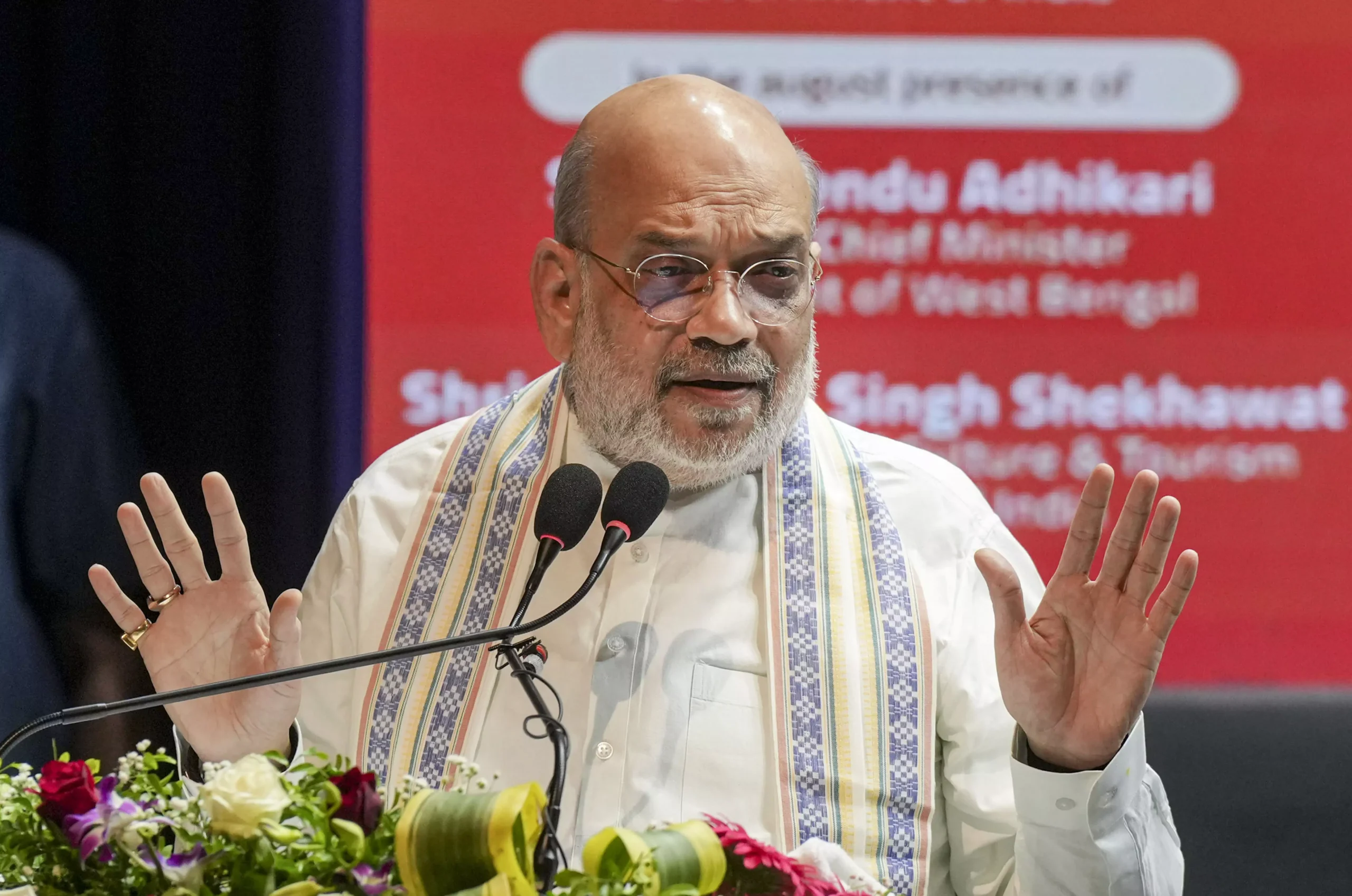
Union Home Minister Amit Shah, in a post on X following Union Education Minister Dharmendra Pradhan’s resignation, said the BJP considers the country, youth, and students more important than any position, while reiterating the Modi government’s commitment to tougher action against paper leaks-Photo Credit -ANI
Union Home Minister Amit Shah’s statement following the resignation of Union Education Minister Dharmendra Pradhan sends a strong political message. His assertion that “the country, youth and students are more important than any position” reflects the government’s effort to reassure millions of students shaken by the NEET paper leak controversy.
The principle is difficult to disagree with. Public office should never outweigh public trust.
However, the question that naturally follows is equally important:
If students were always the priority, why did accountability come only after weeks of nationwide protests, mounting public pressure, and intense political scrutiny?
For nearly a month, students marched on the streets, demanded answers, and questioned the credibility of one of India’s most important entrance examinations. Parents expressed anxiety, aspiring doctors faced uncertainty, and opposition parties intensified their criticism. Throughout this period, the government defended the Education Minister and repeatedly maintained that corrective measures were underway.
Only after the controversy reached its peak did the resignation come.
This timing inevitably raises questions about whether the decision was driven solely by principle or by the growing political and public pressure surrounding the issue.
Reform Must Go Beyond Resignation
Amit Shah has rightly highlighted the government’s proposed legal reforms, including stricter punishments for paper leaks, fast-track courts, time-bound investigations, and tougher penalties for organised examination fraud. These are significant measures that could strengthen the integrity of India’s examination system.
Yet legislation alone cannot restore trust.
Students expect more than stronger laws—they expect an examination process that is secure from the outset. The real test lies not in how severely offenders are punished after a leak occurs, but in whether such leaks are prevented altogether.
Accountability Should Be Timely
In any democracy, accountability carries greater value when it is prompt rather than delayed.
When thousands of students are affected, public confidence depends on swift administrative action. Delayed accountability often creates the impression that governments act only when political costs become too high.
The resignation of Dharmendra Pradhan may ease immediate public anger, but it also highlights a broader lesson: institutions earn credibility not merely by correcting mistakes, but by responding decisively when those mistakes first emerge.
Students Need Certainty, Not Symbolism
For NEET aspirants, the controversy was never about political victories or defeats. It was about years of hard work, emotional investment, and faith in a fair examination system.
If the proposed amendments deliver faster investigations, speedy trials, and exemplary punishment for organised cheating networks, they could become a turning point in examination governance.
However, the government will ultimately be judged not by statements after a crisis, but by whether future examinations are conducted without controversy.
My View
Amit Shah’s message that “students are above any position” is an important democratic principle. The resignation demonstrates political accountability, but the timing also raises a legitimate public question: could decisive action have come sooner?
The challenge before the government now is not to defend the past, but to ensure that no future student has to question the fairness of India’s examination system. The proposed legal reforms are a step in that direction, but their effectiveness will depend on consistent implementation, institutional transparency, and preventive safeguards rather than post-crisis responses.

YOU MAY LIKE THIS