Reg No. - CHHBIL/2010/41479ISSN - 2582-919X

Chintan Shivir 3.0 Charts the Roadmap for a Developed Chhattisgarh
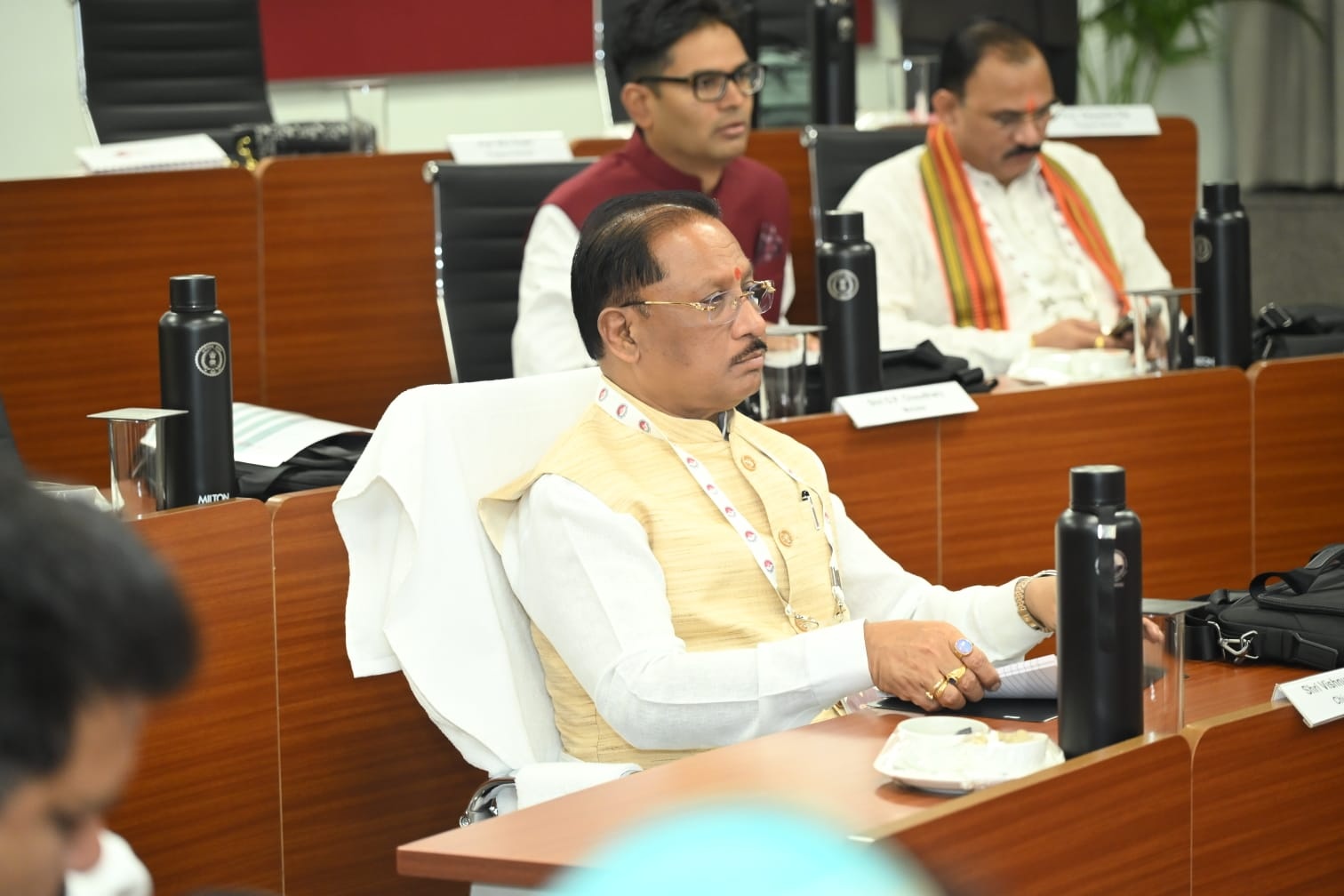
Chief Minister Vishnu Deo Sai attentively participates in the concluding session of Chintan Shivir 3.0 at IIM Raipur on Sunday July 5, 2026 , reaffirming the state’s commitment to transparent, technology-driven, and citizen-centric governance-Photo Credit -channel24india.com via CG/PR
Key Factors
- Chintan Shivir 3.0 concludes with a comprehensive roadmap for a Developed Chhattisgarh aligned with the national vision of Viksit Bharat 2047.
- Chief Minister Vishnu Deo Sai says the conclave has evolved from a forum for discussion into a platform for policy implementation.
- Experts deliberate on good governance, emerging technologies, agriculture, tourism, leadership development, and development-oriented politics.
- Government highlights successful implementation of recommendations from previous conclaves, including e-Office, CM Helpline 1076, and the Service Setu Portal.
- Policy experts call for district-centric development, technology-driven governance, sustainable tourism, and climate-resilient agriculture.
Chief Minister Vishnu Deo Sai says ideas emerging from the two-day conclave will shape the next generation of governance, innovation, and inclusive development
Raipur: The two-day Chintan Shivir 3.0, jointly organised by the Department of Good Governance & Convergence and the Indian Institute of Management (IIM), Raipur, concluded on Sunday July 5, 2026 with a renewed commitment to transforming Chhattisgarh into a model state of transparent governance, technological innovation, and inclusive development.
Designed to formulate a long-term strategy for building a Developed Chhattisgarh, the conclave brought together Chief Minister Vishnu Deo Sai, members of the Council of Ministers, senior civil servants, distinguished policy experts, academicians, and subject specialists from across the country.
Over two days, participants engaged in extensive discussions on governance reforms, leadership, public service delivery, agriculture, tourism, emerging technologies, and sustainable development.
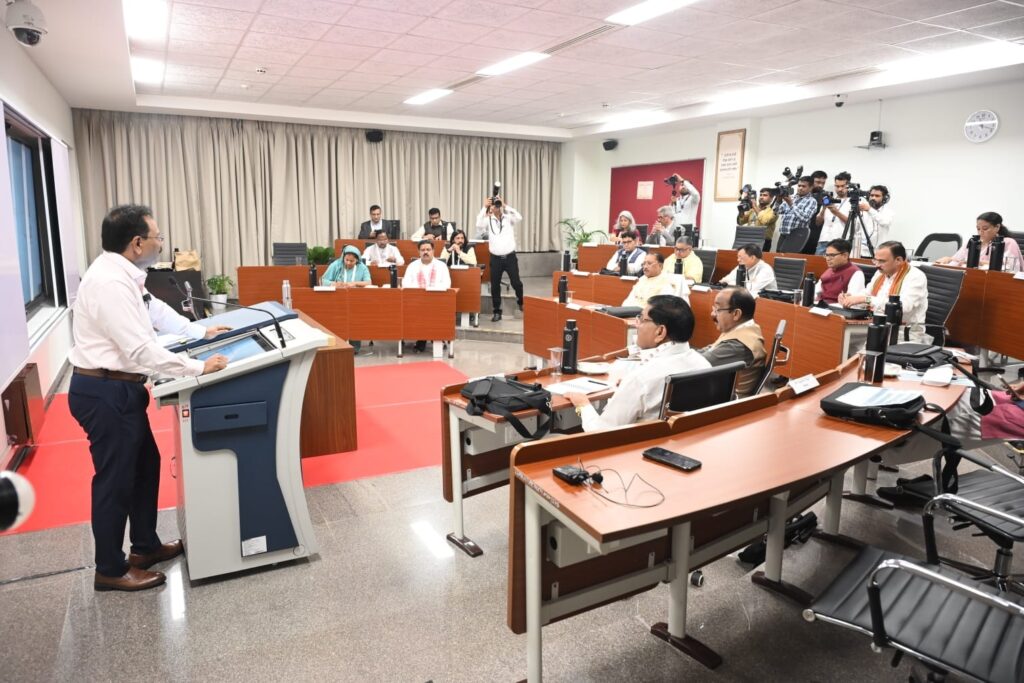
Policy experts, ministers and academicians engage in high-level deliberations during Chintan Shivir 3.0 at IIM Raipur on Sunday July 5, 2026 , discussing strategies for building a developed and future-ready Chhattisgarh-Photo Credit-channel24india.com via CG/PR
Addressing the concluding session, Chief Minister Vishnu Deo Sai said the Chintan Shivir has evolved beyond being a platform for exchanging ideas and has become an effective mechanism for translating vision into policy and action.
“Our government is committed to building a modern, transparent, technology-driven administration that remains sensitive to the aspirations of every citizen. The recommendations emerging from Chintan Shivir 3.0 will soon be reflected in policy decisions and administrative reforms, giving fresh momentum to Chhattisgarh’s development journey,” the Chief Minister said.
Ideas That Turn Into Action
Highlighting the tangible outcomes of the previous editions of the conclave, the Chief Minister noted that several recommendations have already been successfully implemented.
Among the major governance reforms introduced are:
- Implementation of the e-Office system, significantly accelerating file movement and improving transparency.
- Launch of the Chief Minister Helpline 1076, ensuring quicker grievance redressal.
- Introduction of the Service Setu Portal, through which more than 520 public services across 36 government departments are now available online, making citizen services simpler, faster, and more transparent.
“The greatest success of this initiative is that ideas discussed during the conclave are no longer confined to paper—they are visible on the ground through meaningful reforms,” he observed.
Tourism Identified as a New Engine of Growth
During a session on “Tourism as an Engine of Sustainable Prosperity,” senior IAS officer and tourism policy expert Suman Billa described Chhattisgarh as one of India’s most promising destinations for high-value, low-impact tourism.
He emphasised the state’s immense potential in eco-tourism, tribal heritage, and cultural tourism, while advocating stronger tourism infrastructure, community participation, responsible tourism practices, and greater public-private investment.
Billa also highlighted that improved coordination between the Center and the State could position Bastar as a globally recognised tourism destination.
District-Centric Development Model
Speaking on “Development-Oriented Politics through Collective Effort,” Member of Parliament Shashank Mani Tripathi proposed a district-focused development framework, describing districts as the true engines of economic growth.
He stressed the need for district-specific planning based on local economic strengths, District GDP-oriented policy formulation, entrepreneurship promotion, employment generation, agricultural transformation, and grassroots innovation. According to him, empowering Tier-II and Tier-III regions would be instrumental in accelerating balanced development across the state.
Technology to Drive Future Governance
A session on Emerging Technologies, led by NITI Aayog Member Prof. Abhay Karandikar, explored how Artificial Intelligence, Digital Public Infrastructure, 5G connectivity, drones, blockchain, geospatial technologies, and data-driven governance can revolutionize public administration.
He underlined the importance of digital inclusion and innovation in improving service delivery, generating employment, and making governance more efficient, transparent, and citizen-centric.
Agriculture Beyond Production
Agricultural economist Dr. Ramesh Chand and agriculture expert T. Vijay Kumar presented strategies centered on natural farming, climate-resilient agriculture, crop diversification, value addition, technology adoption, and improved market linkages.
Their recommendations focused on increasing farmers’ incomes, strengthening the rural economy, and making agriculture globally competitive.
Leadership with Values
The inaugural session featured renowned spiritual thinker Gaur Gopal Das, who emphasised emotional intelligence, ethical leadership, and public service.
He observed that compassionate and value-based leadership forms the foundation of effective governance and sustainable public administration.
The concluding session also featured Dr. Vinay Sahasrabuddhe, who shared insights on leadership, policy implementation, and governance reforms under the leadership of Prime Minister Narendra Modi.
A Blueprint for Viksit Chhattisgarh
The collective deliberations of Chintan Shivir 3.0 have laid the groundwork for a future-ready Chhattisgarh built on innovation, transparency, technological advancement, and participatory governance.
With practical recommendations emerging from experts, policymakers, and administrative leaders, the state government aims to translate these ideas into impactful policies that will strengthen governance, accelerate economic growth, and improve public service delivery.
Aligned with the national vision of Viksit Bharat 2047, Chintan Shivir 3.0 is being viewed as a significant milestone in shaping a resilient, progressive, and citizen-centric Chhattisgarh for the decades ahead.

YOU MAY LIKE THIS