Reg No. - CHHBIL/2010/41479ISSN - 2582-919X

Gulf Medical University Opens 2026–27 Academic Year with Focus on Healthcare Innovation and Global Excellence
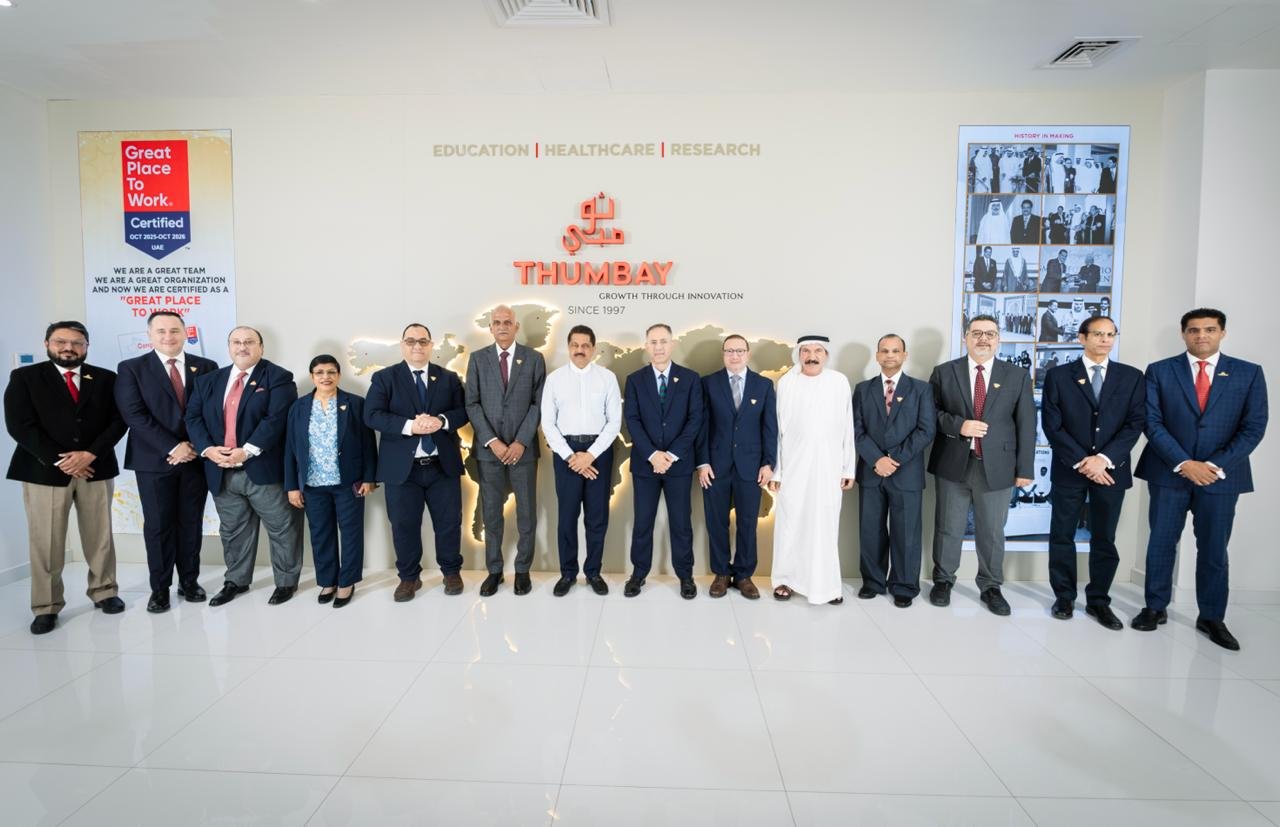
Dr Thumbay Moideen, Founder and President of Thumbay Group, with the leadership and heads of Gulf Medical University’s constituent colleges as GMU begins its 2026–2027 academic year in the UAE. The university is focusing on academic excellence, research, innovation, digital health and multidisciplinary healthcare education.
UAE-based university strengthens medical education, research and digital health after securing international accreditation and expanding its global academic footprint
Ajman, UAE, September 7, 2026: Gulf Medical University (GMU) has commenced its 2026–2027 academic year, welcoming new and returning students to its campus as the institution enters another phase of expansion in health professions education, research, innovation and technology-driven healthcare.
The academic year formally began on August 31, with university leaders, deans and heads of constituent colleges holding a series of meetings and interactions to establish academic priorities for the year ahead.
The return of students has also highlighted continued demand for GMU’s health professions programmes, with the university seeking to strengthen its position as an international centre for medical and healthcare education in the UAE.
“As we welcome our students and faculty to 2026–2027, our focus remains firmly on advancing academic excellence, strengthening research and innovation, and preparing healthcare professionals who are equipped to meet the changing needs of communities locally and globally,” said Prof. Manda Venkatramana, Chancellor of Gulf Medical University.
Referring to GMU’s recent international recognition, he added that such achievements validate the university’s work while simultaneously creating higher expectations for the future.
From Medical College to an Academic Health System
Founded in 1998 by Dr Thumbay Moideen, Founder and President of Thumbay Group, the institution began its journey as Gulf Medical College and has since developed into a comprehensive university and academic health system integrating education, healthcare and research.
Dr Moideen met the deans of GMU’s colleges as part of the opening of the new academic year, while the Vice Chancellor and college leadership reviewed academic plans and priorities.
For 2026–27, the university intends to place greater emphasis on advanced healthcare sciences and foundational medical education while expanding its work in digital health, interdisciplinary learning, research and innovation.
The direction reflects a healthcare environment in which tomorrow’s doctors and health professionals will increasingly require knowledge extending beyond conventional clinical training to technology, data, research and multidisciplinary collaboration.
GMU currently comprises seven colleges — Medicine, Dentistry, Health Sciences, Pharmacy, Nursing, Healthcare Management and Economics, and its newest addition, the Thumbay College of Management and AI in Healthcare.
The university says it now offers 45 accredited programmes, has produced more than 5,000 graduates, and hosts students representing over 111 nationalities, supported by faculty members from 56 countries.
Clinical exposure forms a substantial component of its academic ecosystem. Students have access to more than 3,100 training beds across seven academic hospitals owned by Thumbay Group, alongside collaborations with more than 75 international universities.
International Recognition Ahead of New Session
The academic year follows an important international quality milestone for GMU.
In June 2026, the university received institutional accreditation from the UK’s Quality Assurance Agency for Higher Education (QAA) following an international quality review.
According to the university, the accreditation remains valid until 2031, with GMU meeting all 10 applicable European Standards and Guidelines for Quality Assurance in the European Higher Education Area without conditions.
The university has also reported progress in the Times Higher Education Sustainability Impact Rankings 2026, remaining in the global 301–400 band.
Its subject-related Sustainable Development Goal results included a ranking of 23rd globally for Reduced Inequalities, 60th for Quality Education and 64th for Good Health and Well-being.
These recognitions provide GMU with a strong platform as it seeks to combine academic standards with research, clinical education and social impact during the new session.
For students entering the university, however, rankings and institutional expansion are only part of the story. The larger objective remains preparing healthcare professionals capable of responding to rapidly changing medical needs while retaining the human and ethical dimensions essential to healthcare.
With artificial intelligence, digital health and interdisciplinary approaches increasingly reshaping medicine, GMU’s 2026–27 academic year is therefore beginning not simply as another academic calendar, but as part of the university’s continuing effort to redefine how future healthcare professionals are educated.

YOU MAY LIKE THIS