Reg No. - CHHBIL/2010/41479ISSN - 2582-919X

‘The Chhattisgarh Model of Ecological Restoration – The Return of Blackbucks to Barnawapara’
Raipur (Chhattisgarh): A Journey from ‘Mann Ki Baat’ to the National Horizon – Almost all nature enthusiasts believe that nature never forgets its debts. If humans take even a single step towards its conservation with complete sincerity, nature repays them manifold through its magnificence.
The sacred land of Chhattisgarh—renowned for centuries for its natural wealth and dense forest cover—is today advancing towards a new golden era of wildlife conservation.
The Barnawapara Wildlife Sanctuary (spanning approximately 245 sq. km), located in the Balodabazar-Bhatapara district of Chhattisgarh, has witnessed the successful revival of Blackbucks; their population has now reached nearly 200. These deer—which had gone extinct in the region during the 1970s—were brought back through a restoration plan initiated in 2018, bolstered by scientific efforts extending through 2026.
Recently, when the nation’s illustrious Prime Minister, Narendra Modi, mentioned the successful return of the Blackbucks to the Barnawapara Sanctuary during his popular radio program, “Mann Ki Baat,” it ceased to be merely an achievement of a single state; rather, it became a new chapter in wildlife conservation on India’s environmental map.
Visionary Leadership and Commitment – The architect behind this glorious achievement is the Chief Minister of Chhattisgarh, Vishnu Deo Sai.
He has described this success as a testament to the state’s rich biodiversity and the government’s unwavering commitment to the environment. Chief Minister Sai believes that the Prime Minister’s commendation is not merely an expression of praise, but a national seal of recognition upon the arduous labor of Chhattisgarh’s Forest Department and its local communities.
Under the Chief Minister’s leadership, Chhattisgarh is today striking that rare balance between development and the ecosystem—a balance that the entire world stands in need of today.
Scientific Strategy: From Extinction to Rehabilitation—At one time, the sighting of Blackbucks in the Barnawapara Sanctuary had become a rare occurrence. However, under the expert guidance of Forest Minister Kedar Kashyap and the strategic direction of the Principal Chief Conservator of Forests (Wildlife), Arun Kumar Pandey, this seemingly impossible goal was transformed into reality.
The month of February 2026 proved to be a milestone in the forest history of Chhattisgarh, when, under the strict supervision of experts, 30 Blackbucks were released into their natural habitat using the ‘soft release’ method.
This process was not limited merely to releasing them into the wild; rather, it aimed to ensure that they could assimilate into their new environment in a stress-free manner. Thanks to superior nutrition and scientific care provided at the Blackbuck Conservation Center, their population witnessed a significant increase.
Administrative Resolve and Field-Level Endeavors—Behind this monumental campaign lies the tireless effort of courageous officers and field staff who worked day and night to achieve this objective.
Under the leadership of the Chief Conservator of Forests (Raipur), Satovisha Samajdar, and the Divisional Forest Officer (Balodabazar), Dhammasheel Ganvir, a dedicated team comprising field staff, biologists, and veterinarians stood as a protective shield for the animals.
Currently, a high-tech surveillance system, GPS tracking, and regular patrolling are being employed to ensure the safety of these deer—a testament to the technical prowess of the Chhattisgarh Forest Department.
Rampur Grassland: A Cradle for a Secure Future—This model implemented at the Barnawapara Sanctuary could today serve as a compelling ‘case study’ for other states across the country. Here, the initiative went beyond the mere rehabilitation of the Blackbuck species; a comprehensive habitat ecosystem was developed specifically for them.
The scientific management of the Rampur Grassland, the restoration of natural water sources, and the propagation of indigenous grass species were the key factors that enabled the Blackbucks to thrive in this environment. Furthermore, the active participation of local communities has set a unique precedent for human-wildlife coexistence.
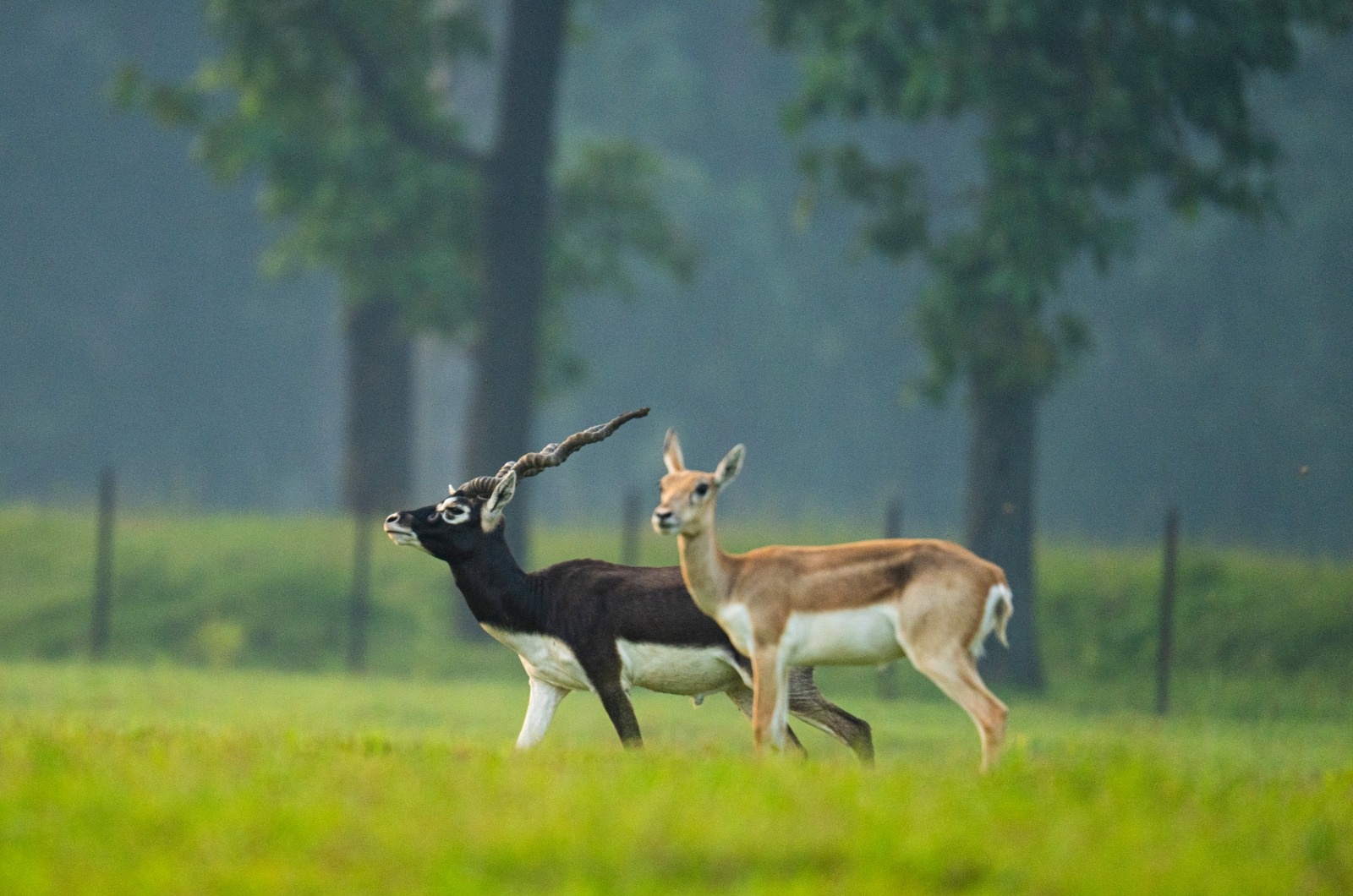
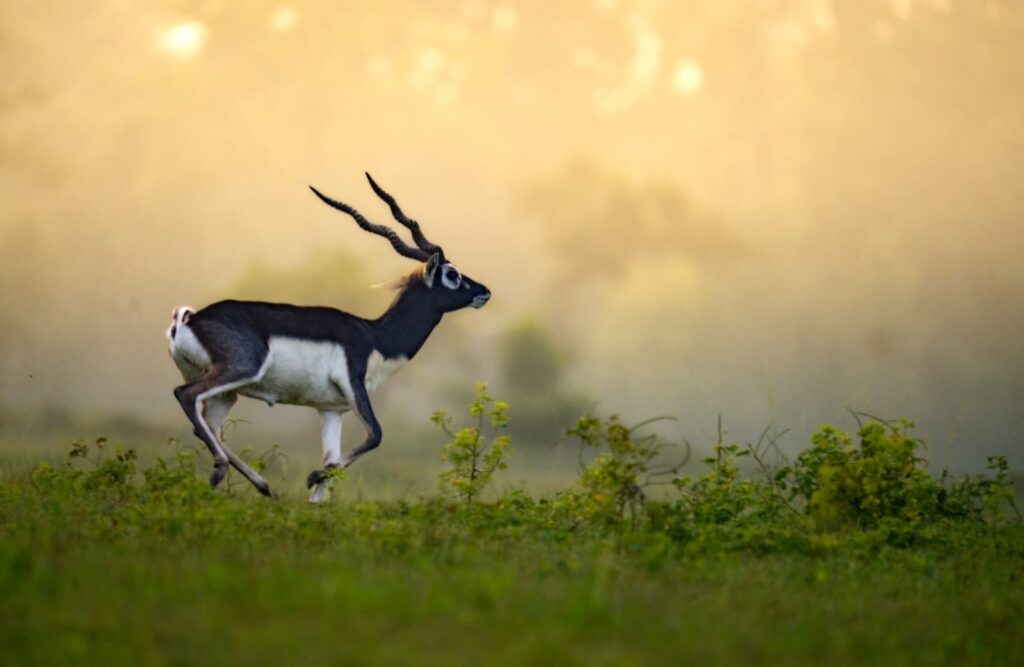
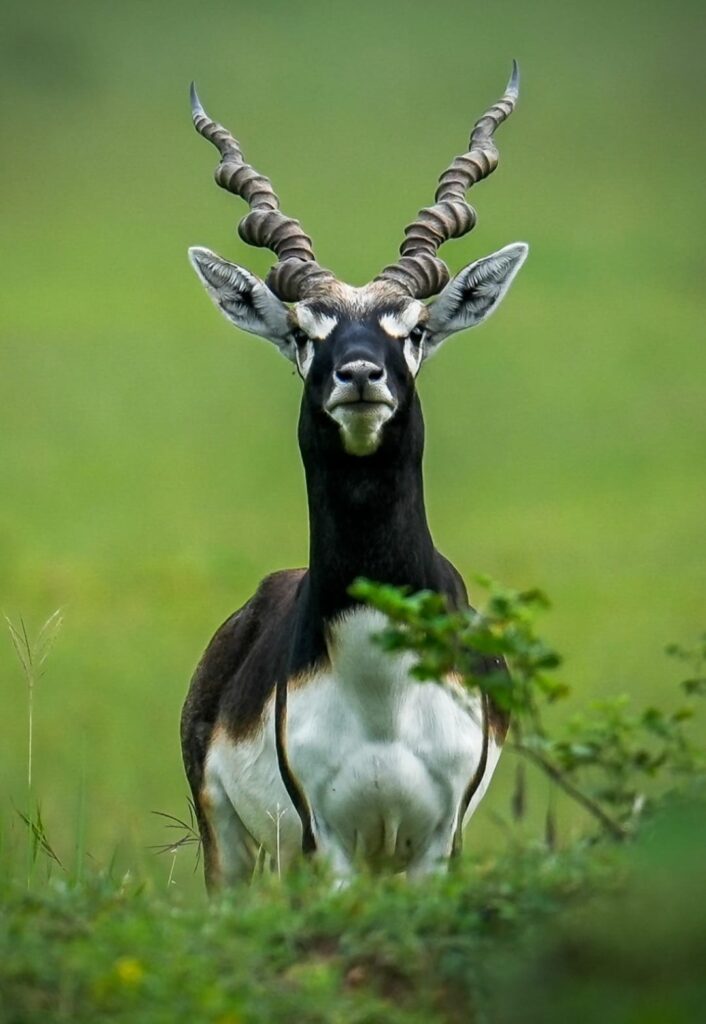
The Blackbuck is an endangered antelope native to the Indian subcontinent. The male Blackbuck is dark brown to black in color, possesses long spiral horns, and features a white underside. Female Blackbucks are light brown in color and generally lack horns.
This species inhabits open grasslands and is active during the day. Its primary diet consists of grasses and small plants. They stand approximately 74 to 84 centimeters tall. Males weigh between 20 and 57 kilograms, while females range from 20 to 33 kilograms. The male Blackbuck’s spiral horns—which can grow up to 75 centimeters in length—make them easily recognisable.
The Path Ahead and a National Message: The movements and playful leaps of the Blackbucks echoing through the Barnawapara Sanctuary serve as living testimony that if humans recognise their sensitivity and responsibility toward nature, lost heritage can indeed be restored.
This initiative will serve as a “Living Laboratory” for future generations, where they can learn to live in harmony with nature.
Chief Minister Vishnu Deo Sai believes that Prime Minister Narendra Modi’s ‘Mann Ki Baat’ has provided a global platform for our innovations. By integrating environmental conservation with the rural economy, the Government of Chhattisgarh is building a future where both humans and wildlife can thrive in safety.
Today, as we witness blackbucks frolicking freely amidst the open landscapes of the Barnawapara Sanctuary, it feels as though Nature herself is smiling and bestowing her blessings upon this commendable endeavor of Chhattisgarh.
This represents the pinnacle of Chhattisgarh’s pride—a brilliance that is now inspiring the entire nation.

YOU MAY LIKE THIS