Reg No. - CHHBIL/2010/41479ISSN - 2582-919X

Government officers, whether Central or State, belong to ECI during poll time, says Supreme Court
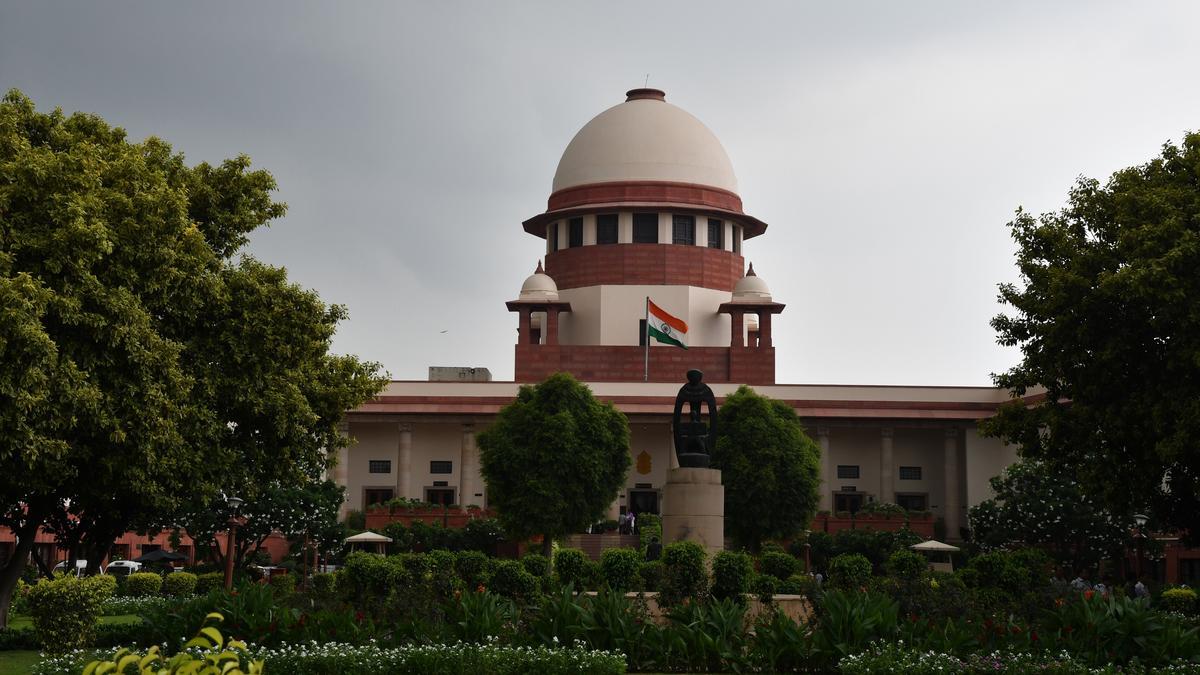
The Supreme Court disposed of the TMC petition, recording in its short order that the ECI must follow the April 13 circular in “letter and spirit”. File. – Photo Credit: Internet
The oral observations were made during the TMC’s petition alleging that the ECI was favouring the BJP by appointing more Central officers over State employees at counting centres in West Bengal
New Delhi : The Supreme Court on Saturday May 2, 2026 called it a “fallacy” nursed by the Trinamool Congress (TMC) party that West Bengal Government services’ employees owe allegiance to it and Central employees were loyal to or controlled by the political party ruling the Centre.
They are employees of the government and are part of the Election Commission of India (ECI) in the exercise of their electoral duties during the poll time.
Calcutta High Court concludes hearing on plea over EC’s order to depute central govt staff for counting
The oral observations were made while disposing of a petition filed by the TMC, which alleged that the ECI was deliberately skewing the playing field in favour of the rival Bharatiya Janata Party (BJP) by appointing more Central officers, disregarding State employees, at counting centres across West Bengal.
Justice P.S. Narasimha, heading a Special Bench, questioned the Trinamool Congress’ perceived need to have a “proportionate representation” of officers drawn from both Centre and State services at counting centres on May 4.
“This is yet another fallacy, that is those belonging to State government services have a different allegiance… These are but employees of the government. Give them some credit,” Justice Narasimha said.
No scope for wrongdoing at counting centres, Bengal CEO says as security forces maintain strict vigil
Justice Joymalya Bagchi, the associate judge on the Division Bench, said that once these officers were deployed for poll duties, they belonged to the ECI.
“All these persons, whether Central or State employees, are in the control of the ECI in the discharge of electoral duties,” Justice Bagchi said.
The special sitting, merely 48 hours before counting started in West Bengal, was convened on a petition filed by TMC challenging an April 13 circular issued by the State’s Additional Chief Electoral Officer directing that at least one counting supervisor and assistant at each counting table would be a Central government or Central Public Sector Unit employee.
The party, represented by senior advocate Kapil Sibal and advocate Sanchit Garga, said the circular was a “textbook example of an unjust executive action”.
“The TMC is the main opponent to the BJP, which admittedly runs and controls the Central government. It is obvious and well known that the Central government/Central PSU employees would be directly under the control of the Centre and likely to be susceptible to the suggestion and control of persons in the BJP. Such direct control of the BJP over them gives rise to an apparent risk of bias, influence, and partisan conduct during the process of counting of votes,” the TMC submitted.
Government officers, whether Central or State, belong to ECI during poll time, says Supreme Court
Sibal said the EC’s powers under Article 324 (power to conduct, superintend and control elections) of the Constitution cannot be a “wild horse”, giving them “freedom to do what they like and anytime they like”.
He read out from the April 13 circular, which said that in view of the “apprehensions expressed from various quarters regarding possible irregularities during the process of counting of votes”. He asked the court about the source of the EC’s “so-called apprehensions” that the counting process would be marred by irregularities, lack of transparency and integrity and disorderliness.
“Such ‘apprehensions’ raises a finger at the State government… There must be some data to back these ‘apprehensions’,” Mr. Sibal said.
Kapil Sibal said the TMC was informed of the April 13 circular only on April 29. He said the Central Government already had its employees in the role of ‘micro-observers’ at counting booths.
Justice Bagchi observed the ECI could take decisions on the ground based on its subjective satisfaction, and there was no question of conferring with political parties on calls that had to be taken.
West Bengal Assembly polls: 70,000 CAPF personnel to remain in State after polling
The senior advocate pointed out that the April 13 circular itself required the “random selection” of both State and Central governments’ employees for counting duty through a dedicated module containing personnel databases incorporated in the ECINet. He said the circular should be complied with strictly.
“You want ‘strict compliance’ of the challenged circular? You came here challenging the circular, and now you are saying ‘follow the circular’,” Justice Bagchi asked.
Senior advocate Dama Seshadiri Naidu, for the ECI, said the poll body was studiously following the circular. He said the Returning Officer, drawn from the State government services, had the overarching power to make a random selection of counting supervisors and counting agents from pools of Central and State employees.
“Each counting table would have the candidates’ agents of all the contesting political parties and election agents besides the counting supervisors and agents who are Class B and Class C category officers. The micro-observers would be picked from the Central services as a rule. The counting supervisors and counting agents are appointed either from the Central or the State services,” Justice Bagchi said.
The court disposed of the TMC petition, recording in its short order that the ECI must follow the April 13 circular in “letter and spirit”.

YOU MAY LIKE THIS