Reg No. - CHHBIL/2010/41479ISSN - 2582-919X

Supreme Court to Hear Rahul Gandhi, Opposition Leaders’ Plea Against CEC Gyanesh Kumar and Electoral Roll Revision on October 15
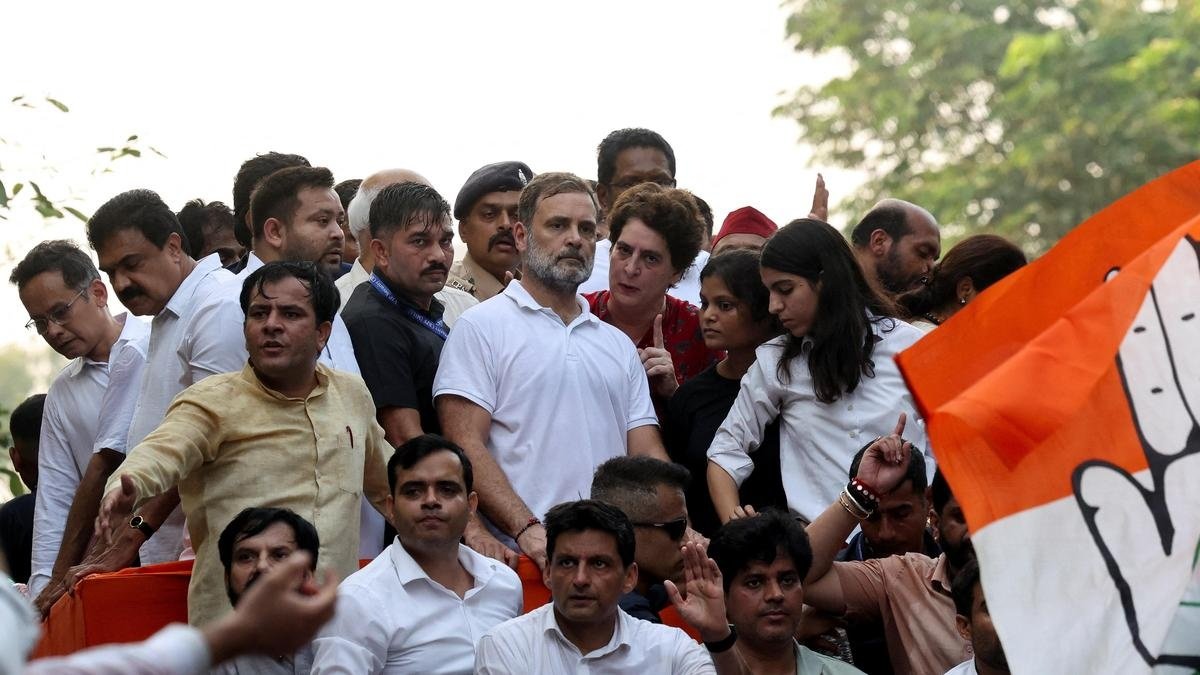
Leader of the Opposition in the Lok Sabha Rahul Gandhi, accompanied by Congress leader Priyanka Gandhi Vadra and other Opposition representatives, participates in a political gathering in New Delhi in this file photograph accompanying a report on Wednesday, October 14, 2026. The Supreme Court is scheduled to hear on October 15 a petition filed by Gandhi and other Opposition leaders seeking disclosure of Election Commission records and interim suspension of the Special Intensive Revision of electoral rolls.Photo: Reuters
Opposition seeks disclosure of Election Commission records and an interim suspension of the Special Intensive Revision, raising questions over electoral transparency, accountability and protection of eligible voters’ rights.
Key Highlights
- Supreme Court scheduled to hear the Opposition leaders’ petition on Thursday, October 15, 2026.
- Leader of the Opposition Rahul Gandhi and other Opposition leaders approached the apex court on October 12.
- Petition seeks disclosure of Election Commission files, agendas, minutes, official notings and objections recorded by Election Commissioners.
- Petitioners have requested an interim suspension of the Special Intensive Revision (SIR) pending judicial consideration.
- Opposition raises concerns about the protection of eligible voters and transparency in electoral roll revision.
- The Court’s consideration is expected to focus attention on the Election Commission’s procedures and the legal issues raised by the petitioners.
New Delhi: The Supreme Court is scheduled to hear on Thursday, October 15, 2026, a petition filed by Leader of the Opposition in the Lok Sabha Rahul Gandhi and other Opposition leaders concerning Chief Election Commissioner Gyanesh Kumar and the Election Commission’s Special Intensive Revision (SIR) of electoral rolls. Filed on October 12, the petition seeks comprehensive disclosure of official Election Commission records and an interim direction suspending the revision exercise until the issues raised before the Court are considered and adjudicated, with the petitioners arguing that judicial intervention is necessary to protect the rights of eligible electors.
The proceedings are expected to bring renewed attention to the relationship between electoral administration, institutional transparency and the constitutional protection of voting rights.
The petition raises questions about access to internal records relating to Election Commission decisions and the safeguards required during the revision of electoral rolls.
Opposition Demands Disclosure of Election Commission Records
A central demand in the petition concerns access to records maintained during the Election Commission’s decision-making process.
According to the information provided, Rahul Gandhi and the other petitioners have sought complete disclosure of files, agendas, minutes, official notings and objections recorded by Election Commissioners.
The request reflects the Opposition’s attempt to obtain a fuller account of the administrative deliberations underlying the decisions being challenged.
Such records may help establish what considerations informed particular decisions, whether objections were recorded and how the Commission arrived at its conclusions.
However, the scope of disclosure and the legal basis for obtaining the requested material remain matters for judicial consideration.
The filing of the petition does not itself establish wrongdoing by the Chief Election Commissioner or the Election Commission.
Petition Seeks Interim Suspension of Special Intensive Revision
The Opposition leaders have also requested an interim direction suspending the SIR exercise until the Supreme Court has examined the issues raised in the petition.
The request is significant because an interim suspension, if granted, could temporarily affect the conduct of the electoral roll revision process covered by the proceedings.
The petitioners have linked their request to the protection of eligible voters, arguing that the exercise should not continue while their legal concerns remain unresolved.
The Supreme Court will have to consider whether the circumstances justify interim intervention and, if so, what form such intervention should take.
An application for interim relief is not equivalent to a judicial finding that the revision exercise is unlawful.
Why the Special Intensive Revision Matters
Electoral rolls are fundamental to the conduct of elections because they determine which eligible citizens are registered to vote.
Revision exercises are intended to maintain the accuracy of these records, including through the verification of entries and the correction of errors.
At the same time, changes to electoral rolls can have serious consequences for citizens if eligible voters are incorrectly excluded or face difficulties establishing their registration status.
The legal and administrative challenge is therefore to maintain accurate electoral records while ensuring that eligible electors are treated fairly and provided with appropriate procedural safeguards.
The Opposition’s petition places these competing considerations before the judiciary.
Transparency and Accountability at the Centre of the Dispute
The demand for disclosure of Election Commission records introduces a broader institutional question concerning transparency in electoral administration.
The Election Commission exercises important constitutional responsibilities in supervising and conducting elections.
Public confidence in electoral processes depends on impartial administration, clear procedures and the availability of appropriate remedies where decisions are challenged.
The petitioners’ request for internal records may require consideration of the applicable legal rules governing official documents, disclosure and the functioning of constitutional institutions.
The Supreme Court’s examination of these questions could have implications beyond the immediate dispute.
Chief Election Commissioner Gyanesh Kumar Figures in Legal Challenge
The proceedings also place Chief Election Commissioner Gyanesh Kumar at the centre of the Opposition’s challenge.
The material supplied identifies him in connection with the petition but does not specify any particular judicial finding or established personal misconduct.
The case should therefore be understood as a pending legal challenge concerning electoral administration and the issues identified by the petitioners.
The Court will determine the legal relevance of the allegations and requests placed before it.
Any response submitted by the Election Commission or other respondents will also be important in understanding the complete dispute.
Supreme Court Hearing Could Shape the Next Stage
The October 15 hearing will provide an opportunity for the Supreme Court to consider the petitioners’ requests, including their demand for disclosure and interim protection.
Depending on the submissions and procedural status of the case, the Court may issue directions, seek responses, consider interim relief or schedule further proceedings.
No particular outcome can be assumed in advance.
The distinction between a petition being listed for hearing and the Court granting relief remains important.
Until an order is passed, the requests made by the Opposition leaders remain requests before the judiciary.
Electoral Integrity and Voters’ Rights Under Scrutiny
The dispute reflects the wider importance of ensuring that electoral administration is both accurate and fair.
Maintaining reliable electoral rolls is necessary for credible elections, but the process must also safeguard the interests of eligible citizens.
The Supreme Court’s consideration of the petition will take place against this institutional background.
For the Opposition, the immediate objective is to secure greater transparency and prevent potential harm to eligible voters while the legal questions are examined.
For the electoral administration, the proceedings raise questions about the procedures and legal framework governing revision exercises.
The outcome will depend on the evidence, statutory provisions and constitutional principles considered by the Court.
October 15 Hearing Draws National Attention
The forthcoming hearing is expected to attract attention because it involves the Leader of the Opposition, other political leaders, the Chief Election Commissioner and the administration of electoral rolls.
At its core, the dispute concerns how electoral decisions are scrutinised, how official records may be disclosed and what safeguards are necessary when voter registration processes are challenged.
The Supreme Court’s directions will determine the next stage of the proceedings.
For now, the central questions remain before the judiciary, and the legal validity of the challenged actions has not been decided on the basis of the information supplied.

YOU MAY LIKE THIS