Reg No. - CHHBIL/2010/41479ISSN - 2582-919X

Supreme Court to Form High-Powered Panel to Probe Alleged Police Excesses During Delhi Student Protest
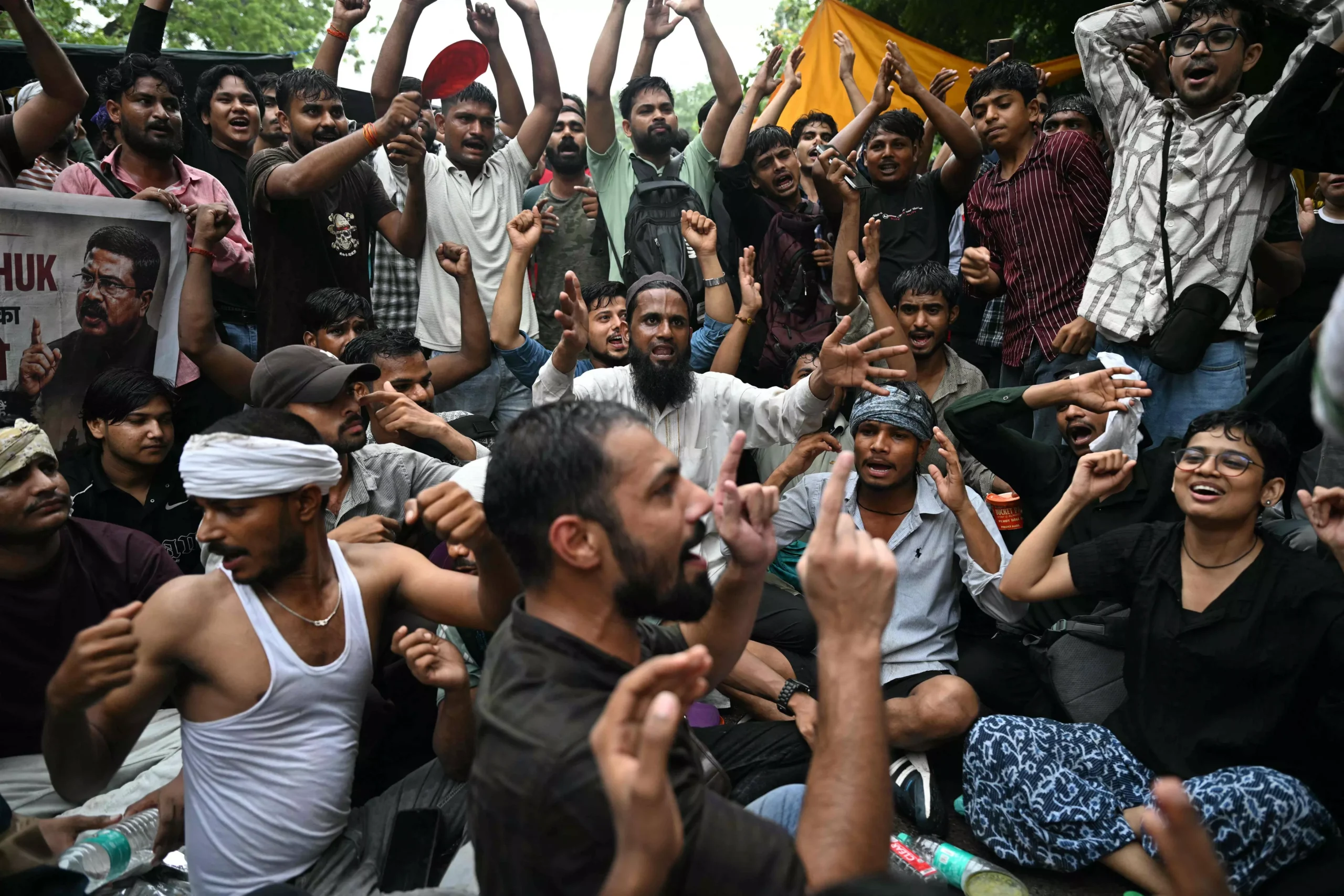
Student protesters raise slogans during the Cockroach Janta Party-led agitation in New Delhi on July 20, 2026. The Supreme Court has proposed a high-powered committee to examine allegations of police excesses, violence against security personnel and complaints made by female protesters during the Parliament march( File Photo)
Committee to include retired judges, a former DGP and an ex-CBI director; CCTV recordings and video footage of the July 20 Parliament march will be examined
Key Factors
- Panel to investigate alleged police excesses as well as violence against security personnel
- Complaints of sexual assault, online harassment and targeting of female protesters to be examined
- Supreme Court asks Centre for details of FIRs against students that may be quashed
- Bench says students have a future and their right to protest is protected under Article 19
- Centre claims more than 2,800 people with alleged serious criminal backgrounds were identified during the protest
The Supreme Court in New Delhi on Tuesday, August 18, 2026, said it would constitute a high-powered fact-finding committee to examine allegations of police excesses against student protesters as well as violence against security personnel during the July 20 march towards Parliament.
A three-judge Bench comprising Chief Justice of India Surya Kant and Justices Joymalya Bagchi and V Mohana said the proposed committee would include retired Supreme Court and High Court judges, a former Director General of Police, a former Central Bureau of Investigation director and other members.
The court said the formal order constituting the committee would be issued on Wednesday after the parties submitted suggestions regarding the remaining members. The panel would be provided with the facilities and material required to conduct an independent examination of the events.
The Bench said video footage and CCTV recordings related to the violence during the July 20 Parliament march would be handed over to the committee. The visual evidence is expected to help establish the sequence of events, the conduct of protesters and the nature of the force used by security personnel.
The inquiry will not be restricted to the allegations levelled against the police. It will also examine claims that security personnel were attacked or obstructed during the demonstration.
Particular attention will be paid to complaints made by female protesters, including allegations of sexual assault, online harassment and deliberate targeting during and after the protest. The committee will also consider allegations that vulnerable participants were victimised through social media.
The court’s decision came while it was hearing a batch of petitions arising from the agitation spearheaded by the Cockroach Janta Party. The petitions include allegations of excessive police action against students and counter-allegations of violence against police personnel.
Students’ Futures and the Right to Protest
During the hearing, the Bench asked Solicitor General Tushar Mehta to provide details of the First Information Reports registered against student protesters that could be considered for quashing.
The court indicated that it may invoke its extraordinary powers under Article 142 of the Constitution to ensure complete justice, although no final direction quashing the cases had been issued at the time of the hearing.
“It is the life of students which is at stake. We have to consider this. They have a future ahead. They have the right to protest under Article 19,” the Bench observed while responding to an argument that criminal cases should not be withdrawn unless the students tendered an apology.
The observation drew an important distinction between young people participating in a protest and individuals accused of using the demonstration as cover for serious violence. The court appeared unwilling to permit students’ educational and professional futures to be permanently damaged merely because they had joined an agitation.
At the same time, it did not suggest that people accused of grave offences should receive automatic protection. The proposed fact-finding exercise is intended to examine conduct on both sides and identify those responsible for violence.
Mehta told the court that the police had identified more than 2,800 alleged “anti-social elements” who had previously been involved in heinous offences and were believed to be responsible for violence during the July 20 protest.
That claim remains the police’s position and will require careful verification. The high-powered committee’s examination of footage, official records and individual complaints could help distinguish peaceful students from those accused of committing violence.
On August 3, the Supreme Court clarified that the expression “criminal antecedents” used in its earlier order concerning the release of student protesters referred only to people involved in grave and heinous offences.
The court had said that states could, in accordance with the law, close or withdraw cases against other students who did not fall within that category.
The clarification followed the Centre’s submission that it was serious about not pursuing cases against students who participated in protests over the NEET examination paper leak—including the July 20 Parliament march—provided they did not have serious criminal antecedents.
The Supreme Court had earlier underlined that police excesses or a lathi charge could not be justified merely because an agitation was taking place. It had observed that the right to peaceful protest was guaranteed, while also recognising the responsibility of demonstrators to remain within the boundaries of law and public order.
The July 20 march saw thousands of CJP supporters and student protesters gather in New Delhi over examination paper leaks and related demands. Clashes broke out when sections of the crowd attempted to move towards Parliament despite police restrictions. Security personnel used batons and tear gas to disperse the protesters.
The committee’s composition, mandate and reporting period are expected to become clear when the Supreme Court issues its formal order. Its findings could prove significant not only for determining responsibility for the July 20 violence but also for establishing safeguards governing police conduct and the handling of large student demonstrations in the future.

YOU MAY LIKE THIS