Reg No. - CHHBIL/2010/41479ISSN - 2582-919X

Rainwater Conservation Initiative to Transform Darri Village, Create Storage Capacity of 24.30 Lakh Litres
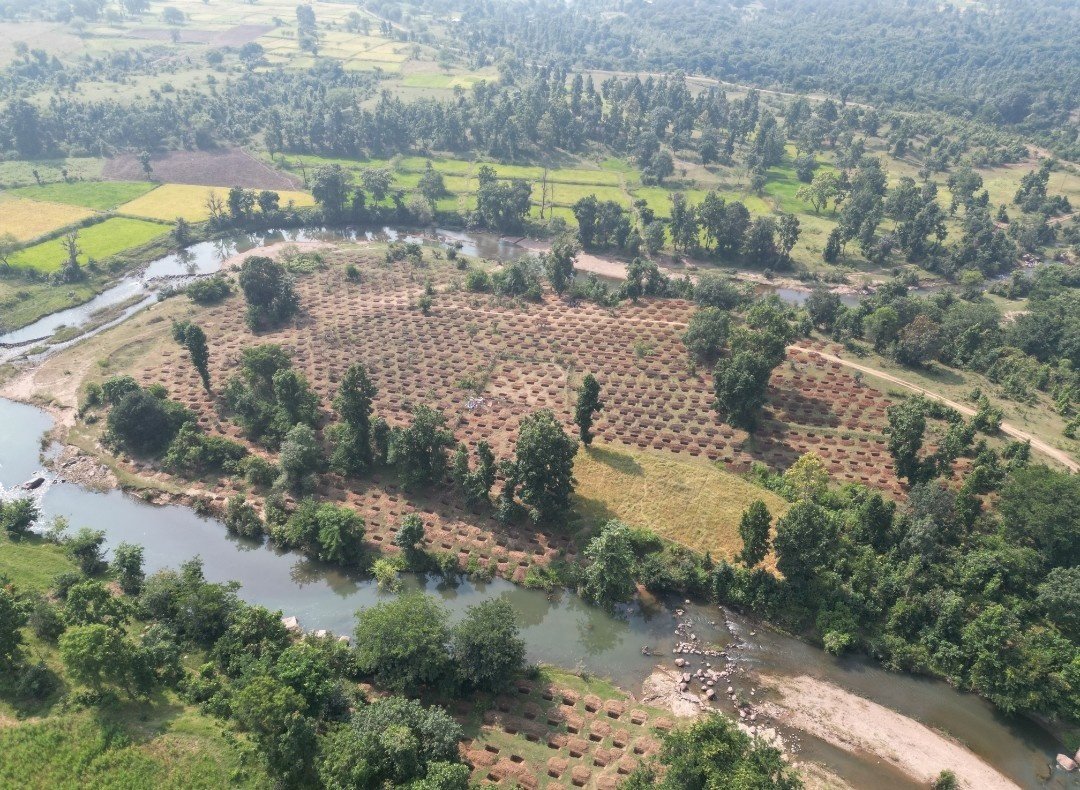
An aerial view of the nearly 3,000 staggered contour trenches developed at Dongri Tola under Darri Gram Panchayat in Marwahi block of Gaurela-Pendra-Marwahi district, Chhattisgarh, as reported on Monday, October 19, 2026. The rainwater conservation structures, with a combined holding capacity of approximately 24.30 lakh litres, are expected to improve groundwater recharge, reduce soil erosion and strengthen long-term water security for around 250 rural families. Photo: primelookindia.com via CGD/PR
Nearly 3,000 Staggered Contour Trenches Developed at Dongri Tola in Marwahi; Project Expected to Benefit 250 Rural Families, Recharge Groundwater and Strengthen Local Livelihoods
Key Highlights
- Nearly 3,000 staggered contour trenches constructed at Dongri Tola in Darri Gram Panchayat, Marwahi block.
- Water conservation structures have a combined rainwater-holding capacity of 24.30 lakh litres.
- Approximately 250 rural families expected to benefit from improved groundwater recharge and long-term water security.
- Construction activities have generated 3,166 person-days of employment for local workers.
- Around 150–160 labourers have been engaged daily during the construction work.
- Project aims to reduce soil erosion, retain moisture and support vegetation in the surrounding landscape.
Raipur: An ambitious rainwater conservation initiative in Dongri Tola, under Darri Gram Panchayat of Marwahi development block in Chhattisgarh’s Gaurela-Pendra-Marwahi district, has created the capacity to retain approximately 24.30 lakh litres of rainwater through the construction of nearly 3,000 staggered contour trenches. The project is expected to strengthen groundwater recharge, reduce soil erosion and improve long-term water availability for around 250 rural families who face difficulties accessing sufficient water during the summer months.
The initiative demonstrates how carefully planned water conservation measures can address environmental challenges while simultaneously generating employment and strengthening rural livelihoods.
Developed across sloping terrain, the trenches are designed to intercept rainwater that would otherwise flow rapidly downhill, allowing it to gradually infiltrate the soil.
By slowing surface runoff and increasing water retention, the structures are expected to improve soil moisture and support the regeneration of local vegetation.
Turning Rainwater Runoff Into a Valuable Rural Resource
Water scarcity in hilly and undulating regions is often aggravated by the rapid movement of rainwater down natural slopes.
During heavy rainfall, substantial quantities of water flow away before they can penetrate the soil, contributing to erosion and reducing opportunities for groundwater recharge.
In Dongri Tola, the construction of staggered contour trenches seeks to address this challenge through a practical land and water management technique.
The trenches have been arranged across the slopes in a staggered pattern, following the natural contours of the terrain.
This arrangement helps interrupt the downward movement of rainwater, reduce its velocity and encourage infiltration.
Instead of allowing rainwater to escape quickly through surface channels, the structures temporarily retain it and provide more time for absorption into the ground.
The approach is particularly relevant in rural areas where groundwater and traditional water sources play an important role in meeting household and agricultural requirements.
3,000 Contour Trenches Create Capacity for 24.30 Lakh Litres
According to the official information, approximately 3,000 staggered contour trenches have been developed in the Dongri Tola area.
Together, they provide a calculated rainwater retention capacity of 24.30 lakh litres, equivalent to 2.43 million litres.
This capacity represents an important step towards improving the local area’s ability to retain seasonal rainfall.
The actual quantity of water captured will depend on rainfall, soil conditions, maintenance and the frequency with which the trenches fill and drain.
The structures are intended to provide several environmental benefits, including improved soil moisture, reduced surface runoff and enhanced opportunities for groundwater recharge.
As rainwater gradually infiltrates the ground, it may also help sustain surrounding vegetation and support nearby natural water sources.
Around 250 Rural Families Expected to Benefit
The initiative is particularly significant for approximately 250 families living in and around Dongri Tola.
Residents in the area face water-related difficulties during the summer, when natural water sources can become depleted and groundwater availability may decline.
The new conservation structures are expected to improve the landscape’s ability to retain water during the monsoon and support groundwater recharge over time.
Improved recharge could eventually benefit nearby wells and other traditional sources of water.
However, the project does not directly guarantee a particular quantity of drinking water to each household. Its benefits will depend on how effectively retained rainwater contributes to local groundwater resources.
The longer-term objective is to reduce seasonal water stress and improve resilience against fluctuations in rainfall.
Water Conservation Project Generates 3,166 Person-Days of Employment
Beyond its environmental significance, the project has also created employment opportunities for rural workers.
Construction activities have generated a total of 3,166 person-days of employment, according to the district administration’s information.
Approximately 150 to 160 workers have been engaged daily during the construction phase.
The availability of local employment has provided income opportunities to rural households while enabling workers to participate in the improvement of their own community’s natural resources.
Such projects illustrate how conservation work can contribute to livelihood security, particularly in areas where seasonal employment opportunities may be limited.
By linking natural resource management with labour-intensive development activities, the initiative has supported both environmental objectives and the rural economy.
Soil Conservation and Groundwater Recharge Go Hand in Hand
The benefits of staggered contour trenches extend beyond their immediate capacity to retain rainwater.
In hilly landscapes, uncontrolled runoff can remove fertile topsoil, gradually reducing the land’s productivity and affecting vegetation.
By slowing water movement, contour trenches can help reduce the force of surface runoff and limit soil erosion.
The additional moisture retained in the soil may also improve growing conditions for grasses, shrubs, trees and other vegetation.
Over time, healthier vegetation can further support soil stability and help reduce erosion.
The combination of water retention, groundwater recharge and vegetation growth can therefore contribute to the broader ecological improvement of the area.
Scientific Water Management Offers Long-Term Benefits
Staggered contour trenches are widely used in watershed management because they work with the natural shape of the landscape.
Unlike large storage reservoirs, these relatively small structures are distributed across slopes to capture runoff close to where rainfall occurs.
Their effectiveness depends on appropriate site selection, spacing, trench dimensions and maintenance.
The Dongri Tola initiative reflects an effort to apply this approach at the village level, where water conservation can have a direct relationship with agricultural activity, vegetation and household needs.
Regular inspection and maintenance will be important to ensure that the trenches continue functioning effectively, particularly after periods of heavy rainfall.
The initiative’s longer-term success can be assessed through changes in soil moisture, groundwater levels, vegetation cover and seasonal water availability.
Strengthening Rural Livelihoods Through Environmental Protection
Water conservation and livelihood improvement are closely connected in rural communities.
Reliable soil moisture and improved groundwater recharge can create more favourable conditions for farming, livestock-related activities and the maintenance of local vegetation.
The construction phase has already provided employment, while the environmental benefits are expected to emerge progressively as the structures capture seasonal rainfall.
For rural families, the potential advantages include reduced vulnerability to seasonal water shortages and improved conditions for agricultural and other livelihood activities.
The project also demonstrates that environmental protection need not be treated separately from rural development.
Well-planned conservation measures can contribute to both objectives when they respond to local geographical conditions and community requirements.
Dongri Tola Initiative Offers a Model for Sustainable Village Development
The rainwater conservation initiative in Dongri Tola provides an example of how decentralised water management can help address environmental and livelihood challenges.
With nearly 3,000 contour trenches, a combined retention capacity of 24.30 lakh litres and 3,166 person-days of employment generated, the project brings together three important development priorities: water security, ecological conservation and rural employment.
For the approximately 250 families expected to benefit, the initiative represents an opportunity to strengthen long-term resilience against seasonal water scarcity.
Its future impact will depend on rainfall patterns, effective maintenance and the extent to which the structures improve groundwater recharge.
Nevertheless, the work marks a significant effort to conserve a valuable natural resource and build a more sustainable future for the rural community.
An aerial video captures the extensive network of nearly 3,000 staggered contour trenches constructed at Dongri Tola under Darri Gram Panchayat in Marwahi block of Chhattisgarh’s Gaurela-Pendra-Marwahi district, as reported on Monday, October 19, 2026. Developed to conserve approximately 24.30 lakh litres of rainwater, the initiative aims to improve groundwater recharge, prevent soil erosion and provide long-term water security for around 250 rural families. The construction work has also generated 3,166 person-days of employment for local villagers. Video: primelookindia.com via CG/DPR

YOU MAY LIKE THIS