Reg No. - CHHBIL/2010/41479ISSN - 2582-919X

From Guns to the Ramp: Nine Surrendered Maoist Women Step Into a New Life-By-Kumar Bahukhandi
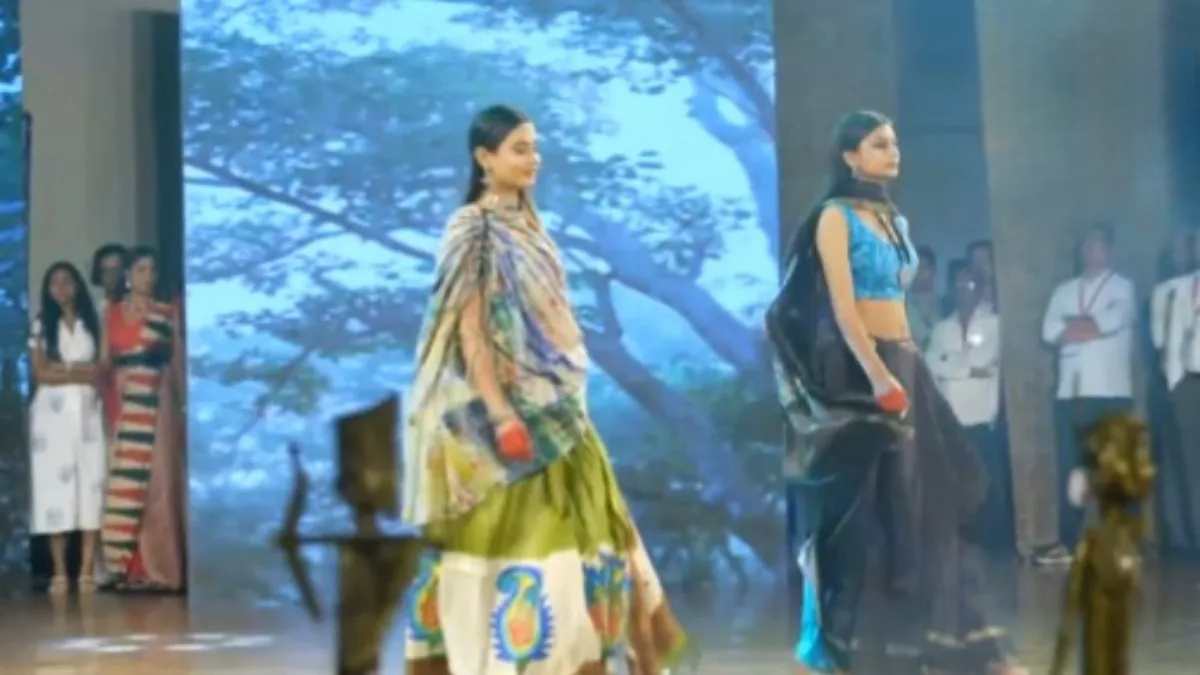
From forests to a new life: Surrendered women formerly associated with the Maoist movement walk the ramp in traditional handloom and Kosa silk attire during the state-level National Handloom Day programme at Pandit Deendayal Upadhyay Auditorium in Raipur, Chhattisgarh, on Friday, August 7, 2026. Nine surrendered women — eight from Sukma and one from Bijapur — participated in the presentation as they rebuild their lives after leaving the path of violence-Photo Credit:primelookindia.com
At a National Handloom Day programme in Raipur on Friday, August 7, nine women who had left the Maoist movement appeared on the ramp in traditional handloom and Kosa silk — offering a striking picture of rehabilitation and a changing Bastar
There are moments when a photograph tells a much larger story than the event it records. In Raipur on Friday, August 7, 2026, nine women walked onto a fashion ramp wearing colourful handloom and Kosa silk garments. To an ordinary viewer, it could have been another presentation celebrating Chhattisgarh’s traditional textiles. But the lives of the women on that stage gave the occasion an altogether different meaning.
All nine had once been associated with the Maoist movement in the conflict-affected forests of Bastar. Eight were from Sukma and one from Bijapur. Having surrendered and stepped away from the path of armed violence, they were now appearing publicly before an audience at the Pandit Deendayal Upadhyay Auditorium in Raipur, during the state-level weavers’ conference organised on National Handloom Day.
The contrast was powerful. Women whose earlier lives had been spent in forests under the shadow of guns were now walking confidently under stage lights, dressed in fabrics representing the culture and craftsmanship of Chhattisgarh.
They also walked alongside Femina Miss India Chhattisgarh Anushka Son, bringing them into a setting far removed from the world they had known before surrender.
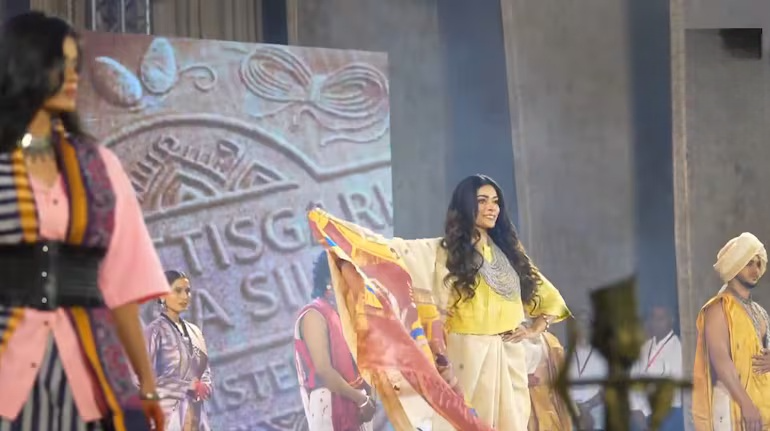
Participants take to the ramp in traditional handloom creations during the National Handloom Day programme at Pandit Deendayal Upadhyay Auditorium in Raipur on Friday, August 7, 2026. The event featured nine surrendered women Maoists from Sukma and Bijapur, highlighting their journey towards rehabilitation, dignity and a life away from violence-Photo Credit:primelookindia.com
Yet it would be a mistake to view the occasion merely as an unusual fashion show. Behind the colourful clothes and applause was a more serious story — of women attempting to reclaim ordinary lives after leaving an armed movement.
Among them was 22-year-old Punem Jyoti of Elmagunda village in Sukma’s Chintagufa area, who had surrendered in Hyderabad in December. The experience of appearing on a fashion ramp was something she had hardly imagined during her earlier life.
“I never thought something like this would happen in my life,” Jyoti said, reflecting on the transformation she had experienced since leaving the Maoist movement.
Another 28-year-old surrendered woman, who did not wish to be identified, recalled how unfamiliar such an occasion was to her.
“When we were in the forest, we had never seen such things,” she said.
Her previous association with the Maoists’ cultural wing had given her some experience of performing before people, which helped her face an audience during the ramp walk. But her most significant observation had little to do with fashion.
“We are happy that, after renouncing violence, we are living a peaceful and dignified life,” she said.
Those words perhaps explain the real importance of what happened in Raipur that Friday.
Beyond the Ramp, the Larger Story of Rehabilitation
For decades, large parts of Bastar have lived through Maoist violence, security operations and the social and economic consequences of prolonged conflict. Women have been part of that history too, although their experiences frequently receive less attention.
Some entered Maoist organisations when they were very young. Years spent in remote forest areas can leave them with limited formal education, few recognised employment skills and little familiarity with life outside the organisation.
Surrender therefore cannot be regarded as the end of the process. In many respects, it is only the beginning.
A person may put down a weapon in a single day, but building a new life can take years.
That is what gives the Raipur event significance beyond its visual appeal. The women were not being presented merely as former Maoists. For a few hours at least, society was seeing them in another role — as individuals capable of learning, participating, working and becoming economically independent.
Some of the surrendered women are now associated with social organisations and are receiving training and learning new skills. Such efforts are crucial because rehabilitation will succeed only when the decision to abandon violence is accompanied by a realistic alternative.
A former cadre without education, employment or social acceptance remains vulnerable. A former cadre equipped with skills, a livelihood and dignity has a far stronger reason never to return to the forest.
Handloom Becomes Part of the Message
There was also symbolism in the clothes the women wore.
Chhattisgarh’s handloom and Kosa traditions represent generations of craftsmanship and provide livelihoods to artisan communities. By bringing surrendered women onto the stage in locally produced textiles, the programme connected rehabilitation with something deeply rooted in the state’s cultural identity.
It also offered another image of Bastar.
For years, national perceptions of the region have often been shaped by encounters, landmines, security camps and casualty figures. Yet Bastar is equally a land of extraordinary tribal traditions, art, forests, textiles and communities whose lives cannot be defined solely by insurgency.
The women walking the ramp therefore represented more than their individual journeys. Their presence suggested what a post-conflict Bastar could eventually look like — a region in which people previously caught in cycles of violence find space in education, employment, enterprise and cultural life.
But symbolism must eventually translate into opportunity.
Fashion shows and public programmes can help restore confidence and reduce social stigma, but rehabilitation cannot survive on symbolic gestures alone. Women leaving extremist organisations require sustained vocational training and, more importantly, actual employment.
Government schemes, private employers, social organisations and local communities all have a role to play. Training should be connected with viable livelihoods in areas such as handloom, handicrafts, agriculture, forest produce, hospitality and other locally sustainable sectors.
Economic independence is particularly important for women. It provides not only income but also the ability to make decisions about their own future.
The success of rehabilitation should therefore not be measured merely by how many people surrender or how many weapons are deposited before authorities. The real test comes several years later: Did the person who surrendered find a livelihood? Was she accepted by society? Could she educate her children? Did she acquire the confidence to live independently? And, most importantly, did she have sufficient reason never to return to violence?
A Second Chance Must Become a Lasting One
The history of Maoist violence in Chhattisgarh cannot and should not be romanticised. Thousands of families, civilians and security personnel have paid a heavy price during decades of conflict. Rehabilitation does not require society to forget that history.
But ending an insurgency requires more than defeating armed groups in the forests. It also requires creating conditions in which those who abandon violence can permanently return to democratic and social life.
Society therefore has a responsibility alongside the government. If people who surrender are permanently branded by their past and denied employment or acceptance, rehabilitation becomes considerably harder. Accountability under law and an opportunity for reform can exist together.
This is what makes the nine women on the Raipur ramp worth remembering.
On Friday, August 7, 2026, they walked only a short distance across a stage at Pandit Deendayal Upadhyay Auditorium. In another sense, however, the distance was enormous.
It was a journey from the forests of Bastar to the heart of the state capital; from an underground existence to a public stage; from being identified with a gun to being recognised as women trying to rebuild their lives.
The applause eventually stopped. The stage lights were switched off. The National Handloom Day programme ended.
Their real journey did not.
For these nine women, the challenge now is to turn that moment on the ramp into something permanent — skills, employment, economic independence and acceptance.
And perhaps that is the strongest message emerging from their appearance in Raipur: putting down the gun opens the door to peace, but dignity, livelihood and social acceptance are what can ensure that the door to violence remains closed forever.

YOU MAY LIKE THIS