Reg No. - CHHBIL/2010/41479ISSN - 2582-919X

BJP Condemns Congress’ Vande Mataram Stand, Plans Nationwide Campaign
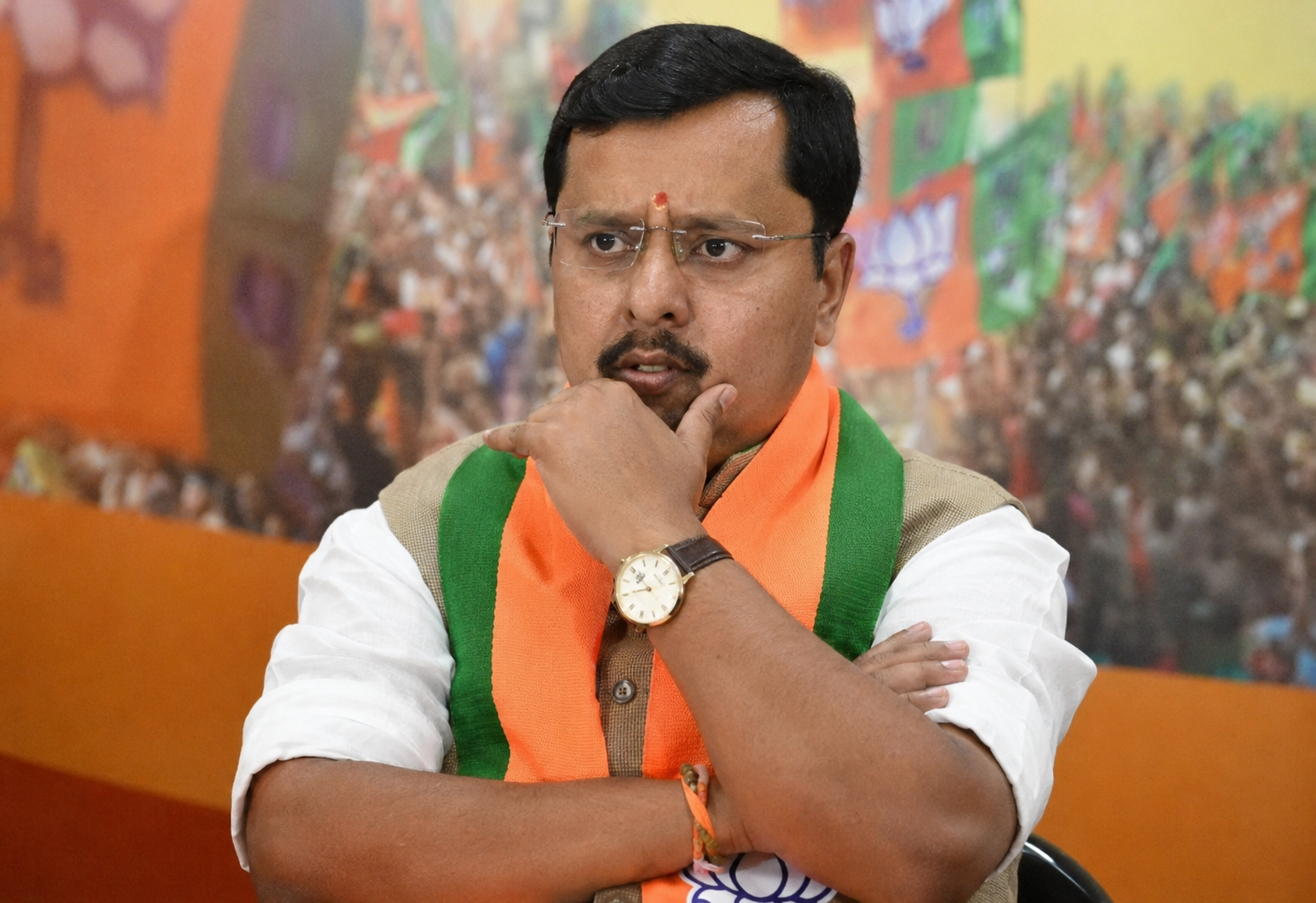
BJP national president Nitin Nabin, who chaired the party’s national office-bearers meeting in New Delhi on Saturday, August 22, 2026, where a resolution on Vande Mataram was adopted. Photo: BJP/Social Media
Party resolution rejects Congress decision to retain two-stanza rendition at its programmes
Key Highlights
- BJP says there can be no compromise on the honour and historical legacy of Vande Mataram
- Resolution follows Congress Working Committee’s August 19 decision to retain its 1937 position
- BJP plans a nationwide campaign explaining the history and significance of the national song
- Party president Nitin Nabin says the issue goes beyond party politics and concerns India’s freedom struggle
- Parliament recently extended legal protection against intentional disruption of Vande Mataram
New Delhi : The Bharatiya Janata Party on Saturday, August 22, 2026, stepped up its political confrontation with the Congress over Vande Mataram, adopting a resolution condemning the opposition party’s decision to continue singing only the first two stanzas of the national song at its programmes.
The resolution was adopted at a meeting of the BJP’s newly appointed national office-bearers in New Delhi, chaired by party president Nitin Nabin. The BJP also announced plans for a nationwide campaign aimed at taking the history, meaning and significance of Vande Mataram to people across the country.
The move follows the Congress Working Committee’s August 19 decision reaffirming its 1937 position under which the first two stanzas of Vande Mataram are sung at Congress functions.
Nabin said the BJP “strongly condemns and unequivocally opposes” the Congress decision and would resist attempts to subject the national song to what the party described as communal pressure, political appeasement or vote-bank considerations.
He maintained that a political party’s resolution could not supersede constitutional arrangements or legislation enacted by Parliament.
BJP Links Campaign to Freedom Struggle Legacy
The BJP sought to place the controversy within the wider historical context of India’s freedom movement, arguing that Vande Mataram was not merely a ceremonial song but one of the powerful expressions of resistance to British rule.
The party said its campaign would particularly reach out to younger Indians with information about the complete song, its six stanzas and its association with the independence movement.
Nabin said the BJP was committed to protecting the “honour, dignity, heritage and national character” of the complete Vande Mataram. The resolution also invoked Mahatma Gandhi’s association with the song and its role as an anti-colonial rallying cry.
The political dispute has acquired additional significance following Parliament’s recent amendment to the Prevention of Insults to National Honour Act, 1971.
The amendment, enacted on August 6, extends to the national song the protection already provided to the national anthem. It makes intentionally preventing the singing of either the National Anthem or National Song, or deliberately disturbing an assembly engaged in such singing, punishable with imprisonment of up to three years, a fine, or both.
The legislation, however, concerns intentional prevention or disruption of the singing of Vande Mataram and does not prescribe that all six stanzas must be sung at every function.
The BJP resolution came during the first major meeting of the party’s newly constituted national team under Nabin. Apart from the Vande Mataram issue, party leaders discussed preparations for forthcoming Assembly elections, strengthening grassroots organisation and communicating government programmes to voters.
For the BJP, the dispute is now set to move beyond the exchange of statements between the two parties. By announcing a nationwide public campaign, the party is seeking to turn the debate over Vande Mataram into a broader political and historical narrative centred on nationalism, the freedom struggle and national symbols.

YOU MAY LIKE THIS