Reg No. - CHHBIL/2010/41479ISSN - 2582-919X

Integrated Farming Key to Raising Bastar Farmers’ Incomes: Siddharth Komal Pardeshi
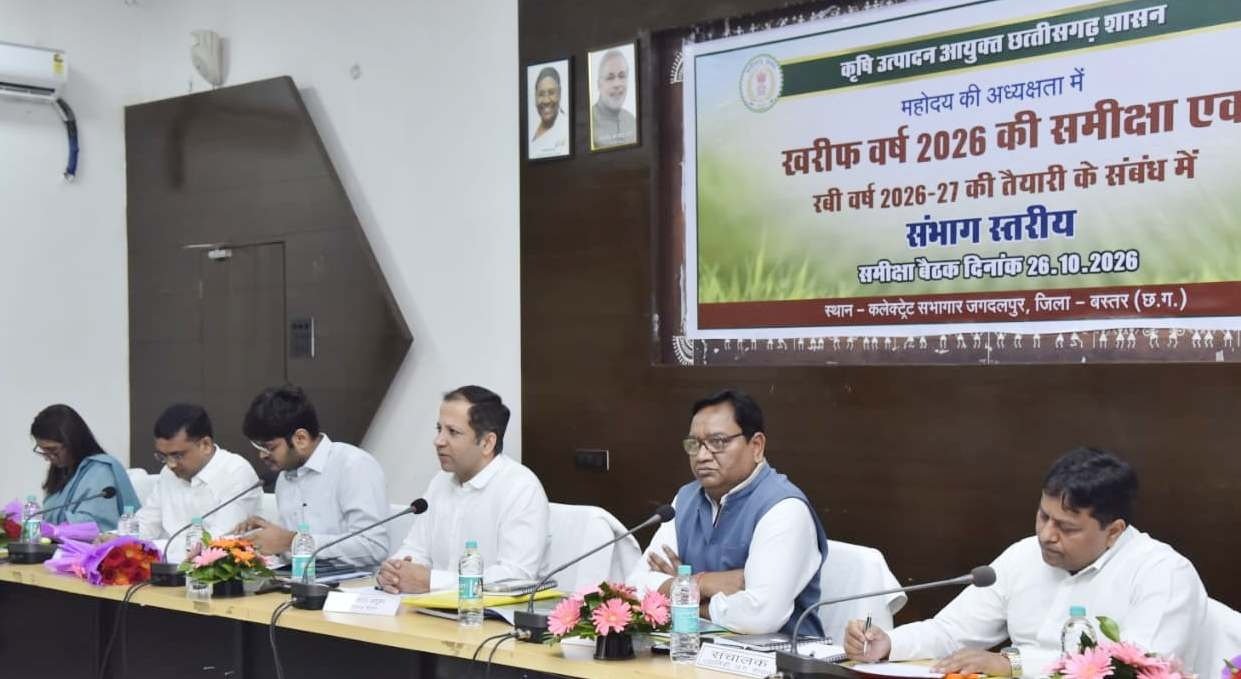
Agriculture Production Commissioner Siddharth Komal Pardeshi chairs the Bastar divisional meeting on the Kharif review and preparations for Rabi 2026–27 at the Collectorate conference hall in Jagdalpur on Monday, October 26, 2026. Photo: primelookindia.com via CG/DPR.
Agriculture Production Commissioner calls for coordinated support for farming, horticulture, livestock and fisheries at divisional review meeting in Jagdalpur.
Key Highlights
- Integrated farming proposed to expand rural income sources and provide year-round livelihood opportunities.
- Departments directed to coordinate training, technical assistance, scheme benefits and marketing support.
- Crop diversification, water conservation and locally suitable livelihood models receive priority.
- Rabi preparations reviewed, with emphasis on input availability, agricultural credit and action against counterfeit farm supplies.
Jagdalpur: Agriculture Production Commissioner Siddharth Komal Pardeshi on Monday October 26, 2026 has called for promoting integrated farming across Bastar to improve farmers’ incomes, strengthen rural livelihoods and make agriculture more profitable. Chairing a divisional meeting to review the Kharif season and preparations for Rabi 2026–27, he emphasised linking crop cultivation with horticulture, livestock rearing, fisheries, poultry and other income-generating activities suited to local conditions.
Pardeshi said developing multiple sources of income could help rural families secure employment and earnings throughout the year while reducing their dependence on a single crop. A diversified farming system could also help households better withstand fluctuations in weather and market prices.
He asked officials to frame plans around Bastar’s geography, natural resources and existing agricultural practices, enabling farmers to improve returns without substantially increasing production costs.
Linking Farming with Livestock and Fisheries
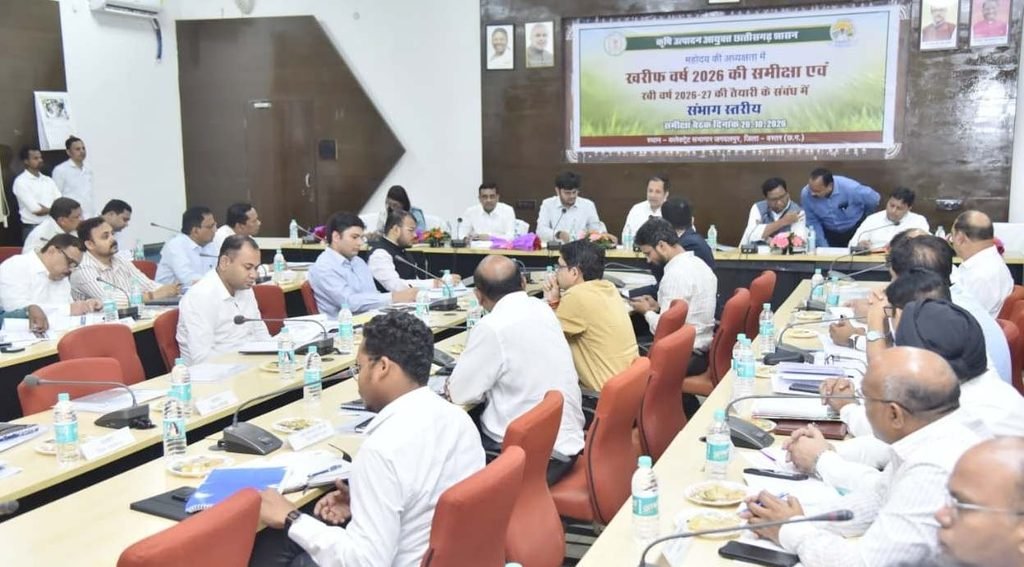
Officials participate in the Bastar divisional agriculture review meeting in Jagdalpur on Monday, October 26, 2026, where integrated farming, crop diversification and preparations for the forthcoming Rabi season were discussed. Photo: primelookindia.com via CG/DPR.
Explaining the benefits of an integrated approach, Pardeshi encouraged officials to help farmers combine conventional cultivation with vegetable production, fruit crops, animal husbandry and fisheries, depending on the resources available to each household.
Integrating livestock with farming could improve the availability of organic manure, while crop residues could serve as animal feed. Where water availability permits, farm ponds could support fish rearing, with adjoining land used for vegetable cultivation.
He said such arrangements would allow farmers to make better use of land, water and agricultural residues while developing several income streams within the same farming unit.
Livelihood Models Suited to Small Farmers
Pardeshi stressed the need for practical livelihood models that reflect local requirements and remain accessible to small and marginal farmers.
He called for greater attention to improved seeds, appropriate farm machinery, balanced fertiliser use, water conservation and crop diversification. Farmers should also receive guidance on aligning production with market demand.
Limited landholdings, he indicated, need not prevent households from diversifying their activities if suitable technical support and coordinated assistance are available.
Departments Asked to Coordinate Support
The Agriculture Production Commissioner directed agriculture, horticulture, livestock development, fisheries and rural development departments to work together so that farmers receive assistance according to their needs.
Training, technical guidance, improved production practices and access to markets should form part of this coordinated approach. He also asked officials to work closely with scientists from Krishi Vigyan Kendras and implement the Khet Bachao campaign with full commitment.
Highlighting Bastar’s natural resources, Pardeshi pointed to its greenery, grazing areas and groundwater resources as opportunities for expanding livestock and fisheries activities. He said rising local demand for meat and eggs should be considered while planning livelihood interventions.
He also directed that essential equipment, including aerators where required for shrimp farming projects, be incorporated into project planning from the outset.
Crop Diversification and Rabi Readiness
Director of Agriculture Rahul Dev presented proposals on crop diversification, emphasising pulses, oilseeds and millets as alternatives to paddy. Officials were also asked to encourage suitable oil palm cultivation and intercropping, backed by necessary agricultural input assistance.
The meeting reviewed arrangements for seeds, fertilisers and other inputs for the forthcoming Rabi season, along with access to short-term agricultural credit.
Pardeshi called for implementing an online fertiliser management system for the season and stressed strict legal action against the sale of substandard or counterfeit fertilisers, seeds and pesticides.
Bastar Commissioner Calls for Practical Action Plans
Bastar Divisional Commissioner Doman Singh asked departments to prepare and implement coordinated action plans that make effective use of local resources. He emphasised strengthening both farming and allied activities to improve the economic position of farmers and rural households.
District Collectors shared details of agricultural innovations being undertaken in their respective districts.
The meeting was attended by Director of Animal Husbandry Chandrakant Verma, Seed Development Corporation Managing Director Ajay Agrawal, Director of Horticulture Lokesh Kumar and Director of Fisheries Narayan Nag. Senior representatives of the Cooperation Department, Markfed, Mandi Board and Apex Bank, along with district panchayat chief executive officers and divisional and district officials, also participated.

YOU MAY LIKE THIS