Reg No. - CHHBIL/2010/41479ISSN - 2582-919X

‘Serial Practitioner of Terrorism’: Jaishankar Hits Back at Pakistan at UN
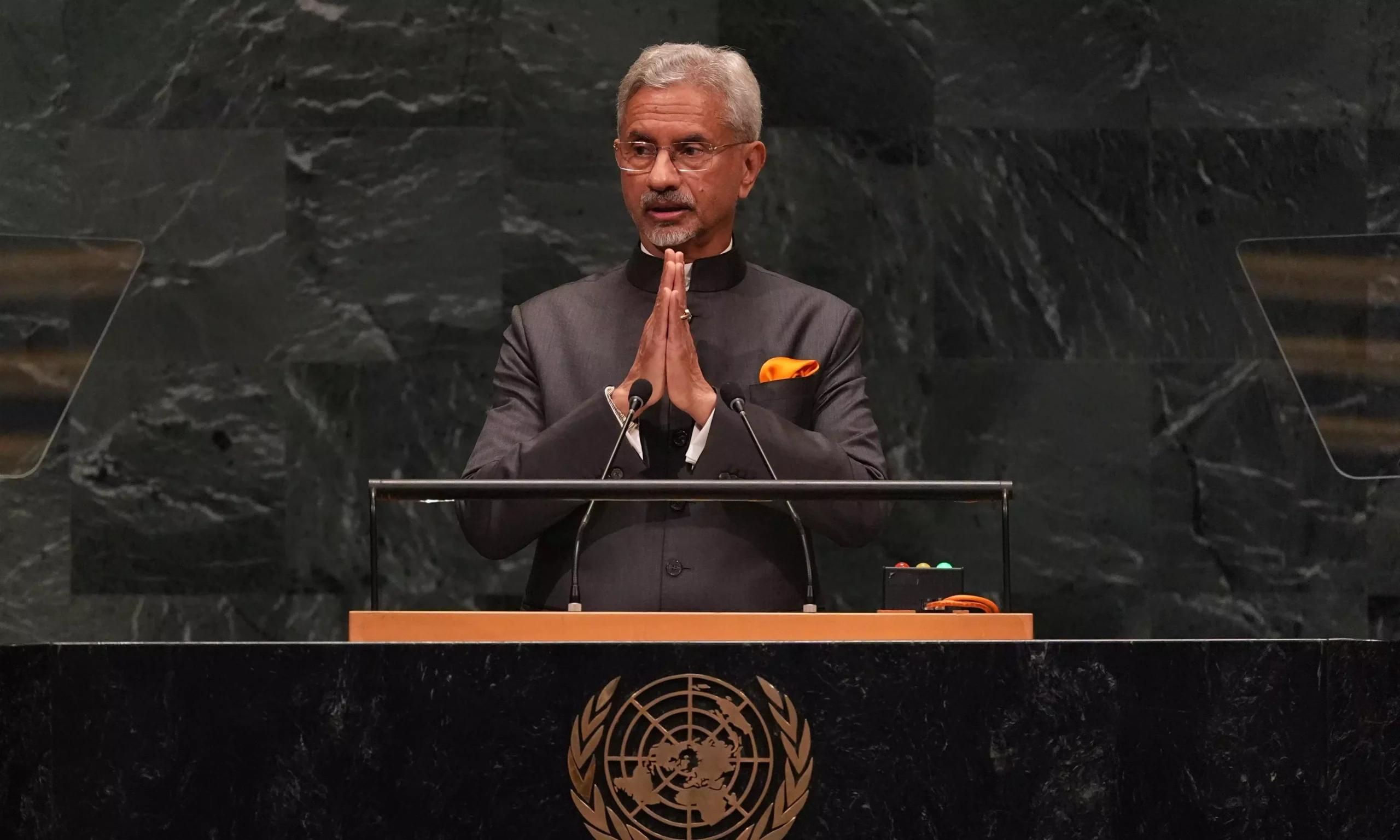
External Affairs Minister S Jaishankar addresses the General Debate of the 81st session of the United Nations General Assembly at UN headquarters in New York on Saturday, September 26, 2026. Photo: AP/Heather Khalifa
External Affairs Minister tells UN General Assembly that attempts to normalise terrorism or claim immunity from its consequences “will not stand”; asserts India’s right to defend itself
Key Highlights
- S Jaishankar delivers India’s national statement at the 81st UN General Assembly in New York.
- Without naming Pakistan, he refers to a “serial practitioner of terrorism” that had “misrepresented facts” before the Assembly.
- Says attempts to normalise terrorism and escape its consequences “will not stand”.
- Asserts that India will exercise its right to defend itself against terrorism.
- Calls for accountability for governments involved in state-sponsored, cross-border terrorism.
- Urges continued zero tolerance towards terrorism, including action against terror financing.
- Describes attacks on commercial shipping and seafarers using international waterways as unacceptable.
- His remarks follow Pakistan Prime Minister Shehbaz Sharif’s UNGA address a day earlier.
United Nations, September 26, 2026: External Affairs Minister S Jaishankar delivered a sharp response to Pakistan at the United Nations General Assembly on Saturday, declaring that attempts by a “serial practitioner of terrorism” to normalise terrorism and seek immunity from its consequences would not succeed.
Jaishankar did not name Pakistan or Prime Minister Shehbaz Sharif during the remarks, but his comments came a day after Sharif addressed the UNGA and raised Kashmir, the 2025 India-Pakistan military confrontation and the Indus Waters Treaty.
“Yesterday, a serial practitioner of terrorism misrepresented facts before this Assembly. Arguments were invoked to normalise terrorism and claim immunity from its consequences. That will not stand,” Jaishankar said.
He followed the statement with an unequivocal assertion of India’s position on terrorism.
“Our right to defend ourselves against terrorism will be exercised,” he said, adding that friendship and goodwill could not coexist with terrorism and that it was for the perpetrator of terrorism to change its ways.
Zero Tolerance Towards Terrorism
Jaishankar told the General Assembly that terrorism remained a persistent threat to international peace and said the challenge became a direct affront to the global order when terrorism was state-sponsored and pursued with a cross-border purpose.
He called for governments involved in such practices to be held accountable and urged the international community not to dilute its zero-tolerance approach.
The External Affairs Minister also placed particular emphasis on the financial networks behind terrorism, saying terror financing should be exposed and countered.
His remarks followed Sharif’s address on Friday in which the Pakistan Prime Minister spoke about the May 2025 military confrontation between India and Pakistan and again raised Kashmir. Sharif also credited US President Donald Trump with what he described as a “timely intervention” during the confrontation.
Beyond India-Pakistan relations, Jaishankar used his UN address to draw attention to conflicts affecting international trade, energy security and civilians.
He described attacks targeting commercial shipping and seafarers travelling through international waterways as unacceptable, noting the consequences of continuing instability from the Red Sea and Black Sea to the Gulf.
Jaishankar called for restraint and de-escalation and stressed the importance of protecting civilians and maintaining the uninterrupted movement of energy and commerce.
He also highlighted India’s role in humanitarian and development assistance, pointing to medical supplies provided to conflict and disaster-affected regions and India’s development partnerships across the Global South.
At the centre of his UNGA intervention, however, was India’s message on cross-border terrorism: states sponsoring or facilitating terrorism must face accountability, and New Delhi would continue to assert its right to protect itself against terrorist threats.

YOU MAY LIKE THIS