Reg No. - CHHBIL/2010/41479ISSN - 2582-919X

Cities Must Be Developed According to Their Character and Future Needs: Sonmoni Borah
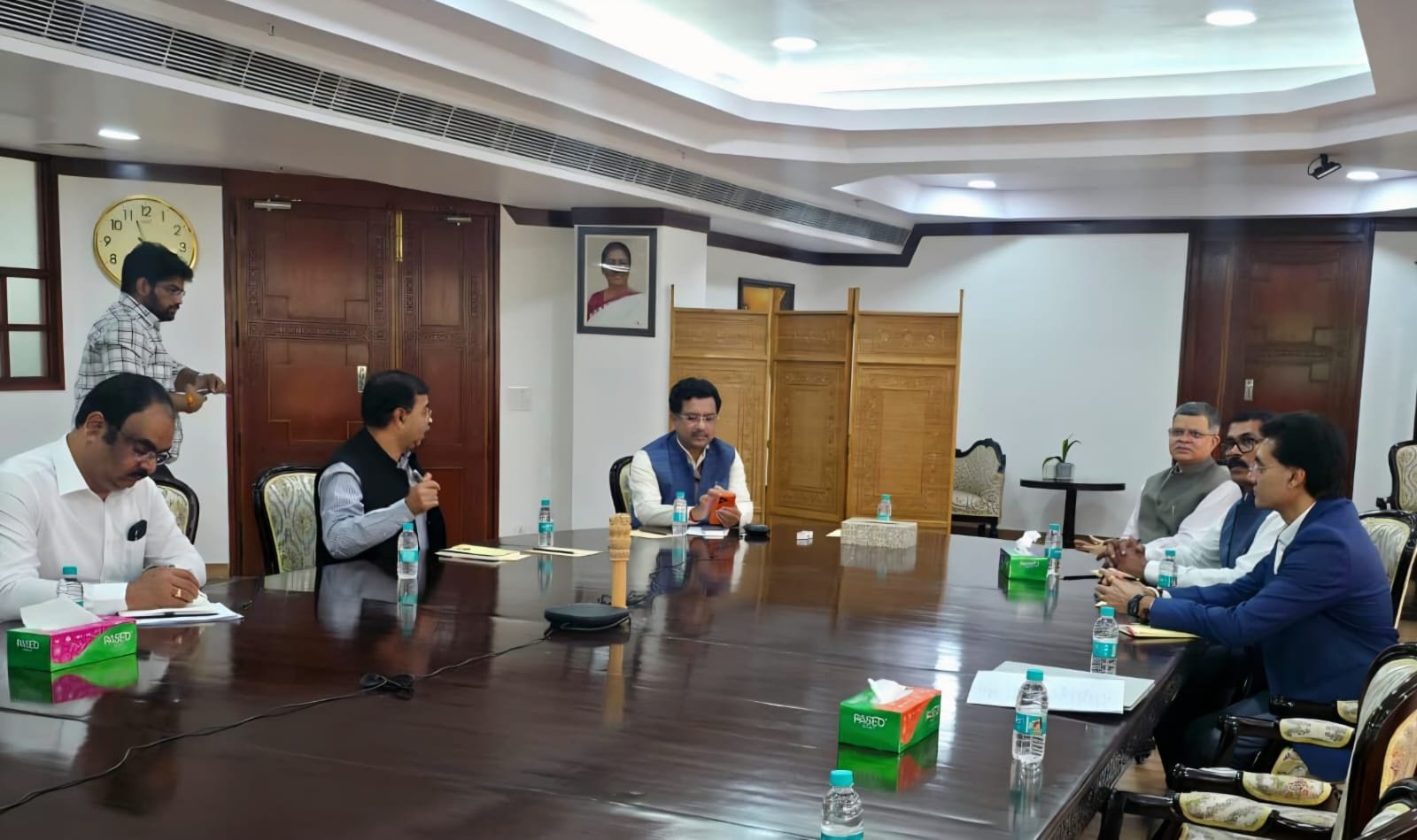
Principal Secretary, Urban Administration and Development Department, Sonmoni Borah holds discussions with senior officials in New Delhi on Saturday, September 26, 2026, on Chhattisgarh’s urban development strategy and implementation of major schemes-Photo:primelookindia.com via CG/DPR .
Chhattisgarh Urban Administration Principal Secretary addresses HUDCO capacity-building workshop in New Delhi; holds discussions with MoHUA Secretary and HUDCO leadership on urban projects and funding
Raipur: Chhattisgarh is looking at a more city-specific approach to urban development, with planning shaped by the identity, needs and future potential of individual cities rather than relying on a uniform model.
Principal Secretary, Urban Administration and Development Department, Sonmoni Borah, emphasised this approach while addressing a capacity-building workshop on the Urban Challenge Fund (UCF) organised by the Housing and Urban Development Corporation (HUDCO) in New Delhi.
Borah told participants from different states and urban local bodies that long-term urban development requires better planning, stronger institutional capacity, effective use of financial resources and closer convergence among different schemes.
“Development planning should be in accordance with the character of a city. Its future requirements, challenges, local identity and potential must form the basis of long-term planning,” Borah said.
He stressed that cities with industrial, religious, spiritual, tourism, cultural or historical significance have different requirements and their development strategies should reflect those distinctions.
Local Identity, Stronger Institutions and Better Financing at Core of Urban Strategy
Key Highlights
- Sonmoni Borah addressed HUDCO’s capacity-building workshop on the Urban Challenge Fund in New Delhi.
- He called for development strategies reflecting the individual character and future requirements of cities.
- Discussions covered PMAY, Swachh Bharat Mission, AMRUT, PM SVANidhi, PM e-Bus and the Urban Challenge Fund.
- Potential projects discussed included food parks, rental housing, tourism promotion, slum redevelopment and Transit-Oriented Development (TOD).
- HUDCO agreed to support preparation of Preliminary Project Reports (PPRs) and capacity building of state and urban local body officials.
- Technical guidance, financing options and convergence of Central and State schemes were also discussed.
Borah said effective urban planning must take into account not only present infrastructure requirements but also the pressures cities are likely to face in the coming years.
“Better planning, capacity building and effective utilisation of available financial resources, along with improved convergence among schemes, are necessary for the long-term development of our cities,” he said.
During his New Delhi visit, Borah met Satendra Singh, Secretary, Ministry of Housing and Urban Affairs (MoHUA), and discussed the progress and implementation of major Central urban schemes in Chhattisgarh.
The discussions covered Pradhan Mantri Awas Yojana, Swachh Bharat Mission, AMRUT Mission, PM SVANidhi, PM e-Bus and the Urban Challenge Fund, along with strategies for achieving targets and further strengthening the capacity of urban local bodies.
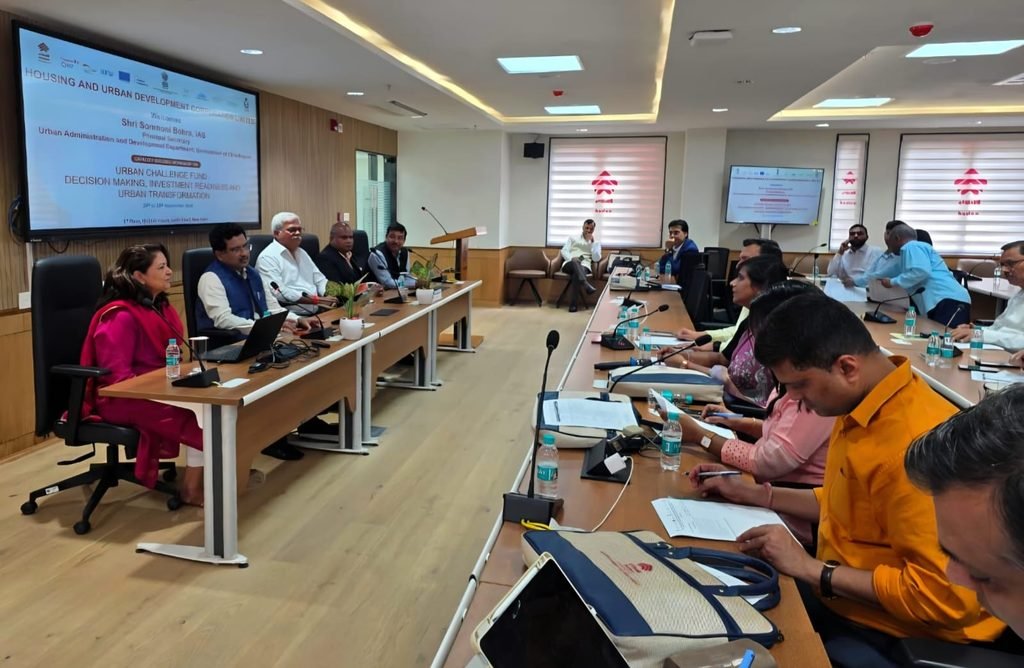
Principal Secretary Sonmoni Borah addresses HUDCO’s capacity-building workshop on the Urban Challenge Fund in New Delhi on Saturday, September 26, 2026 emphasising city-specific planning, institutional capacity and effective utilisation of financial resources-photo Credit:primelookindia.com via CG/DPR
Borah also held detailed discussions with HUDCO Chairman and Managing Director Sanjay Kulshrestha and his team on a long-term strategy for comprehensive and need-based development of Chhattisgarh’s urban areas.
The discussions focused on preparing plans around the distinctive characteristics of individual cities. Industrial centres, pilgrimage and spiritual destinations, tourism hubs, culturally significant towns and historically important cities, it was stressed, cannot necessarily be developed through an identical template.
The objective is to ensure that expansion of urban services and infrastructure responds to actual local requirements while also preparing cities for future growth.
“The specific identity and potential of each urban body must be kept in mind while preparing its development roadmap,” Borah said.
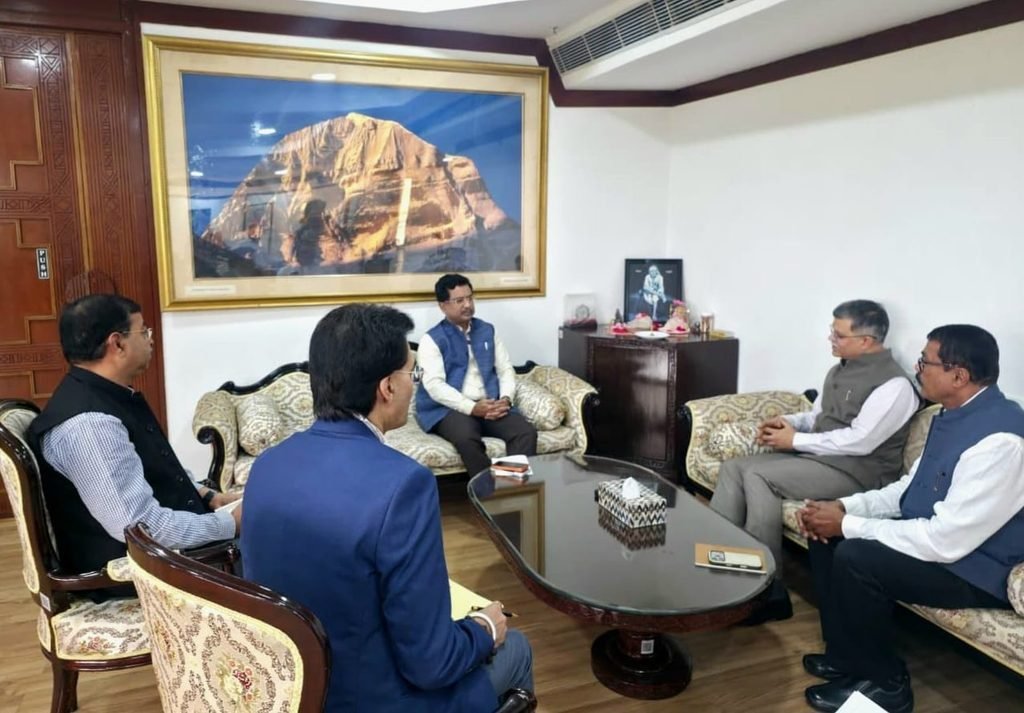
Principal Secretary Sonmoni Borah during discussions with senior officials on strengthening urban development projects and financing mechanisms for Chhattisgarh in New Delhi on Saturday, September 26, 2026-Photo:primelookindia.com via CG/DPR .
The meeting examined possibilities for incorporating projects such as food parks, rental housing, tourism promotion, redevelopment of slum areas and Transit-Oriented Development into city development plans wherever these interventions are appropriate.
Experiences and best practices from other states were also discussed. The emphasis was on studying not only successful models but also implementation challenges before adapting suitable elements to Chhattisgarh’s requirements.
Another major focus was financing. Discussions examined how different sources of funding could be used more effectively and how financial convergence between Central and State schemes could help urban bodies take up larger and more sustainable projects.
HUDCO’s CMD agreed to extend support for preparing Preliminary Project Reports for potential projects. HUDCO also agreed to work towards organising a state-level workshop for capacity building of officials and employees of the State Government and urban local bodies, including identification and documentation of specific projects.
The HUDCO leadership also assured cooperation in providing the technical guidance and facilitating financial resources required for urban development projects.
The discussions signal an approach in which Chhattisgarh’s urban development plans would increasingly be built around what a particular city is, what its residents need and what that city is expected to become in the years ahead, while strengthening the institutional and financial capacity required to translate those plans into projects.

YOU MAY LIKE THIS