Reg No. - CHHBIL/2010/41479ISSN - 2582-919X

Trump Says Gas Prices Will Fall Below $2 After US ‘Wins’ War With Iran
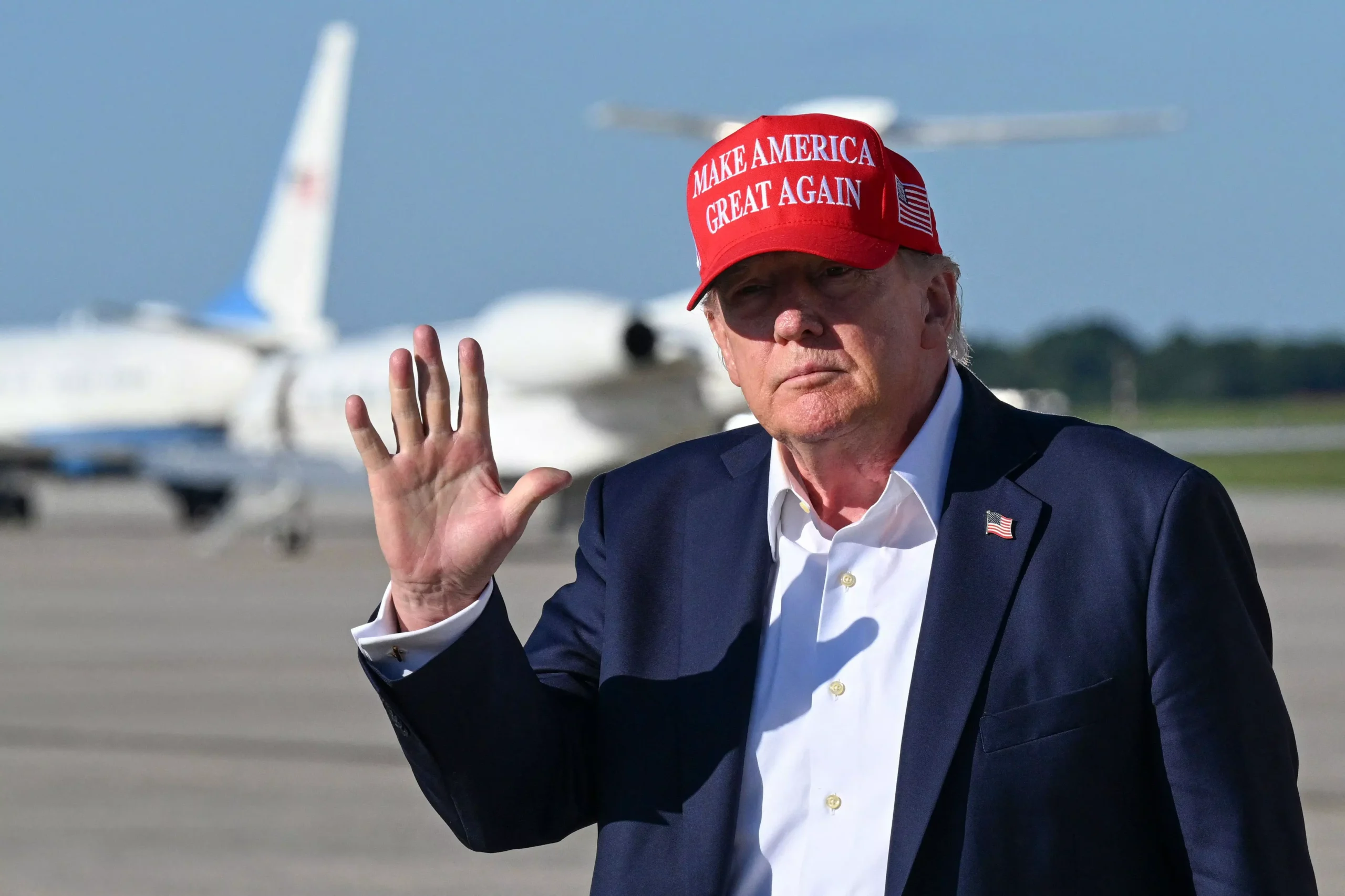
US President Donald Trump gestures as he arrives at an airport wearing his trademark “Make America Great Again” cap. Trump has predicted that gasoline prices could eventually fall below $2 a gallon once the United States “wins” its war with Iran, even as escalating tensions in the Gulf keep global crude prices elevated. (AFP)
US President links elevated energy costs to the continuing conflict as Tehran warns that attacks on Iranian oil and gas assets would bring retaliation against American energy interests
Key Highlights
- Trump predicts US gasoline prices could eventually fall below $2 a gallon after the Iran war ends.
- He expects prices to first decline towards $3 a gallon before falling further.
- Trump reiterated that Iran would not be allowed to possess a nuclear weapon.
- Iranian Parliament Speaker Mohammad Bagher Ghalibaf warned: “Strike our assets, and you get struck.”
- Pete Hegseth threatened Iranian oil tankers if Tehran attacks US Navy vessels.
- Brent crude settled above $97 a barrel on Monday as Middle East tensions intensified.
- Threats to Gulf energy infrastructure and shipping remain a major risk to global oil prices.
Washington: US President Donald Trump has predicted a dramatic decline in oil and gasoline prices once the United States achieves what he described as victory in the war with Iran, saying American motorists could eventually see petrol prices fall below $2 a gallon.
Trump made the claim in a post on Truth Social on Monday as the continuing US-Iran conflict and threats to energy infrastructure and shipping routes kept global oil markets under pressure.
“Oil prices will drop precipitously, like everything else is dropping (but more!), when we WIN the war with Iran,” Trump wrote.
He predicted that gasoline would first fall to around $3 a gallon before declining further.
“Three Dollars a gallon, but ultimately, below Two Dollars a gallon,” Trump said, adding that the change would happen quickly. He also reiterated that Washington would not allow Iran to possess a nuclear weapon.
Trump’s prediction comes against a markedly different immediate market backdrop. Brent crude settled at around $97.31 a barrel on Monday, a six-week high, while West Texas Intermediate closed at about $92.65, as escalating hostilities heightened concerns about disruption to Middle Eastern energy supplies.
Iran Warns Against Attacks on Energy Assets
Trump’s remarks came amid increasingly sharp exchanges between Washington and Tehran over attacks on oil infrastructure and shipping.
Iranian Parliament Speaker Mohammad Bagher Ghalibaf warned the United States against targeting Iranian oil and gas facilities, arguing that American energy interests operating across the region were themselves exposed.
“Strike our assets, and you get struck,” Ghalibaf warned, after describing the region’s oil and gas production network as sprawling and vulnerable.
His remarks followed a warning from US Secretary of War Pete Hegseth, who said Washington would target Iranian oil tankers if Iran attacked American naval vessels.
“If Iran shoots at U.S. ships, we will destroy (and sink) their oil tankers,” Hegseth said, describing Iran’s tanker fleet as defenceless and asserting that American aircraft, ships and submarines were capable of striking the vessels.
The latest escalation follows US strikes on Iranian tankers and Iranian attacks on American warships, with the confrontation adding to uncertainty surrounding the Strait of Hormuz, one of the world’s most strategically important energy corridors.
Energy Markets Caught in the Conflict
Trump’s forecast of sub-$2 gasoline therefore represents a prediction about a post-war energy market, rather than current price conditions.
The immediate direction has been the opposite: geopolitical risk has pushed crude prices higher as markets assess the possibility of further attacks on tankers, energy installations and shipping routes.
Iran has also threatened further measures affecting Gulf shipping, increasing concerns that any expansion of the confrontation could have consequences well beyond the United States and Iran.
Whether Trump’s prediction can ultimately materialise will depend not merely on the outcome of the conflict but on global crude supplies, the restoration of secure shipping routes, refinery conditions and broader market demand.
For now, the increasingly direct threats against oil tankers and energy installations have placed the global energy market squarely in the middle of the US-Iran confrontation.

YOU MAY LIKE THIS