Reg No. - CHHBIL/2010/41479ISSN - 2582-919X

Vishnu Bhaiya’s Raksha Bandhan Gift’: Mahtari Vandan Puts Money — and Choices — in Women’s Hands
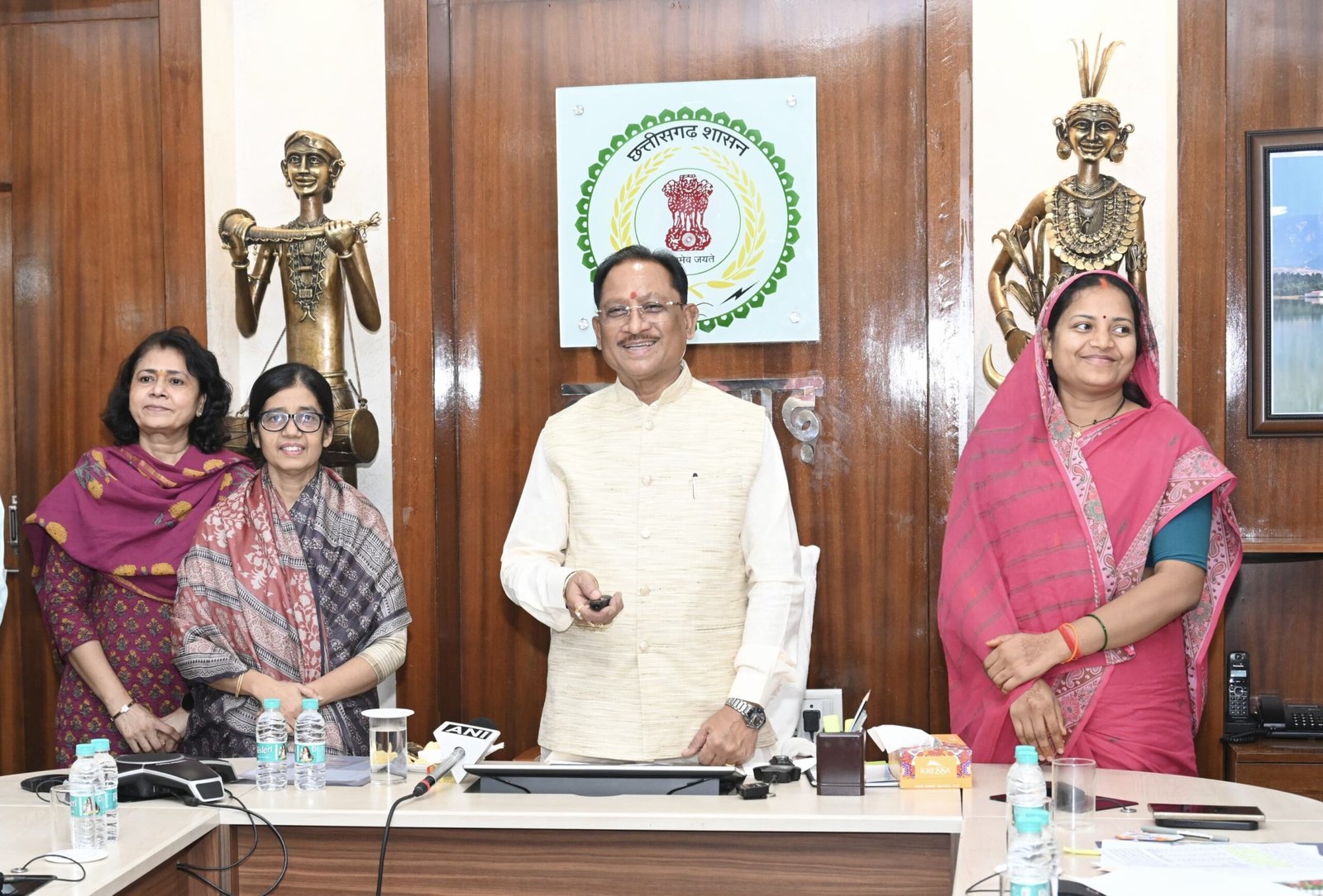
Chhattisgarh Chief Minister Vishnu Deo Sai virtually releases an instalment of the Mahtari Vandan Yojana for transfer to women beneficiaries across the state, as Women and Child Development Minister Lakshmi Rajwade and officials look on. Photo credit:primelookindia.com via CG/DPR
30 instalments have transferred more than ₹19,444.33 crore to women across Chhattisgarh; beneficiaries are using the monthly support for household needs, children’s education, savings and small businesses
Key Highlights
- Mahtari Vandan Yojana completes 30 instalments, with over ₹19,444.33 crore transferred to eligible women
- The 30th instalment, released on August 7, has reached beneficiaries ahead of Raksha Bandhan
- ₹1,000 monthly assistance is transferred directly into beneficiaries’ bank accounts through DBT
- Women across Chhattisgarh are using the money for education, nutrition, savings and household expenses
- Some beneficiaries have turned accumulated instalments into capital for tailoring, bangle and other small businesses
- Chief Minister Vishnu Deo Sai’s government projects regularity of payments as central to women’s economic confidence
Raipur : Ahead of Raksha Bandhan, thousands of women across Chhattisgarh have an additional amount at their disposal for celebrations, household requirements or savings, with the 30th instalment of the Mahtari Vandan Yojana already credited to eligible beneficiaries.
For many beneficiaries, the ₹1,000 monthly assistance may appear modest when considered in isolation. Its greater significance lies in its regularity — money that women can count on, decide how to spend and, in some cases, accumulate to create an independent source of income.
Since the scheme was launched on March 1, 2024, more than ₹19,444.33 crore has been transferred through 30 instalments to eligible women in Chhattisgarh. The latest instalment was released on August 7, ahead of Raksha Bandhan.
The scheme, being implemented under Chief Minister Vishnu Deo Sai’s government and the Women and Child Development Department headed by Minister Lakshmi Rajwade, provides ₹1,000 every month through Direct Benefit Transfer.
Coming ahead of the festival celebrating the bond between brothers and sisters, the latest payment has acquired a more personal description among beneficiaries — “Vishnu Bhaiya’s Raksha Bandhan gift.”
But beyond the festive symbolism, individual stories emerging from different districts illustrate how regular cash support can gradually translate into greater financial choice.
From ₹1,000 Assistance to Small Steps Towards Independence
In Surajpur district, beneficiaries including Tej Kumari, Manju Rajwade, Punia Prajapati, Shahnaz Begum, Ganeshwari Prajapati, Menka Rajwade and Lata Kewat say the assistance is helping meet expenses ranging from children’s books and education to nutritious food and everyday household requirements.
Elsewhere, women have chosen to save successive instalments rather than immediately spend the entire amount.
Anita Gandharva of Ghuthera village in Mungeli development block used savings from her Mahtari Vandan payments to start a tailoring and manihari shop near Mungeli’s old bus stand. According to the information provided by the state government, the venture now earns her around ₹500 to ₹1,000 a day, enabling her to contribute towards her children’s education and household expenses.
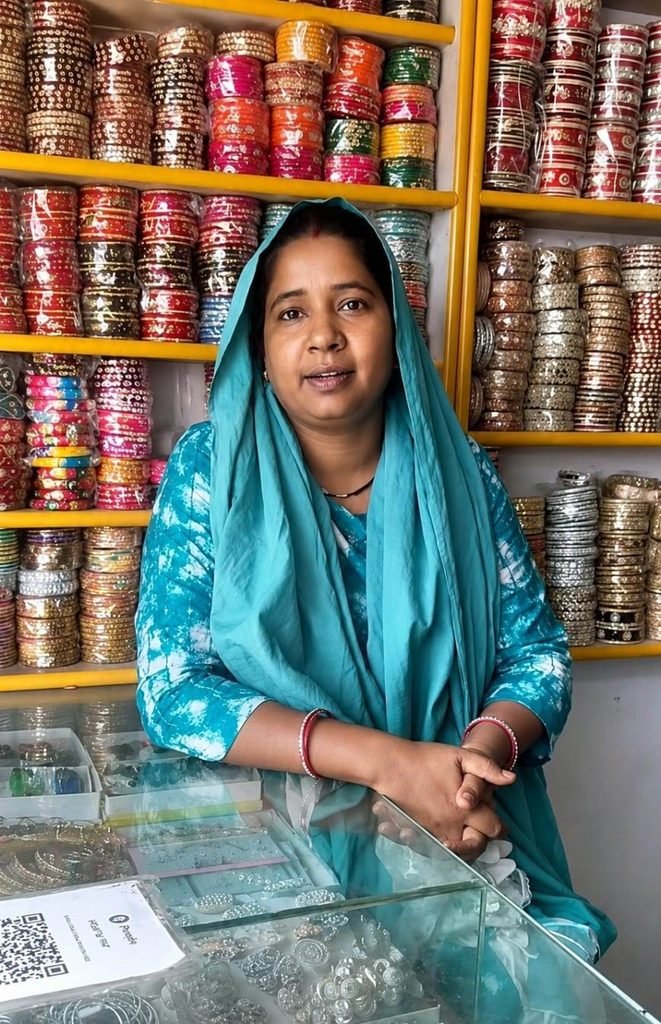
Shabina Begum of Sarkhon village in Janjgir-Champa district at her bangle shop. She used assistance received under the Mahtari Vandan Yojana to add new stock and a wider variety of bangles, helping increase her customers and income. Photo credit:primelookindia.com.com via CG/ DPR
In Sarkhon village of Janjgir-Champa district, Shabina Begum used the assistance to add new stock and a wider variety of bangles to her existing shop. The additional investment helped her expand both her customer base and earnings.
Gayatri Srivastava of Manendragarh-Chirmiri-Bharatpur saved the assistance to purchase a second-hand sewing and pico machine, adding another service to her tailoring work. In Raigarh, Rashi Kanwar similarly used accumulated instalments to buy a sewing machine and strengthen her livelihood.
The money is also finding its way into longer-term family savings.
In Korba, Shakuntala Kurre uses part of the assistance for her children’s education and healthcare while putting money aside for her daughter Dhriyanshi through the Sukanya Samriddhi Yojana.
Other beneficiaries, including Hemant Banjare of Sakti, Devki Nishad of Mohla and Anita Gupta of Manendragarh-Chirmiri-Bharatpur, have reported using the assistance for household requirements or strengthening small livelihood activities.
These individual experiences underline an important aspect of direct financial assistance to women: economic empowerment does not necessarily begin with a large amount of money. Sometimes it begins with having money that is predictably one’s own.
That distinction is important.
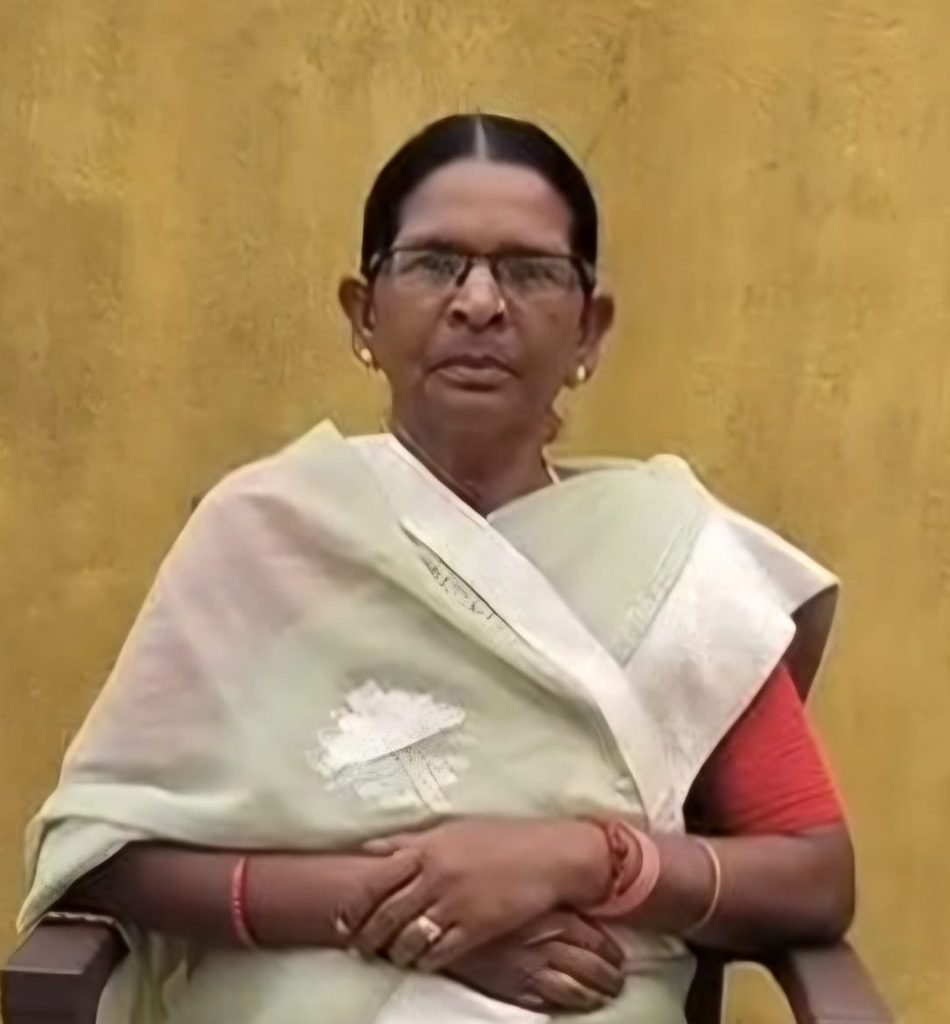
Menka Rajwade of Surajpur district, one of the beneficiaries of the Mahtari Vandan Yojana. She says the monthly assistance is helping women meet household and family needs and has provided additional financial support ahead of Raksha Bandhan. Photo credit: primelookindia.com via CG/DPR
A regular transfer gives a beneficiary the ability to decide whether this month’s ₹1,000 should buy schoolbooks, supplement household nutrition, meet an unexpected expense, be saved for the future or become part of the capital for a small enterprise.
Thirty consecutive instalments have consequently created something beyond the cumulative monetary transfer — predictability.
For the Sai government, maintaining that regularity will remain crucial to the scheme’s credibility. Its longer-term success, however, should ultimately be measured not merely by the number of instalments or the total amount transferred, but by whether beneficiaries gain greater financial security, decision-making power and opportunities to improve their livelihoods.
For now, as Chhattisgarh prepares to celebrate Raksha Bandhan, the latest instalment has given the programme an emotional connection with the festival.
Some women will use it to buy a rakhi or sweets. Others may spend it on their children, save it or put it back into their businesses.
The choices are different.

YOU MAY LIKE THIS