Reg No. - CHHBIL/2010/41479ISSN - 2582-919X

Sai’s Swift Response to IGKV Paper Leak Sends the Right Message on Examination Integrity-By-Kumar Bahukhandi (Editorial)
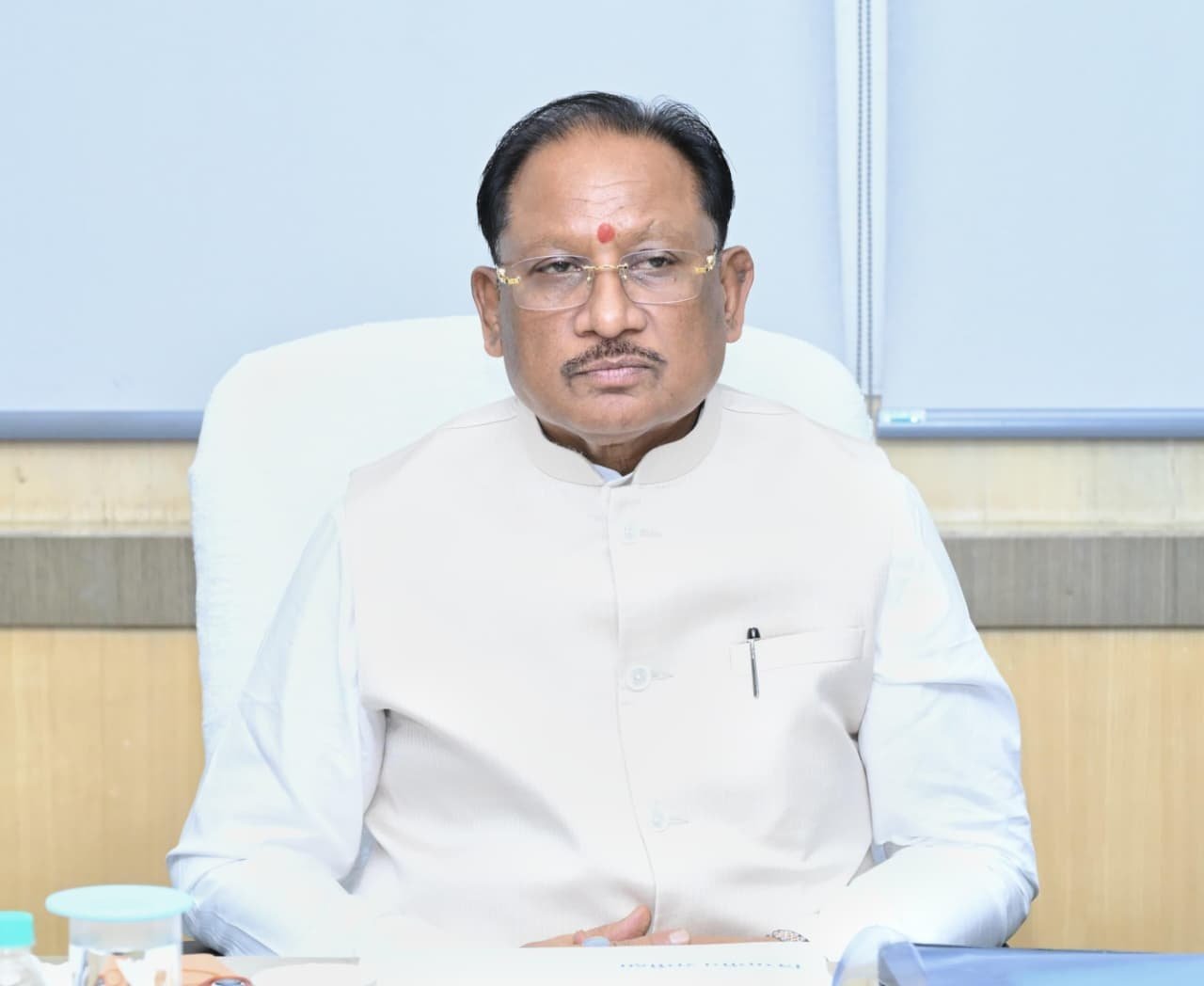
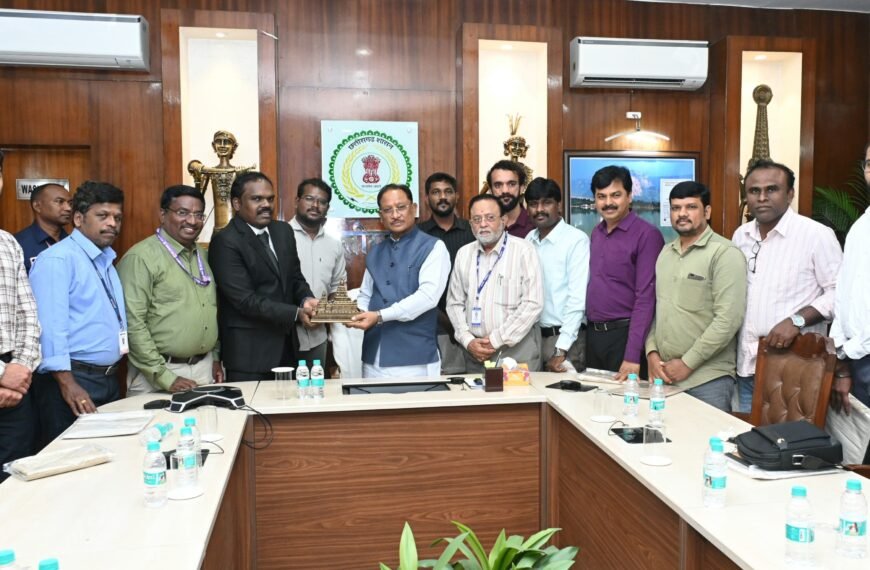
Chhattisgarh Chief Minister Vishnu Deo Sai has ordered strict action over the alleged circulation of an IGKV B.Sc. Agriculture examination question paper on social media before the examination, declaring that there would be “no compromise with the integrity, transparency and credibility of examinations”. A five-member inquiry committee has been constituted, an FIR registered and the Cyber Cell engaged to trace the source and circulation chain. Photo: (File Photo)
From cancelling the examination to registering an FIR and bringing in the Cyber Cell, Chhattisgarh’s immediate response offers an important contrast to paper-leak controversies elsewhere that have dragged on for months or years
Key Highlights
- Chief Minister Vishnu Deo Sai declares zero tolerance towards examination irregularities
- IGKV examination cancelled promptly after the alleged question paper circulation surfaced
- Five-member inquiry committee constituted and FIR registered at Telibandha Police Station
- Cyber Cell tasked with tracing the source and digital chain through which the paper circulated
- Government orders a wider review of question-paper security to prevent recurrence
- Swift intervention assumes significance amid continuing concern over examination leaks across India
The alleged circulation of an Indira Gandhi Krishi Vishwavidyalaya (IGKV) examination paper before students entered the examination hall is unquestionably a serious breach. But the manner in which the Chhattisgarh Government responded to the incident deserves equal attention.
Chief Minister Vishnu Deo Sai did not allow the matter to remain confined to an internal university inquiry. The examination was cancelled, a five-member inquiry committee was constituted, an FIR was registered and the Cyber Cell was brought into the investigation to trace the digital trail of the circulated question paper.
More importantly, Sai made the government’s position unambiguous.
“The hard work, trust and future of students are paramount to us. The investigation will ascertain where the question paper originated, who circulated it and who else was involved. No one found guilty will be spared.”
His assertion that there would be “no compromise with the integrity, transparency and credibility of examinations” goes beyond a response to one university examination. It establishes a standard against which the government’s subsequent investigation and action will also have to be judged.
The controversy relates to the B.Sc. Agriculture second-year Entomology examination held on August 20. Around 1,200 students from 27 agricultural colleges across Chhattisgarh were involved. After a complaint that the question paper had circulated on social media before the examination, IGKV cancelled the paper and decided to conduct it again in the first week of September.
Speed of Action Matters When Students’ Trust Is at Stake
India’s recent experience demonstrates why the first few hours after an examination irregularity emerges are critical.
Paper leaks and examination malpractices have become a serious national concern, affecting recruitment and entrance examinations in several states, including Uttar Pradesh, Rajasthan, Bihar and Gujarat, besides controversies surrounding major national-level examinations. Governments across political lines have consequently been forced to strengthen laws against organised examination fraud.
The deeper problem has often been accountability after the leak.
An investigation published in June 2026 examining 45 major examination paper-leak cases over more than two decades found that only two cases had resulted in convictions. The cases examined affected crores of candidates, while cancelled examinations frequently took months to be rescheduled.
That national background makes the Chhattisgarh response significant.
Instead of waiting for the controversy to grow, the administration moved simultaneously on three fronts — protecting students by cancelling the compromised examination, beginning institutional scrutiny through the university committee, and initiating a criminal and digital investigation through the police and Cyber Cell.
Sai has also directed IGKV to examine the entire question-paper security chain — preparation, storage, transportation and protection until the examination begins. This is particularly important because identifying an individual offender will not by itself correct a systemic vulnerability.
The inquiry must now establish whether the paper circulating on social media was identical to the original examination paper, when it first entered the digital domain, who obtained it and whether anyone within or outside the examination system facilitated its circulation.
Speedy action, however, must ultimately be followed by speedy accountability.
That is where the Sai government’s zero-tolerance declaration will face its real test. If the investigation identifies those responsible, action should follow irrespective of their position or institutional connection. Its findings should also be made sufficiently transparent to restore the confidence of the students whose examination has been disrupted.
Chhattisgarh cannot claim that a paper leak did not happen simply because the government acted quickly. What it can demonstrate is something equally important: when the integrity of an examination comes under question, the state will respond immediately rather than allow uncertainty, delay and institutional silence to deepen the damage.
For the nearly 1,200 affected students, that distinction matters.
And at a time when examination leaks have become a recurring source of anxiety for young Indians, Sai’s message — “No one found guilty will be spared” — now carries both a promise and a responsibility.

YOU MAY LIKE THIS