Reg No. - CHHBIL/2010/41479ISSN - 2582-919X

CM Vishnu Deo Sai Leads Chhattisgarh’s New Chapter in Women’s Empowerment-By- Dr Daneshwari Sambhakar
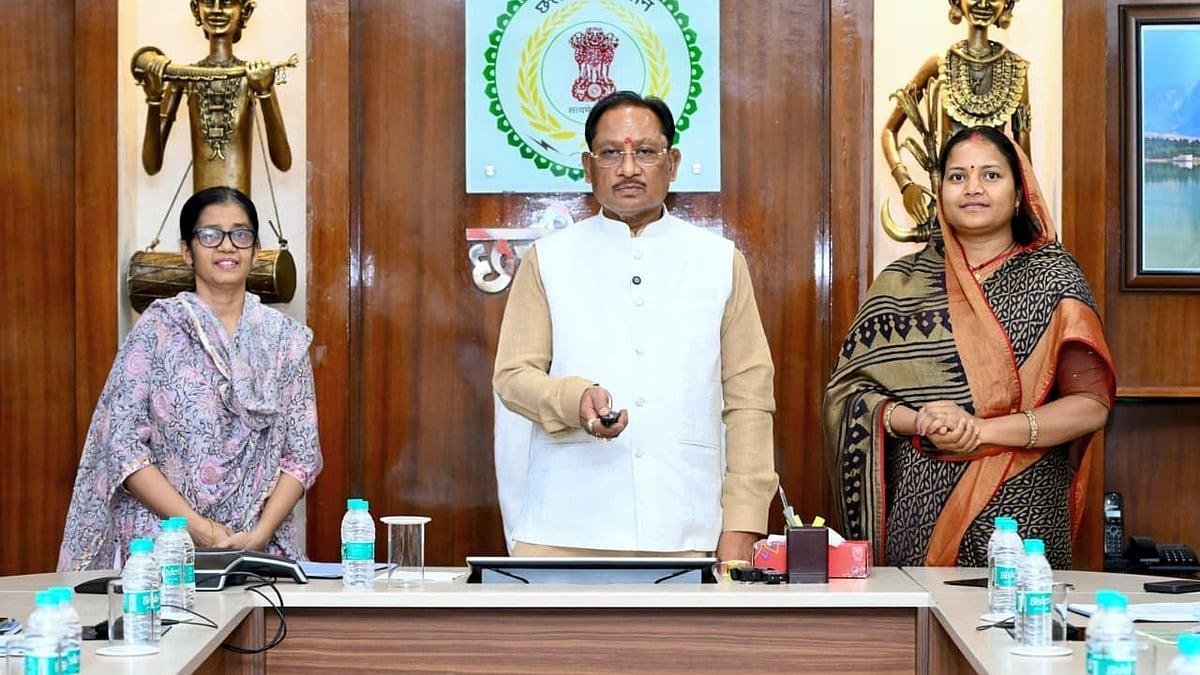
Chhattisgarh Chief Minister Vishnu Deo Sai with Women and Child Development Minister Lakshmi Rajwade during the release of an instalment under the Mahtari Vandan Yojana, one of the state government’s flagship initiatives for women’s financial empowerment-Representational Image (File Photo )
From direct financial assistance and safer support systems to self-help groups and women-led enterprises, Chhattisgarh is seeking to place economic independence at the centre of its women empowerment strategy
Key Highlights
- More than 66 lakh women covered under Mahtari Vandan Yojana
- Over ₹19,444 crore transferred through 30 instalments
- ₹8,200 crore provided for Mahtari Vandan in the 2026-27 Budget
- More than 10.43 lakh women have become Lakhpati Didis in Chhattisgarh
- 31.65 lakh women connected with over 2.92 lakh self-help groups under Bihaan
- 368 Mahtari Sadans sanctioned across the state
- Sakhi One-Stop Centres operating across all 33 districts
- New initiatives target girls’ security, nutrition, livelihoods and entrepreneurship
Raipur: The progress of a state can be measured not merely through roads, industries and investment, but also by the position women occupy within its economy, families and decision-making structures. When women acquire independent incomes and greater control over financial decisions, the benefits tend to extend well beyond individual beneficiaries to their families and communities.
That principle increasingly defines Chhattisgarh’s approach to women’s development.
Under Chief Minister Vishnu Deo Sai and Women and Child Development Minister Lakshmi Rajwade, the state government has brought financial assistance, nutrition, health, safety and livelihood programmes within a broader framework of women’s empowerment. With 2026 being observed as “Mahtari Gaurav Varsh”, the government has placed particular emphasis on women’s dignity and economic independence.
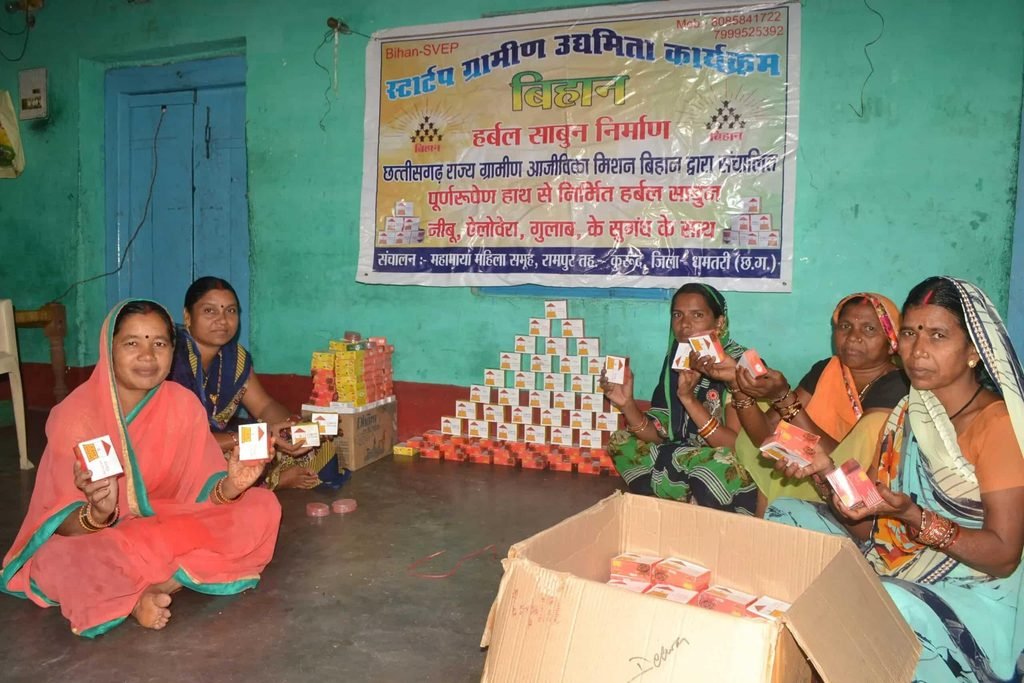
Women associated with the Bihaan rural livelihood programme manufacture and package products through a self-help group enterprise in Chhattisgarh, reflecting the growing role of women-led businesses in creating sustainable rural incomes-Photo Credit: primelookindia.com.com
At the centre of this effort is the Mahtari Vandan Yojana, which has emerged as one of the state’s largest direct financial support programmes for women.
Launched by Prime Minister Narendra Modi on March 10, 2024, the scheme provides ₹1,000 every month directly into the bank accounts of eligible women. More than 66 lakh women are covered, and over ₹19,444 crore has been transferred through 30 instalments. The state Budget for 2026-27 provides ₹8,200 crore for continuing the programme.
Women and Child Development Minister Lakshmi Rajwade has described the scheme as an important instrument for strengthening women’s financial independence. The significance of regular direct assistance lies not only in its monetary value, but also in giving women greater freedom in meeting household and personal requirements.
The government’s next set of initiatives extends from childhood to motherhood and beyond.
Under the proposed Rani Durgavati Yojana, a girl will receive financial assistance of ₹1.50 lakh on attaining the age of 18. The 2026-27 Budget provides ₹15 crore for the programme. Another ₹120 crore has been allocated for the Pradhan Mantri Matru Vandana Yojana and ₹80 crore for Mission Vatsalya.
From Welfare Support to Economic Independence
Nutrition and early childhood care remain another major component of the state’s strategy. The 2026-27 Budget provides ₹800 crore for Anganwadi operations, ₹650 crore for supplementary nutrition and ₹235 crore for programmes addressing malnutrition and nutritional requirements.
The government also plans to strengthen the physical network supporting women and children. Provision has been made for 250 new Anganwadi centres in urban areas and another 500 in rural areas through convergence, with ₹42 crore earmarked for their construction.
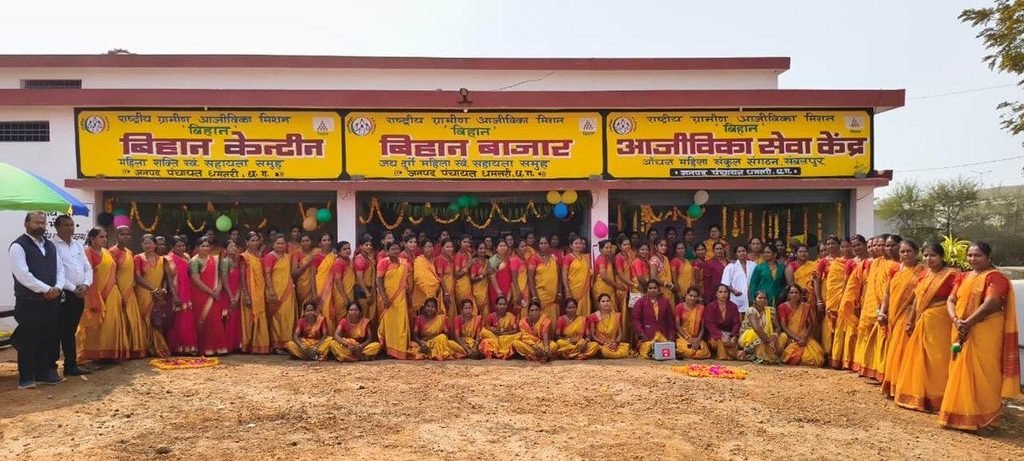
Women associated with self-help groups under the Bihaan Mission gather at a Bihaan centre in Chhattisgarh. The programme is strengthening rural women’s livelihoods through entrepreneurship, market linkages and collective economic activity-Photo Credit;primelookindia.com (file Photo)
Alongside nutrition and childcare, the government is expanding spaces designed specifically for women.
A total of 368 Mahtari Sadans have been sanctioned, of which 137 have been completed. Another 250 are proposed during 2026-27 with a budgetary provision of ₹75 crore. These centres are intended to provide women with spaces for training, livelihood development and community activities.
Safety is another essential element of meaningful empowerment.
Across Chhattisgarh’s 33 districts, 34 Sakhi One-Stop Centres provide assistance to women facing domestic violence, harassment or other crises. Legal assistance, medical support, psychological counselling and temporary shelter are available through the centres, supported by coordination with Women’s Helpline 181 and emergency service 112.
The state has also introduced a digital standard operating procedure for Sakhi One-Stop Centres, intended to make the response mechanism more consistent and accountable.
Yet perhaps the most visible transformation is occurring through women’s collective entrepreneurship.
Under the Bihaan Mission, more than 2.92 lakh women’s self-help groups have been formed, bringing together over 31.65 lakh women. Their activities now extend from agriculture and livestock to food processing, handicrafts, ready-to-eat products and small businesses.
Chhattisgarh has also reported more than 10.43 lakh Lakhpati Didis, contributing significantly towards the national goal of creating three crore women earning sustainable annual household incomes through self-help group-linked livelihoods.
The transition is important: women who once entered government programmes primarily as beneficiaries are increasingly becoming producers, entrepreneurs and employers.
The proposed Unity Mall, being developed at a cost of ₹200 crore, is expected to provide a wider market for products made by women’s groups and local entrepreneurs. Successful women entrepreneurs are also proposed to receive exposure through the Lakhpati Didi study-tour initiative.
Several programmes target women from economically vulnerable working families. Eligible daughters of construction workers receive ₹20,000 under the Mukhyamantri Noni Sashaktikaran Sahayata Yojana, while assistance of ₹7,900 is provided under the sewing-machine scheme. The Didi E-Rickshaw initiative supports women seeking livelihood opportunities, while pregnant women workers receive ₹20,000 under the Minimata Mahtari Jatan Yojana.
Social security and economic opportunity are also being linked with important stages in women’s lives.
More than 24,000 girls have so far been married through the Mukhyamantri Kanya Vivah Yojana, under which the government provides assistance of ₹50,000 for each couple.
Under the Mahila Samriddhi Yojana, 42,878 women’s groups have received concessional loans amounting to ₹129.46 crore. The Mahtari Shakti Loan Scheme provides collateral-free loans of up to ₹25,000 to support women’s self-employment.
Other programmes address needs that directly affect women’s quality of life. More than 38 lakh women in the state are beneficiaries of the Pradhan Mantri Ujjwala Yojana. Under the Sushiksha initiative, 2,18,139 girl students receive monthly financial assistance of ₹500, while sanitary-napkin vending machines have been installed in 2,000 schools under the Shuchita programme.
The results of women’s entrepreneurship are increasingly visible beyond their villages.
Products created by tribal women under the Jashpure brand have demonstrated how local resources and traditional skills can be transformed into marketable enterprises. Initiatives such as Sakhi outlets and millet cafés are similarly creating direct connections between women’s groups and consumers.
This is where the larger significance of women’s empowerment in Chhattisgarh lies.
Financial transfers can provide immediate security, but enduring empowerment requires something more: education, health, safety, access to credit, skills, markets and the confidence to participate in economic and social decision-making.
The emerging challenge is therefore to ensure that the expanding network of schemes translates into measurable improvements in women’s incomes and independence.
Under the leadership of Chief Minister Vishnu Deo Sai and the guidance of Women and Child Development Minister Lakshmi Rajwade, Chhattisgarh’s women-focused initiatives are attempting to move in precisely that direction — from welfare towards opportunity, from assistance towards enterprise, and ultimately from beneficiaries to participants in the state’s development.
That transition will be central to the vision of a self-reliant woman and a prosperous Chhattisgarh.
Author Dr. Daneshwari Sambhakar is Deputy Director, Department of Public Relations, Chhattisgarh, Raipur.