Reg No. - CHHBIL/2010/41479ISSN - 2582-919X

CM Sai Government’s Bulk Purchase Policy Spurs Sale of 226 Homes Worth ₹42.17 Crore
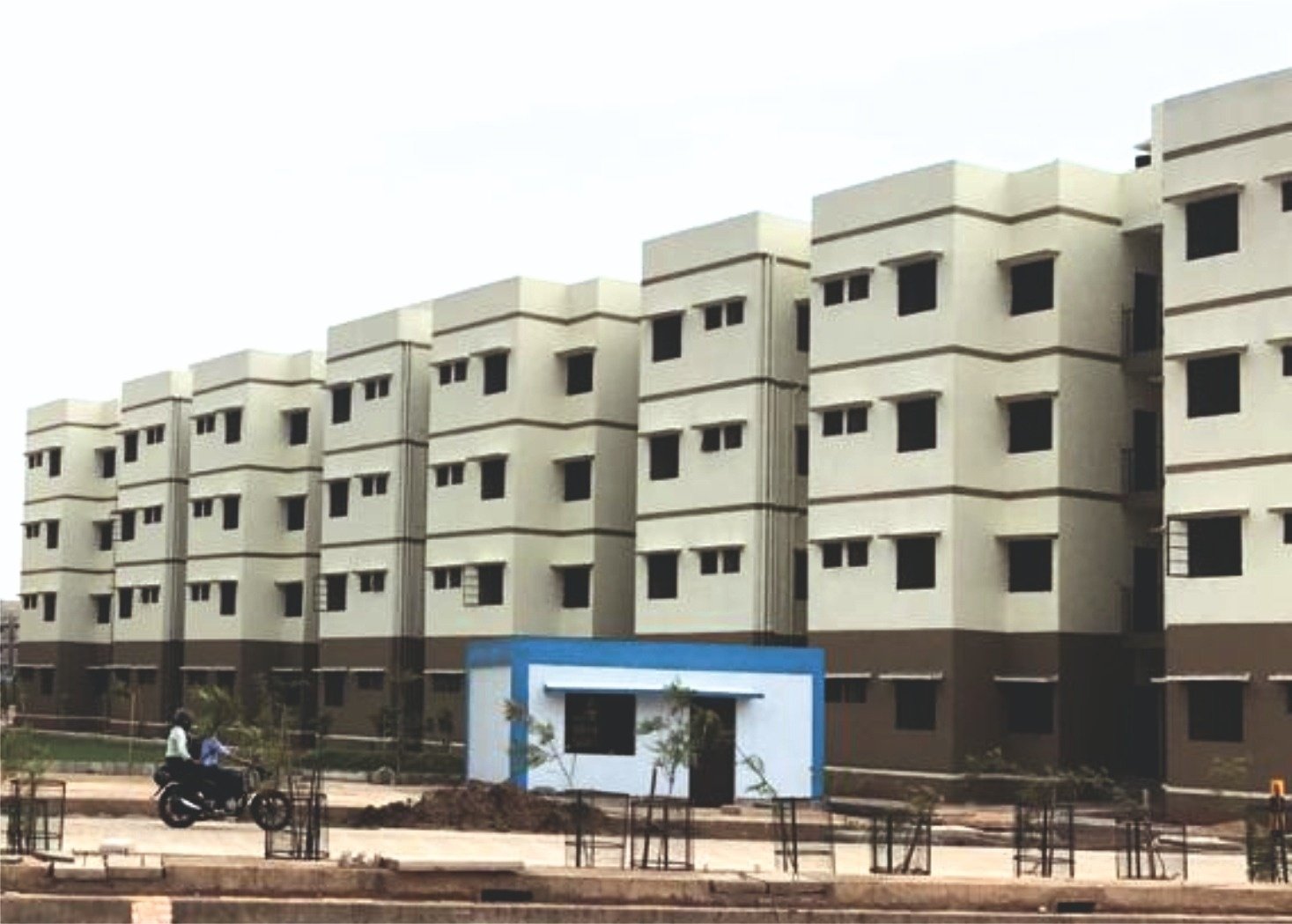
Residential blocks are pictured in an image accompanying the Chhattisgarh government’s announcement from Raipur on Friday, October 23, 2026, reporting institutional purchases of 226 Housing Board homes worth approximately ₹42.17 crore. Photo: primelookindia.com via CG/DPR
Institutional purchases across six cities boost use of vacant Housing Board properties, while subsidies remain available to eligible EWS and LIG beneficiaries
Key Highlights
- Government and private institutions purchase 226 homes across Durg, Jagdalpur, Bilaspur, Raigarh, Nava Raipur and Arang.
- Completed sales are valued at approximately ₹42.17 crore.
- A further purchase of 128 flats worth around ₹16.20 crore is proposed in Nava Raipur.
- Eligible EWS and LIG beneficiaries retain their prescribed government subsidies.
- Other income groups and institutions can purchase qualifying unsold homes without subsidies.
Raipur: Chhattisgarh’s decision to permit bulk purchases of vacant Housing Board properties is generating institutional demand, with 226 homes worth approximately ₹42.17 crore sold across six cities. According to a state government release issued on Friday, October 23, 2026, the policy introduced under Chief Minister Vishnu Deo Sai’s leadership is helping put long-vacant properties to use while enabling institutions to arrange housing for their employees.
Under the guidance of Finance, Housing and Environment Minister O. P. Choudhary, the Chhattisgarh Housing and Infrastructure Development Board is working to sell vacant properties, increase occupancy and improve the utilisation of its residential schemes.
Institutional Purchases Across Six Cities
The completed purchases cover housing schemes in Durg, Jagdalpur, Bilaspur, Raigarh, Nava Raipur Atal Nagar and Arang.
The GST Department has purchased 68 homes across four cities for approximately ₹23.77 crore. These comprise 24 homes in Durg worth ₹6.50 crore, 16 in Jagdalpur worth ₹6 crore, 25 in Bilaspur worth ₹10.35 crore and three in Raigarh worth ₹92 lakh.
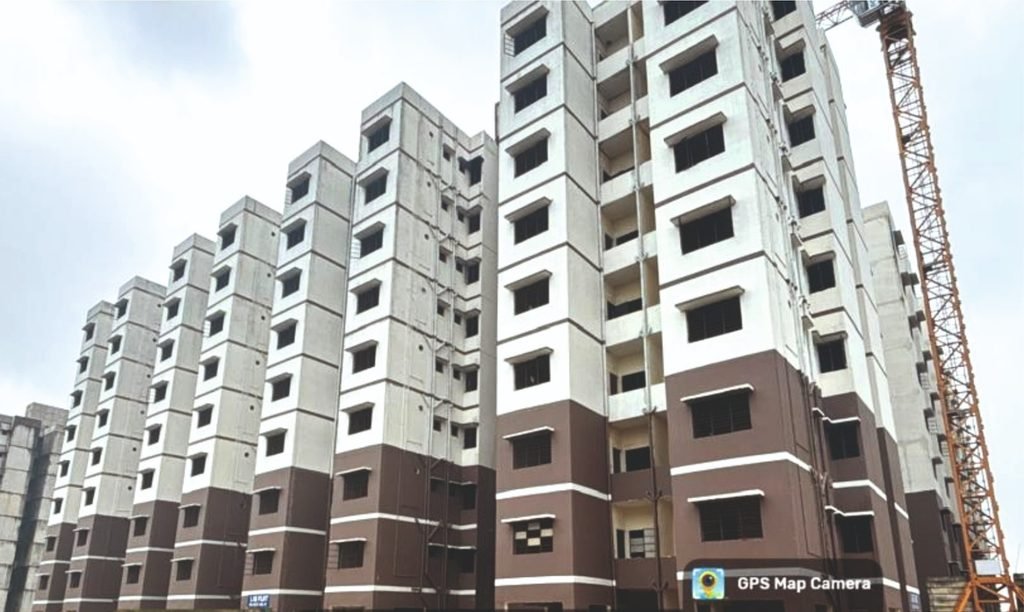
Multi-storey residential buildings are shown in a photograph accompanying the state government’s update from Raipur on Friday, October 23, 2026, on its policy to promote institutional purchases and better utilisation of vacant housing. Photo: primelookindia.com via CG/DPR
In Nava Raipur, Mayfair has purchased 128 homes under the Pradhan Mantri-cum-Mukhyamantri Awas Yojana for approximately ₹16.20 crore. MATS University has purchased another 30 homes in Arang for around ₹2.20 crore.
Together, these transactions account for the reported sale of 226 homes worth ₹42.17 crore.
Another 128 Flats Proposed for Purchase
The release said that Science and AYUSH University has also decided to purchase 128 flats in Nava Raipur Atal Nagar through the bulk purchase arrangement.
The proposed transaction is valued at approximately ₹16.20 crore. These flats are additional to the 226 homes already sold and will increase institutional sales once the purchase is completed.
Cabinet Decision Opens Unsold Housing to More Buyers
The policy follows a Cabinet decision taken on November 14, 2025, under Chief Minister Sai’s chairmanship.
The Board had developed housing for economically weaker sections and low-income groups under the Pradhan Mantri-cum-Mukhyamantri Awas Yojana in Sectors 16, 30 and 34 of Nava Raipur. The first phase covered 6,296 housing units.
Despite repeated advertisements, some properties remained unsold for extended periods, creating difficulties involving security, maintenance and the management of the Board’s financial resources.
The Cabinet permitted homes remaining unsold after three rounds of advertising to be offered to individuals from other income groups and to institutions, in addition to the scheme’s eligible beneficiaries.
Subsidies Protected for Eligible Beneficiaries
The government has retained the distinction between subsidised purchases by eligible beneficiaries and purchases by other buyers.
Eligible EWS and LIG beneficiaries will continue receiving the prescribed Union and state government assistance. Individuals from other income groups and institutions purchasing through the expanded arrangement will not receive these subsidies.
The policy therefore allows vacant housing to be used more widely while retaining financial assistance for the scheme’s intended beneficiaries.
‘A Housing Scheme Succeeds When People Live There’
Board Chairman Anurag Singh Deo described the decision as a practical measure to improve the use of public housing assets.
“The real success of any housing scheme is ensured not merely by constructing buildings, but by people living in them and putting them to proper use,” he said.
He explained that properties remaining vacant for long periods require additional expenditure on security and maintenance. Bringing them into use would help strengthen the Board’s finances and create more active residential communities.
“The bulk purchase facility gives government, semi-government and private institutions an opportunity to provide organised housing for their employees within a single residential complex,” Singh Deo said.
He added that increased occupancy could support nearby commercial activity and improve the residential environment.
Online Offers to Ensure Transparency
Board Commissioner Avanish Kumar Sharan said institutions had shown growing interest following the policy decision.
He cited purchases by the GST Department, Mayfair and MATS University, alongside the proposed university purchase in Nava Raipur, as evidence of institutional demand.
“The growing interest of government and private institutions in bulk purchases reflects the positive impact of the government’s policy,” Sharan said.
He stated that sales were being conducted through online offers in accordance with prescribed rules.
“Special attention is being given to ensuring transparency, impartiality and equal opportunity throughout the process,” he said.
Occupancy Expected to Support Local Services
The government expects institutional purchases to encourage settlement in residential complexes and improve the use of existing infrastructure.
As employees and their families move into these homes, demand may increase for local transport, groceries and other everyday services. Regular occupancy could also support building security, maintenance and the effective use of civic amenities.
Revenue from sales is expected to assist the Board’s future housing and infrastructure development activities.

YOU MAY LIKE THIS