Reg No. - CHHBIL/2010/41479ISSN - 2582-919X

USS George Washington Arrives in Middle East, Relieves Long-Deployed Abraham Lincoln
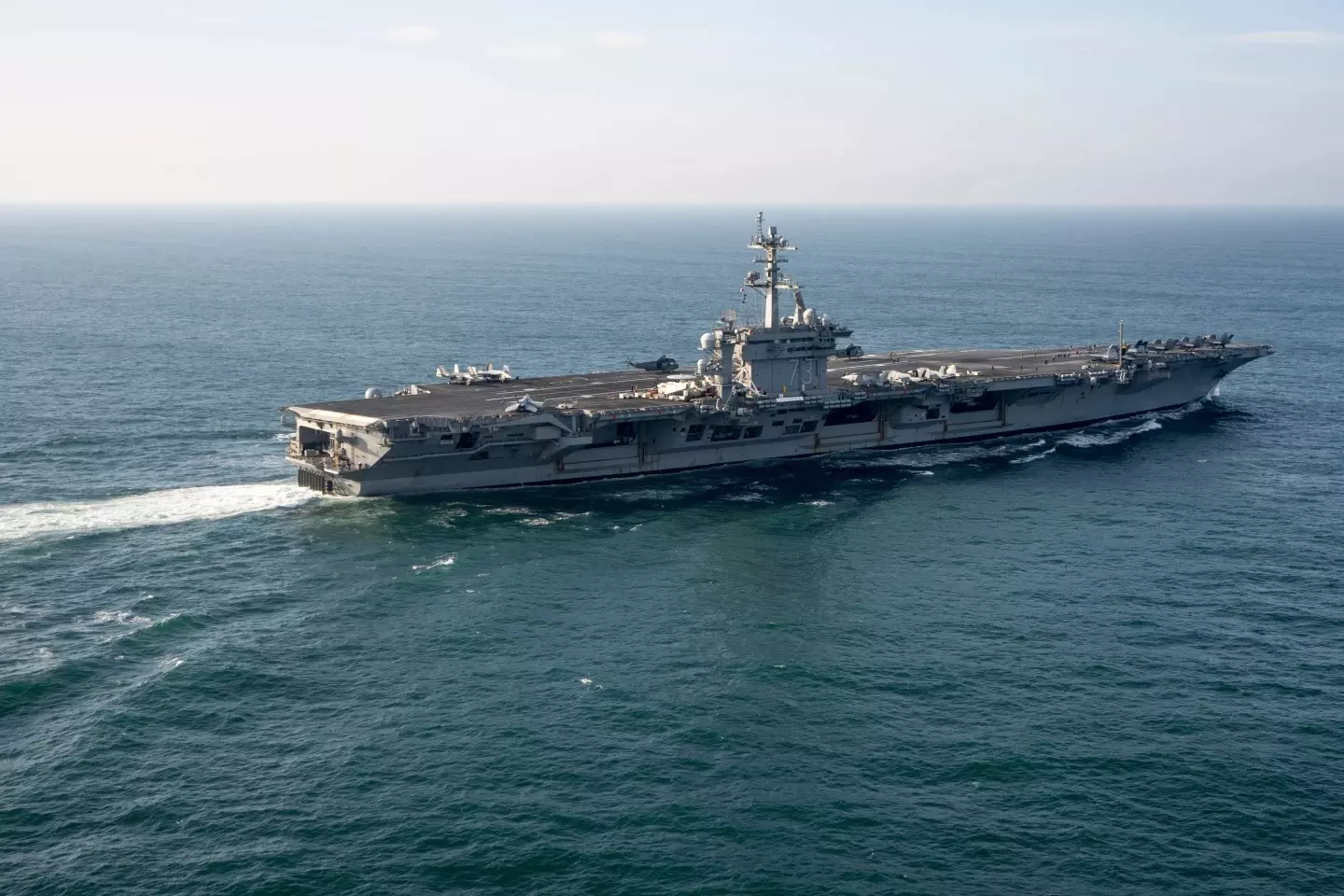
USS George Washington, the Japan-based US aircraft carrier now deployed to the Middle East to relieve the long-serving USS Abraham Lincoln amid continuing American military operations linked to Iran. (AP Photo)
Carrier rotation comes after more than 250 days at sea for USS Abraham Lincoln amid concerns over crew welfare and supplies
In Short
- USS George Washington enters US Central Command’s Middle East theatre
- Carrier expected to relieve USS Abraham Lincoln after extraordinary deployment
- Lincoln has spent more than 250 consecutive days at sea without a significant port visit
- Reports of supply shortages and mental-health strain have drawn scrutiny from US lawmakers
- Pentagon and Navy officials dispute some accounts of conditions aboard the Lincoln
- George Washington joins USS George H.W. Bush in the Middle East
- Deployment temporarily reduces America’s carrier presence in the Indo-Pacific
Washington: The USS George Washington aircraft carrier has arrived in the Middle East to relieve the USS Abraham Lincoln following an exceptionally long deployment that has raised concerns over the strain on its sailors and the sustainability of prolonged US naval operations linked to the conflict with Iran.
US Central Command (CENTCOM) announced on Thursday August 20, 2026 that the George Washington Carrier Strike Group had entered its area of responsibility a day earlier. The carrier, normally based in Japan, was subsequently operating in the Arabian Sea.
The arrival gives the United States a fresh carrier strike group as the Abraham Lincoln prepares to leave after more than 250 consecutive days at sea without a significant port visit — an extraordinary operational stretch for its roughly 5,000 sailors.
The Lincoln left its home port of San Diego in November 2025 and was subsequently redirected towards the Middle East as the confrontation with Iran intensified. Its deployment was repeatedly extended as US military operations in the region continued.
Reports of food and other supply shortages, plumbing problems, disrupted mail services, declining morale and mental-health concerns among sailors have prompted Democratic lawmakers to seek answers from the Department of Defence.
A Carrier Rotation With Wider Strategic Consequences
Admiral Brad Cooper, commander of US Central Command, recently visited the Abraham Lincoln and praised its crew for sustaining an unusually demanding operational tempo.
Cooper acknowledged the difficulty of prolonged deployments but said the carrier had comparatively low numbers of reported mental-health cases. He nevertheless recognised the particular strain associated with extended periods at sea.
The Lincoln’s relief comes even as Washington continues significant naval operations around Iran and the Strait of Hormuz. The Trump administration has maintained that its maritime pressure on Tehran can be sustained as long as necessary.
The George Washington now joins the USS George H.W. Bush in the Middle East, maintaining a substantial American carrier presence in the region.
But moving the Japan-based George Washington westward also carries a strategic cost.
Its departure leaves the Indo-Pacific temporarily without an American carrier strike group at a time when Washington continues to regard China’s growing military power as one of its principal long-term security challenges. Another US carrier could eventually be deployed to restore that presence.
The rotation therefore goes beyond replacing one warship with another. It illustrates the pressure that prolonged Middle East operations are placing on American naval resources — forcing Washington to balance immediate requirements surrounding Iran against its wider strategic commitments in the Indo-Pacific.
For the sailors aboard the Abraham Lincoln, however, the arrival of the George Washington carries a much simpler significance: after one of the most demanding deployments in recent US naval history, their journey home can finally begin.

YOU MAY LIKE THIS