Reg No. - CHHBIL/2010/41479ISSN - 2582-919X

Remember Partition’s Pain to Protect India’s Unity: Sai
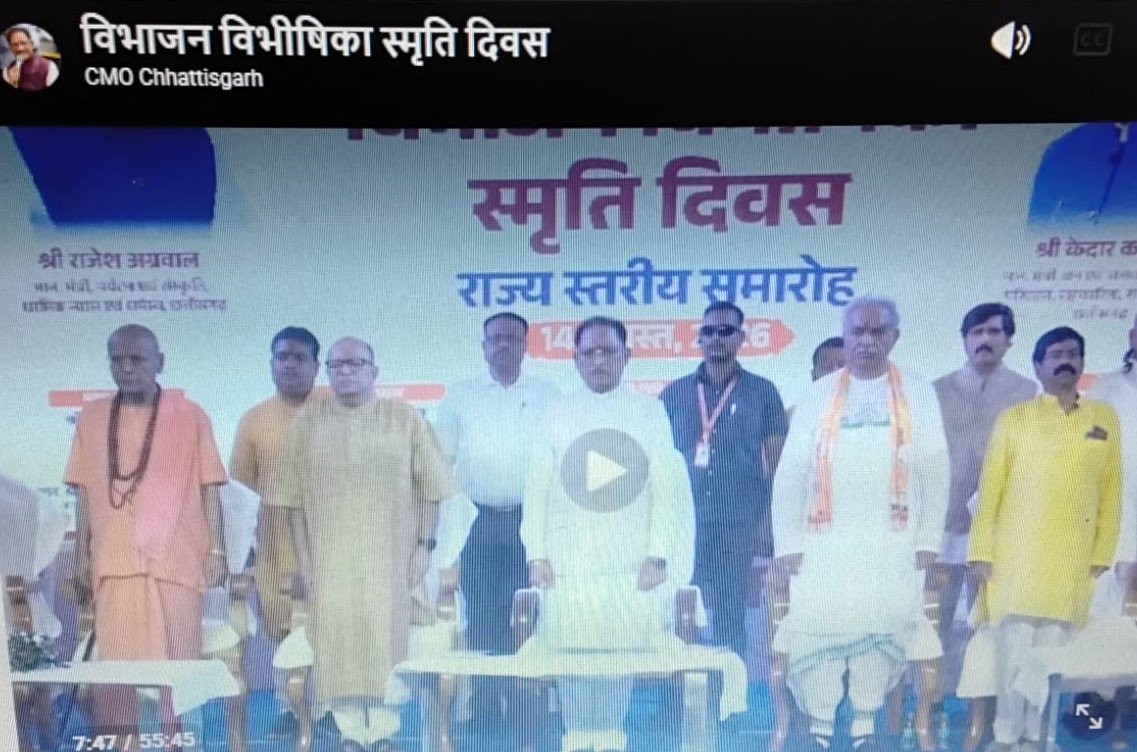
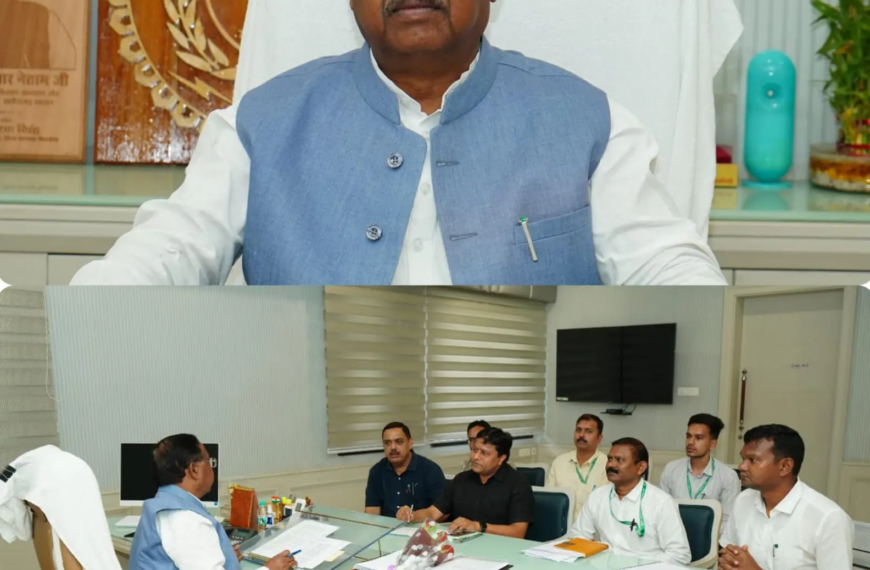
Chief Minister Vishnu Deo Sai and Padma Shri filmmaker Dr Chandraprakash Dwivedi attend the state-level Partition Horrors Remembrance Day programme in Raipur on Friday, August 14, 2026. The programme remembered the suffering and displacement caused by the 1947 Partition while stressing unity, harmony and lessons for future generations-Video Credit:primelookindia.com via CG/PR
Chhattisgarh marks Partition Horrors Remembrance Day in Raipur; filmmaker Dr Chandraprakash Dwivedi joins state-level programme
Raipur: Chhattisgarh on Friday observed Partition Horrors Remembrance Day, remembering the millions who endured displacement, violence and the loss of their homes during the Partition of India while underlining the need to preserve national unity and social harmony.
The state-level programme was organised at the Muktakashi Manch in the Directorate of Archaeology complex near Lok Bhavan in Civil Lines, Raipur, with Chief Minister Vishnu Deo Sai as the chief guest. Renowned filmmaker, actor and Padma Shri awardee Dr Chandraprakash Dwivedi, known for his acclaimed television series Chanakya and the Partition-based film Pinjar, was the keynote speaker.
The programme sought to take the story of Partition beyond dates and political boundaries by recalling the experiences of ordinary families who lost their homes, livelihoods and loved ones and were forced to rebuild their lives in unfamiliar surroundings.
The observance also carried a message for younger generations: remembering Partition should not become an exercise in reviving old hostility, but an opportunity to understand the consequences of communal hatred, social division and violence.
A special exhibition depicting the human cost of Partition formed an important part of the programme. Historical photographs and accounts highlighted displacement, migration, refugee camps and the enormous struggle faced by families compelled to leave their ancestral homes.
Representatives of communities affected by Partition, including Sindhi, Punjabi and Bengali families, were invited to share memories and experiences associated with that period. Students from schools and colleges were also part of the programme, giving the observance an educational dimension and connecting a new generation with one of the most painful chapters of modern Indian history.
Dwivedi’s presence carried particular significance because of his long association with historical storytelling. His film Pinjar, set against the backdrop of Partition, explored the human consequences of communal conflict and displacement. At the Raipur programme, he was invited to speak about the historical and social context of Partition and the memories that continue to surround it.
Culture Minister Rajesh Agrawal chaired the programme, while Forest and Climate Change Minister Kedar Kashyap attended as a special guest. The gathering also included public representatives, academics, members of different communities and students.
The larger message emerging from the observance was that remembering the horrors of 1947 has meaning only when those memories strengthen society’s commitment to peace, fraternity and national unity.

YOU MAY LIKE THIS