Reg No. - CHHBIL/2010/41479ISSN - 2582-919X

Sonmoni Borah Reviews Tribal Welfare Schemes, Stresses Timely Scholarships and Last-Mile Delivery
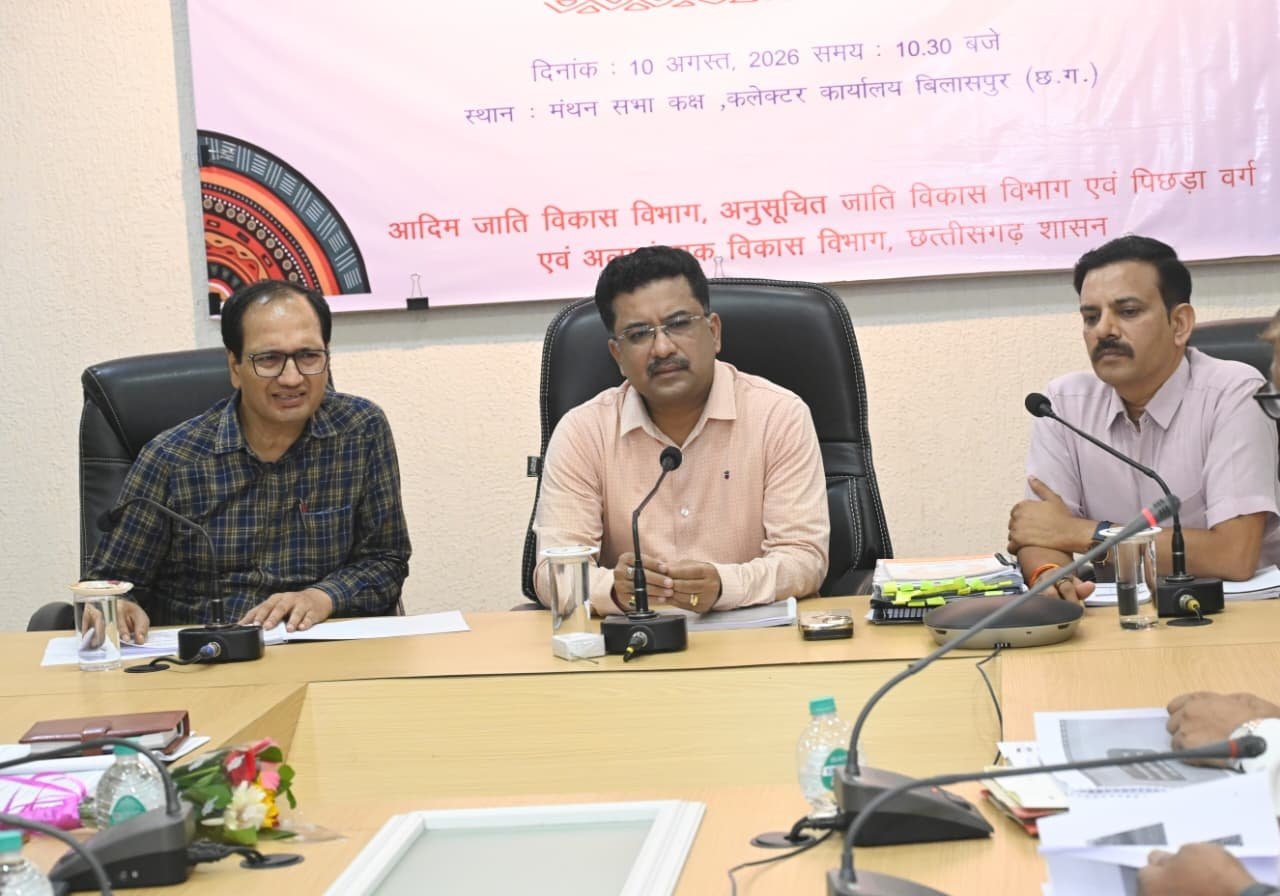
Principal Secretary Sonmoni Borah chairs a high-level review of departmental welfare schemes at the Manthan Conference Hall, Bilaspur Collectorate, on Monday, August 10, 2026, with Collector Sanjay Agrawal and senior officials in attendance. Photo Credit: primelookindia.com via CG/PR
Principal Secretary reviews PM-JANMAN, Dharti Aaba campaign and residential schools; directs officials to make August 13–15 public hearings effective
Key Factors
- Scholarships must be sanctioned within the prescribed timeframe, Principal Secretary tells officials
- PM-JANMAN multipurpose centres and Dharti Aaba campaign come under detailed review
- Public hearings to be held at Aadi Seva Kendras from August 13 to 15
- Prayas and Eklavya residential schools, coaching arrangements and student facilities reviewed
- CM Helpline grievances and village verification to receive priority
- Regular field monitoring stressed to ensure welfare benefits reach intended beneficiaries
Bilaspur: Principal Secretary of the Tribal Development, Scheduled Caste Development, Other Backward Classes and Minority Welfare Department, Sonmoni Borah, on Monday August 10, 2026 conducted a comprehensive review of departmental schemes in Bilaspur, directing officials to focus on timely delivery of student scholarships, effective public hearings and closer monitoring of welfare programmes at the grassroots.
During his visit to Bilaspur, Borah chaired a high-level meeting of Assistant Commissioners of Tribal Development and Project Administrators of Bilaspur Division at the Manthan Conference Hall in the Collectorate. Bilaspur Collector Sanjay Agrawal and other departmental officials attended the meeting.
A major focus of the review was PM-JANMAN, which seeks to improve basic facilities for Particularly Vulnerable Tribal Groups (PVTGs) living in remote tribal areas.
Borah reviewed the functioning of multipurpose centres constructed under the programme. These centres are being used to provide facilities connected with health, education, nutrition and community activities.
He also reviewed the Dharti Aaba Janjatiya Gram Utkarsh Abhiyan, aimed at improving basic infrastructure and accelerating socio-economic development in tribal-majority villages.
Scholarships Must Not Be Delayed
Student welfare received particular attention during the meeting.
Borah issued strict instructions that scholarships for eligible students should be sanctioned within the stipulated timeframe. To streamline the process and address possible bottlenecks, he directed officials to organise meetings of heads of educational institutions at the earliest.
The direction assumes significance as timely scholarship assistance can be crucial for students from tribal and other disadvantaged communities in continuing their education without financial disruption.
Borah also reviewed admissions and functioning of Prayas residential institutions and Eklavya Model Residential Schools, along with the process for selecting institutions for providing coaching to students.
The availability and timely distribution of study material and uniforms were examined, while officials also briefed the Principal Secretary about the progress of student nutrition gardens and surveys concerning vulnerable tribal communities.
August 13–15 Public Hearings Reviewed
Preparations for public hearings scheduled from August 13 to 15 at village-level Aadi Seva Kendras under the Dharti Aaba Janjatiya Gram Utkarsh Abhiyan were reviewed in detail.
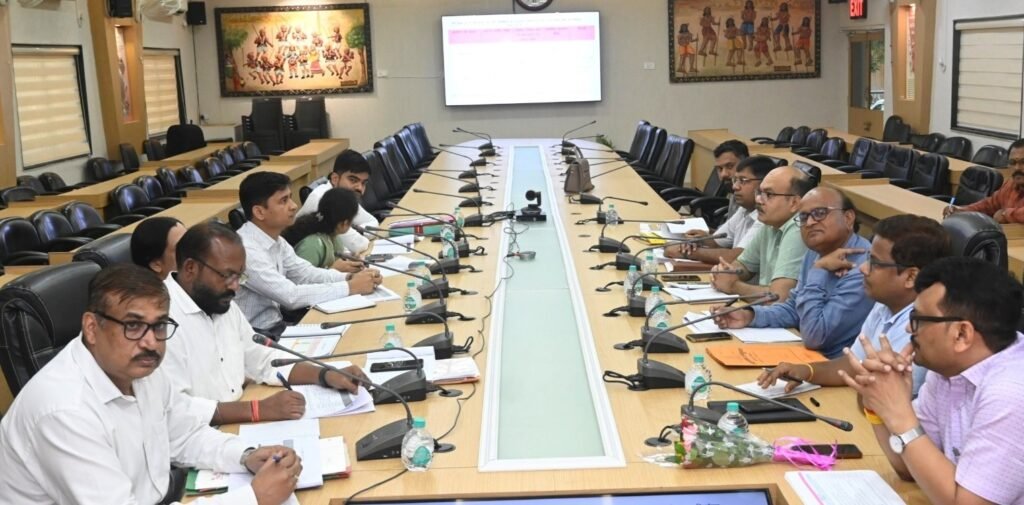
Officials of Bilaspur Division attend a review meeting on PM-JANMAN, Dharti Aaba Janjatiya Gram Utkarsh Abhiyan, scholarships and other tribal welfare programmes at the Manthan Conference Hall, Bilaspur Collectorate, on Monday, August 10, 2026. Photo Credit: primelookindia.com via CG/PR
Borah directed officials to establish better coordination between Panchayat representatives and field-level functionaries so that the hearings are conducted effectively and people’s concerns receive appropriate attention.
He stressed that coordination at the grassroots would be essential for making the exercise meaningful and ensuring that problems relating to implementation are identified and addressed.
Construction Works, CM Helpline Cases Under Review
Progress of works sanctioned under the Dharti Aaba campaign and ongoing construction activities under the Pradhan Mantri Adarsh Gram Yojana was also assessed.
The Principal Secretary sought updates on village verification surveys and other field-level exercises being undertaken by the department.
Cases received through the CM Helpline were another important part of the review. Borah directed officials to ensure speedy disposal of applications and grievances so that citizens are not forced to wait unnecessarily for resolution.
Throughout the meeting, his emphasis remained on monitoring implementation beyond files and administrative approvals.
Benefits Must Reach the Last Person
Borah told officials that the purpose of welfare programmes could not be considered fulfilled merely because administrative approval had been granted or a scheme formally implemented.
“The objective of departmental schemes should not remain confined to administrative approvals; their real and direct benefits must reach the last person in society.” — Sonmoni Borah
He called for regular monitoring of schemes and priority resolution of problems emerging at the field level, making it clear that officials would need to assess programmes by their actual impact on beneficiaries.
His directions on scholarships similarly placed the emphasis on adherence to timelines, while his review of the forthcoming public hearings stressed coordination between Panchayat representatives and field officials.
The review brought together the department’s education, infrastructure and community welfare initiatives, with the Principal Secretary underlining that effective implementation at the grassroots remains central to achieving their intended purpose.
Key Takeaways from Borah’s Directions
On scholarships: Eligible students should receive sanction within the prescribed timeframe, and institutional-level coordination must be strengthened.
On public hearings: Panchayat representatives and field officials should work in coordination to make the August 13–15 hearings effective.
On grievances: CM Helpline applications should be disposed of promptly.
On implementation: Regular monitoring and priority resolution of field-level problems are necessary to translate government schemes into tangible benefits.

YOU MAY LIKE THIS