Reg No. - CHHBIL/2010/41479ISSN - 2582-919X

Student Protests Should Not Be Viewed Through a Political Lens-By-Kumar Bahukhandi ( Editorial)
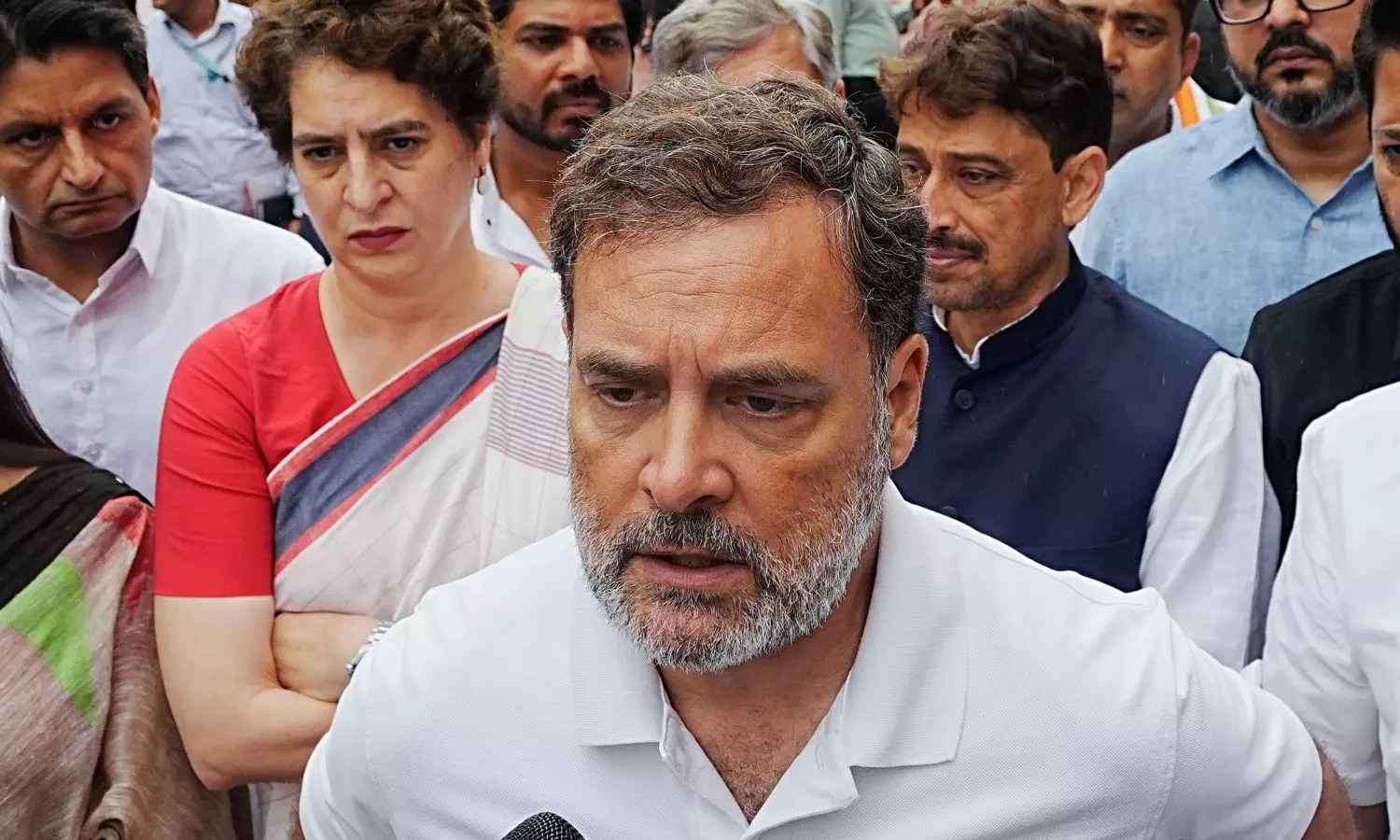
Congress leader Rahul Gandhi addresses the media while criticising the RSS over historical narratives and calling on Prime Minister Narendra Modi to apologise to students over police action against protesters. His remarks have added to the wider political debate over student movements and public accountability. (File Photo)
Consistency in supporting students matters more than who governs at the Centre or in the States
Congress leader Rahul Gandhi’s criticism of the RSS and his demand that the Prime Minister apologise to students has once again brought student protests into the national political conversation. Yet, while leaders across the political spectrum frequently express solidarity with students, an important question remains: is that support consistent, or does it depend on who occupies the seat of power?
The latest example comes from Jharkhand, where students have launched an agitation in Ranchi over alleged irregularities in recruitment examinations conducted by the Jharkhand Public Service Commission (JPSC) and the Jharkhand Staff Selection Commission (JSSC). Aspirants have demanded transparency, accountability and a fair resolution to their grievances, arguing that years of preparation should not be undermined by alleged flaws in the recruitment process.
The protests have once again highlighted concerns that have surfaced in several states over the integrity of public recruitment examinations. For the affected candidates, the issue is not political—it concerns careers, livelihoods and faith in public institutions.
This naturally raises an important question: Should student movements receive political support only when they suit a particular narrative?
In recent years, several student agitations across the country have drawn strong reactions from political parties. Opposition leaders have often criticised the Union Government over examination controversies and police action against protesters. Equally, the ruling BJP has targeted Opposition-ruled states over governance failures. Such political scrutiny is an essential part of democracy.
However, the public also notices when the intensity of political engagement appears to vary depending on whether the government facing criticism belongs to the Centre or to a state ruled by another political party.
The ongoing agitation in Jharkhand presents an opportunity for all political parties to demonstrate that their commitment to students goes beyond electoral considerations. If examination irregularities deserve attention in one part of the country, they deserve the same seriousness elsewhere. Students preparing for competitive examinations face similar pressures regardless of the state in which they reside.
At the same time, fairness requires acknowledging the response of the Jharkhand Government. It has stated that it is taking the allegations seriously and has initiated inquiries into the matter, while assuring students that appropriate action will be taken in accordance with the law. Whether these measures satisfy the protesting students remains to be seen, but governments must be judged not only by their assurances but also by the effectiveness and transparency of their actions.
Student protests should never become instruments of selective politics. Nor should genuine grievances be overlooked because they arise in a state governed by one party rather than another. Young aspirants invest years of hard work, sacrifice and hope in competitive examinations. Their concerns deserve equal empathy and equal urgency from every political party.
Democracy functions best when governments remain accountable and the Opposition remains vigilant. But accountability loses credibility if it appears selective. Political consistency strengthens public trust, while selective outrage weakens it.
The larger issue extends beyond Jharkhand or any single examination. It concerns restoring confidence in recruitment systems and ensuring that every deserving candidate competes on a level playing field. Students deserve transparency, timely investigations and fair opportunities—not political calculations.
In the end, the colour of the government should never determine the colour of political conscience. Whether in Delhi, Ranchi or any other state capital, the principles of fairness, transparency and justice must remain the same.
Students seek fair examinations, not political endorsements. Their future deserves equal concern, regardless of which party governs.