Reg No. - CHHBIL/2010/41479ISSN - 2582-919X

Victory in West Bengal is a paradigm shift in the BJP’s political journey
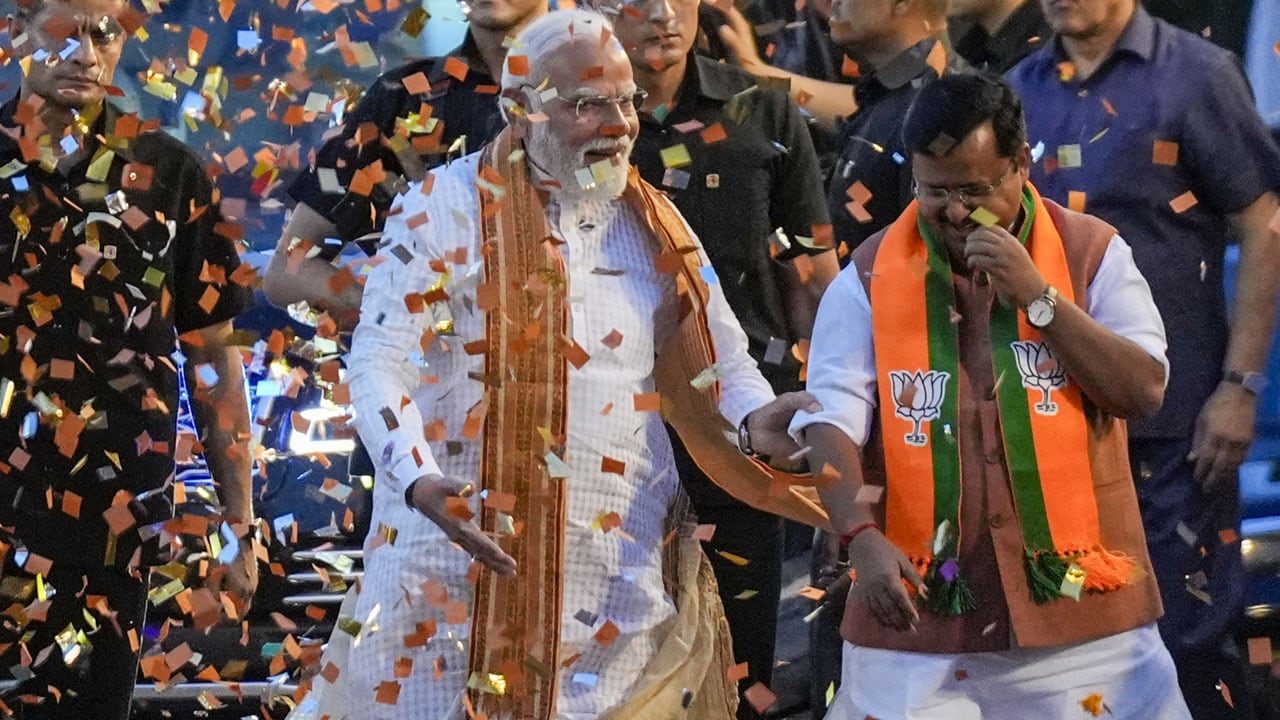
After a sweeping victory in Bengal, Prime Minister Narendra Modi underlines cultural connection over political rhetoric-through street food, river rides and spiritual stops-signalling respect for the state’s identity and soul, Shares victory with BJP National President
The border State of West Bengal has always been very important for the party ideologically, and heavily informs the BJP’s idea of cultural nationalism; the party is now uninterruptedly in power from Gangotri to Gangasagar
The storming of the hustings in West Bengal and Assam by the Bharatiya Janata Party (BJP) on Monday May 4, 2026 with the National Democratic Alliance (NDA) winning in Puducherry and securing three Assembly seats in the bipolar polity of Kerala, heralded a big day for the BJP politically, especially with its victory in West Bengal, in the making for decades.
The implications of these results for the BJP are manifold and significant, in particular the win in West Bengal. Firstly, the party is now uninterruptedly in power from Gangotri in Uttarakhand, the origin of the Ganga, to Gangasagar in West Bengal, where river meets the Bay of Bengal. The birthplace of Shyama Prasad Mookerjee, the founder of the BJP’s earlier avatar, the Jan Sangh, the border State of West Bengal has always been ideologically very important for the party.
West Bengal heavily informs the BJP’s own idea of cultural nationalism, via the national song Vande Mataram, the Independence movement, and the Partition of India and the politics it engendered. Union Home Minister Amit Shah, during a press conference in the midst of his campaign in the State, had said that May 4 would see a BJP government in Anga (Assam), Banga (West Bengal), and Kalinga (Odisha), referring to these States by their ancient names, pointing to a past that predates their current electoral history.
This drawing of a long arc of history is purely ideological in its nature, and makes the victory in West Bengal significant in helping the party establish a different sort of political order in the State, of politics along different lines than currently, beyond the previously held political pieties.
Accondly, it was commonly held that the BJP as an electoral entity did well when it came up against national parties, including the Congress, but faltered at the gate with regional parties, missing the tone of sub-regional nationalism. That presupposition has been finished with victories against the Biju Janata Dal (BJD) in Odisha in 2024; the Aam Aadmi Party (AAP) in Delhi in 2025; and against the Trinamool Congress (TMC) in West Bengal now. This clearly implies that the BJP can get sub-regional nationalism right by tone, tenor and narrative, and move beyond the perception that it’s a party of north Indian Hindi speakers.
Thirdly, the BJP gained Odisha in the 2024 Lok Sabha election, both in the Assembly and in parliamentary seats, a new ground that helped it shore up its third term at the Centre, and an important space as far as the array of States under its rule is concerned. The victory in West Bengal is a signal that the BJP is already preparing to break new ground for the Lok Sabha election of 2029 by its dominance on the ground across States from Haryana to West Bengal and Assam, since in many States, Lok Sabha rewards follow State verdicts.
For the BJP, both in terms of ideology and electoral power, May 4 is a red letter day. Amid the surfeit of electoral victories the party has enjoyed since 2014, the win in West Bengal in 2026 induces a paradigm shift.

YOU MAY LIKE THIS