Reg No. - CHHBIL/2010/41479ISSN - 2582-919X

UP Tightens Government Job Rules for Candidates Linked to Groups Advocating Violent Change
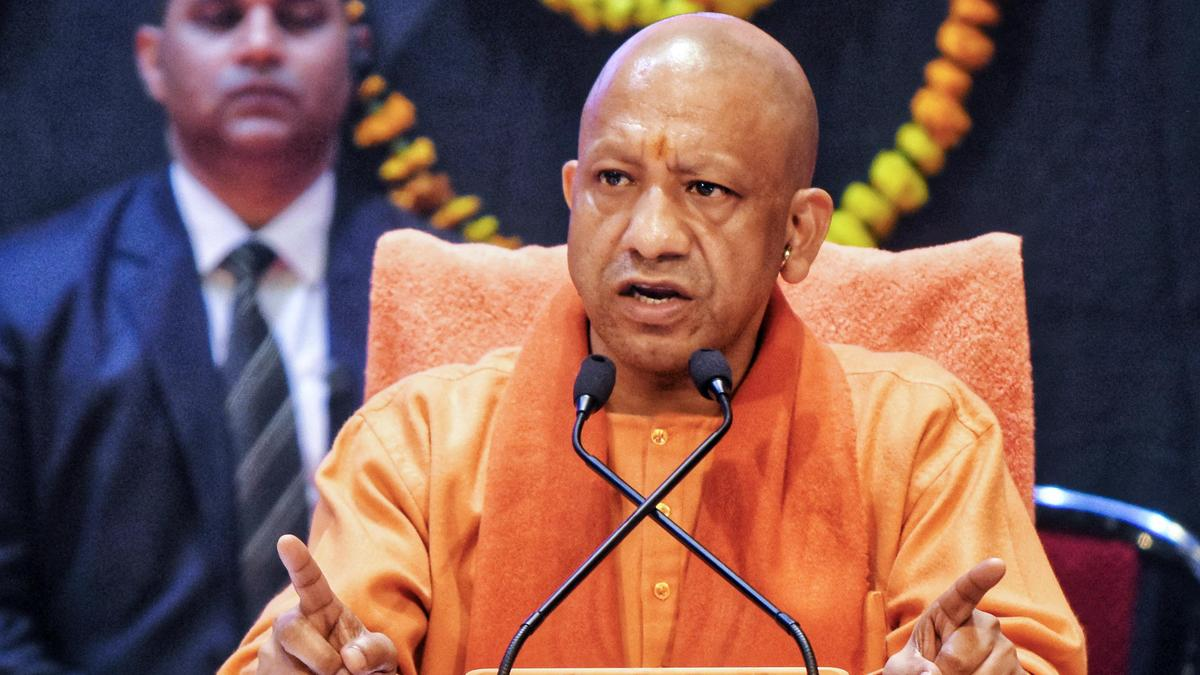
Uttar Pradesh Chief Minister Yogi Adityanath addresses a gathering in this file photograph. His government issued revised character-verification guidelines for direct recruitment on Wednesday, October 28, 2026. (Photo: Special Arrangement)
Revised character-verification guidelines say political ideology, an FIR or a pending investigation alone cannot automatically disqualify applicants
Key Highlights
- Candidates belonging to organisations advocating violent change to the established system may be declared ineligible for government employment.
- Political beliefs alone will not be grounds for disqualification.
- An FIR or an ongoing police investigation will not automatically lead to rejection.
- The guidelines cover government departments, public sector corporations, boards and local bodies.
- Opposition parties have questioned the rules’ implications for democratic protest.
Lucknow: The Uttar Pradesh government has revised character-verification guidelines for candidates selected through direct recruitment, providing for the exclusion of members of organisations whose stated objective is to change the established system through violent means. The guidelines also clarify that political ideology alone cannot be used to deny a candidate government employment.
Issued by Principal Secretary, Appointment and Personnel, M. Devaraj on Wednesday, October 28, 2026, the revised framework applies to state government departments, public sector corporations, boards, and urban and rural local bodies.
The provisions distinguish political beliefs from membership of organisations committed to violent methods. The restriction concerns the latter, rather than political affiliation alone.
The government clarified that a candidate’s political ideology, by itself, would not constitute grounds for disqualification from public employment.
The guidelines also address participation in violent activities or activities aimed at changing the established system during the three years preceding character verification, after a candidate has attained the age of 21.
Such participation may be treated as an indication of continued involvement. However, authorities may consider documented evidence demonstrating a genuine positive change in the candidate’s conduct during that period.
The government has clarified that the registration of a first information report or an ongoing police investigation will not automatically render an applicant unsuitable.
Similarly, acquittals, cases settled through lawful compromises and matters covered by juvenile justice provisions will not result in automatic rejection. These safeguards form part of the revised assessment framework.
The revised framework states that an FIR or pending investigation alone will not automatically disqualify a candidate.
District police and Local Intelligence Units must submit verification reports within 30 days of receiving a request. The Home Department will monitor compliance with this deadline.
Where an adverse report is submitted, the district magistrate must give the candidate an opportunity to present their case, either in person or online, before forwarding a final adverse recommendation. Existing state government employees will not require fresh character verification, although relevant service records may be obtained from their previous departments.
The decision has drawn criticism from opposition parties over its potential application to political dissent.
Samajwadi Party spokesperson Ashutosh Verma, in the supplied report, said his party supported changes of government through democratic means, particularly elections. He questioned the interpretation of “regime change” and distinguished electoral change from violent attempts to alter the system.
Congress spokesperson Surendra Rajpoot argued that peaceful demonstrations and sit-ins by young people, including protests against examination paper leaks, should not be characterised as violence.
BJP MP Ram Pratap Singh, meanwhile, defended action against those spreading anarchy.
The debate centres on how the verification provisions will be applied, with the government expressly excluding political ideology alone as a basis for rejection and opposition parties stressing the protection of peaceful democratic activity.

YOU MAY LIKE THIS