Reg No. - CHHBIL/2010/41479ISSN - 2582-919X

‘Unity in Diversity Is in Bharat’s DNA’: Mohan Bhagwat Takes Message of Oneness to New York
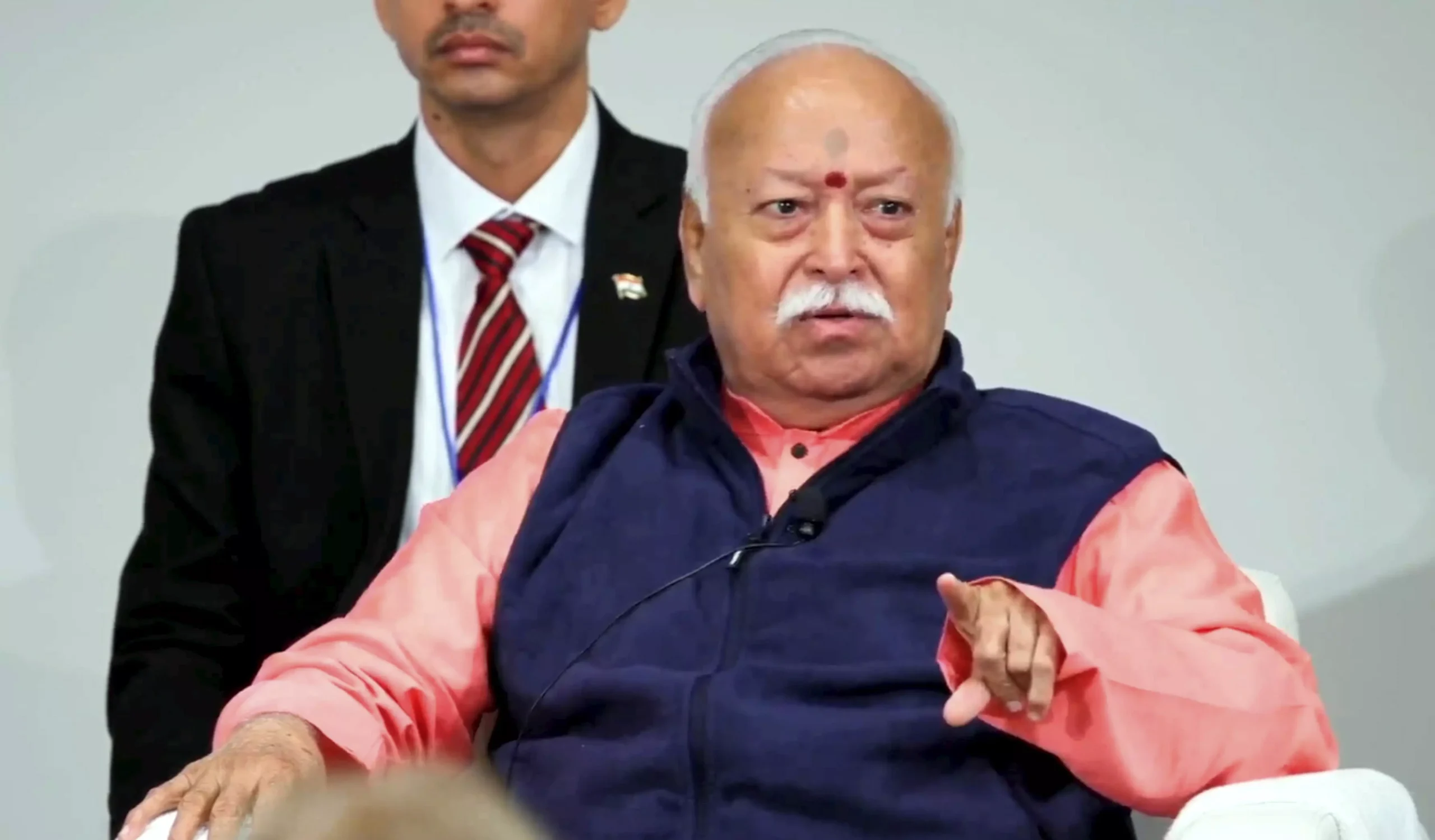
RSS Sarsanghchalak Mohan Bhagwat during his New York visit, where he addressed the Universal Oneness Celebration and spoke about Bharat’s tradition of unity in diversity. Photo: Courtesy/Source image-Photo .Credit: PTI
RSS chief says India’s larger role is to demonstrate that diversity can coexist with a deeper sense of oneness
Key Highlights
- RSS chief Mohan Bhagwat says “unity in diversity” is embedded in Bharat’s DNA
- Tells New York gathering that diversity must be celebrated, respected and accepted
- Says Bharat has a larger responsibility to demonstrate how diversity can coexist with oneness
- Invokes Swami Vivekananda to underline that every nation has a message, mission and destiny
- Calls on Indians abroad to fulfil responsibilities towards both their karma bhumi and janma bhumi
- New York programme forms part of Bhagwat’s international outreach during the RSS centenary year
New York: Rashtriya Swayamsevak Sangh (RSS) chief Mohan Bhagwat has described “unity in diversity” as intrinsic to Bharat, telling an Indian diaspora gathering in New York that diversity should not merely be tolerated but celebrated, respected and accepted.
Addressing the Universal Oneness Celebration at Madison Square Garden on Saturday, August 29, Bhagwat contrasted an expression commonly associated with the United States — pluralism — with what he described as Bharat’s defining principle of unity amid diversity. Contemporary reports confirm the event and his remarks.
“For Bharat, this unity and this diversity, both are in their DNA,” Bhagwat said, arguing that differences need not weaken an underlying sense of human and national oneness.
The RSS Sarsanghchalak expanded the argument beyond India, saying nations should not be viewed merely as geographical entities. Invoking Swami Vivekananda’s conception that every nation has a message, mission and destiny, Bhagwat said Bharat’s particular responsibility was to understand unity in diversity itself and periodically remind the wider world of that principle.
Diversity Should Decorate, Not Divide
Bhagwat said diversity adds to rather than diminishes oneness and called for differences to be celebrated, respected and accepted. His address presented the idea not simply as a political formulation but as a civilisational principle that he traced to India’s ancient traditions.
The remarks acquire additional significance because Bhagwat’s New York engagements have focused strongly on religious and cultural coexistence. At a separate “One World, One Humanity” Faith Leaders’ Conference, he said religions may differ but humanity remains one, and argued that a Hindu who believes Muslims should have no place in Bharat would cease to embody the Hindu outlook he was describing.
Bhagwat also addressed the responsibilities of Indians living abroad. His message was that while India remains their janma bhumi, or land of birth, they owe loyalty and responsibility to their karma bhumi — the country in which they live and work.
His New York appearance has not, however, been without controversy. Critics of the RSS, including New York Mayor Zohran Mamdani, opposed the Madison Square Garden event and described the organisation’s ideology as exclusionary. The RSS rejects accusations that it discriminates against minorities and presents itself as a cultural organisation working for Hindu and national unity.
Against that contentious background, Bhagwat’s emphasis on diversity, religious coexistence and universal oneness becomes particularly noteworthy. Supporters may see the message as an articulation of the RSS chief’s conception of an inclusive civilisational identity; critics are likely to examine whether that message is consistently reflected in the organisation’s politics and public conduct.
For Bhagwat, however, the message delivered in New York was unequivocal: diversity need not stand in opposition to unity. It can, instead, enrich it.

YOU MAY LIKE THIS