Reg No. - CHHBIL/2010/41479ISSN - 2582-919X

Trump Calls Ukraine’s Renewed Strikes on Russian Oil Refineries a ‘Disgrace’, Warns of Rising Global Energy Prices
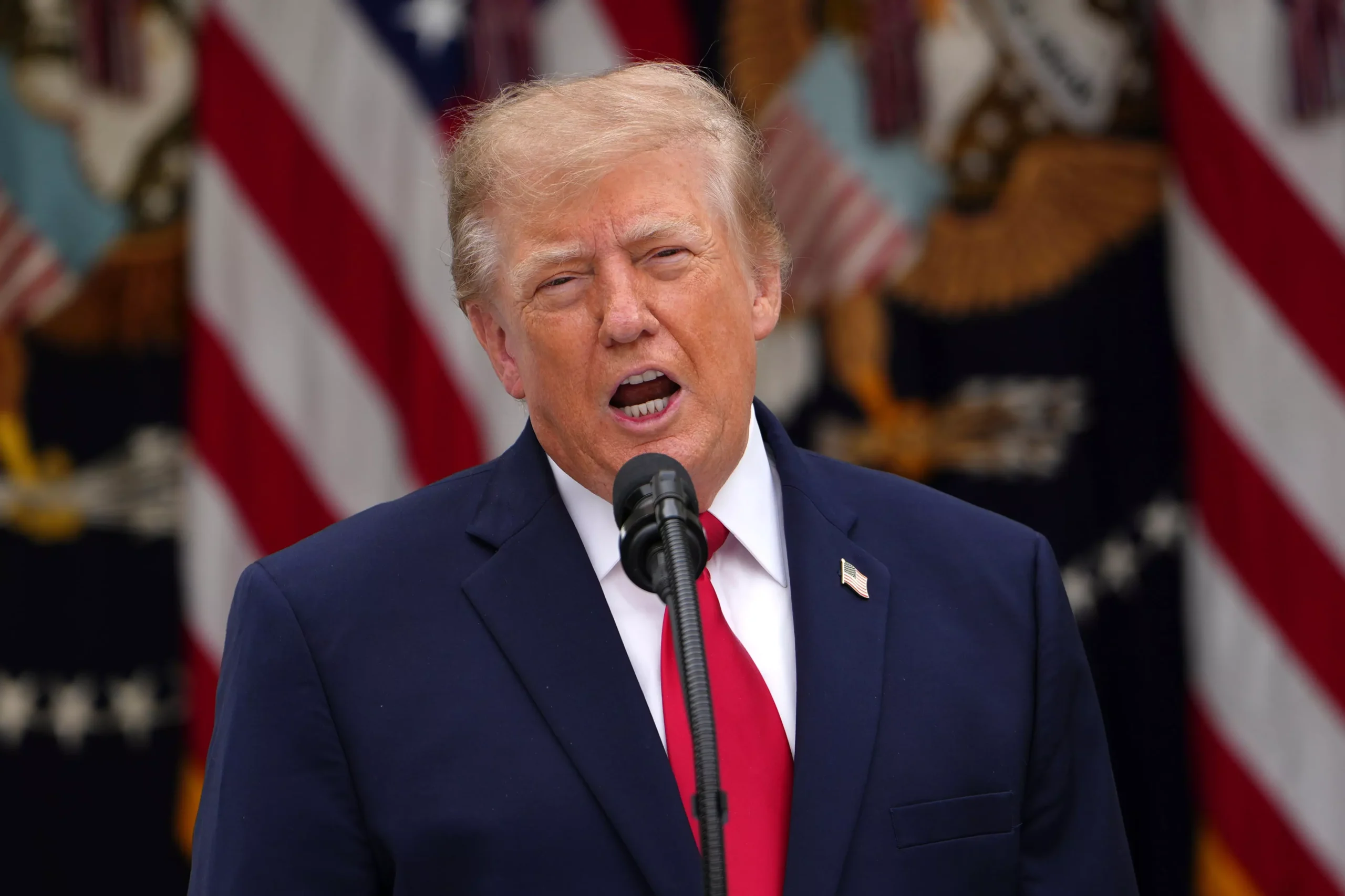
US President Donald Trump addresses an audience in Washington in this photograph accompanying his remarks reported on Thursday, October 15, 2026, in which he described Ukraine’s renewed strikes on Russian oil refineries as a “disgrace” and linked the attacks to rising global energy prices .Photo: AFP
US President Donald Trump criticises Ukrainian attacks on Russian oil infrastructure, raising fresh questions over the economic consequences of the continuing conflict and the implications for international energy markets.
Key Highlights
- President Donald Trump condemns Ukraine’s renewed strikes on Russian oil refineries, describing them as a “disgrace”.
- Trump links the attacks to increasing global energy prices during an interview with Newsmax.
- Russian oil infrastructure remains strategically important to Moscow’s economy and its ability to sustain military operations.
- The controversy highlights the difficult relationship between military objectives, diplomatic negotiations and international energy security.
- Continued instability in global petroleum markets could create additional economic challenges for energy-importing countries, including India.
Washington: US President Donald Trump has strongly criticised Ukraine’s renewed attacks on Russian oil refineries, describing the strikes as a “disgrace” and expressing concern that the targeting of energy infrastructure is contributing to higher global petroleum prices. His remarks, made during an interview with American broadcaster Newsmax and reported on Thursday, October 15, 2026, have brought renewed attention to the economic consequences of the Russia–Ukraine conflict and the growing vulnerability of international energy markets.
Trump’s criticism comes against the backdrop of continuing hostilities between Russia and Ukraine, with energy infrastructure remaining a strategically sensitive component of the conflict.
Asked about Ukraine’s renewed strikes against Russian oil-processing facilities, the American President responded sharply.
“Well, I think that’s a disgrace,” Trump told Newsmax.
He also linked the attacks to rising global energy prices, reflecting concerns that disruptions to Russian petroleum infrastructure could affect international fuel markets.
Trump Questions the Economic Consequences of Ukraine’s Military Strategy
The American President’s remarks underscore the tension between Ukraine’s military objectives and the wider economic consequences of attacks on energy facilities.
Ukraine has targeted Russian energy infrastructure during the conflict, viewing such installations as economically and strategically significant assets.
Oil refineries play an important role in processing crude petroleum into fuels used by civilian industries, transport networks and military operations.
Damage to these facilities can disrupt domestic fuel supplies, affect refinery production and potentially increase pressure on petroleum markets.
However, the precise effect of individual refinery attacks on international crude oil prices depends on several factors, including the extent of the damage, available refining capacity, export flows and prevailing global supply conditions.
Trump’s comments indicate his concern that the economic consequences of the conflict are extending beyond the battlefield.
Russian Refineries Remain Strategically Important Targets
Russia is one of the world’s major petroleum producers and exporters, making its energy infrastructure economically important not only to Moscow but also to international markets.
The country’s refining industry supports domestic fuel consumption, industrial activity and the broader energy economy.
For Ukraine, strikes against strategically important Russian facilities form part of an effort to weaken infrastructure that can contribute to Moscow’s ability to sustain military operations.
From a military perspective, disrupting fuel production and distribution can complicate logistical operations and increase the economic costs of prolonged warfare.
Nevertheless, attacks on energy infrastructure also raise questions about the potential consequences for civilian populations and global energy supplies.
The latest controversy illustrates how modern warfare increasingly extends into economic and industrial systems whose importance reaches far beyond national borders.
Global Energy Markets Face Renewed Uncertainty
International petroleum markets are particularly sensitive to developments involving major oil-producing countries.
Even when attacks do not immediately reduce global crude oil supplies, uncertainty over refinery operations, transportation networks and future disruptions can influence market expectations.
Traders and energy companies closely monitor geopolitical developments because prolonged instability may affect production, shipping, insurance costs and supply arrangements.
However, attributing changes in global oil prices solely to Ukrainian refinery strikes would require supporting market data and a detailed assessment of other supply-and-demand factors.
Trump’s assertion nevertheless draws attention to the broader economic risks associated with continued attacks on energy infrastructure.
India Among Countries Watching Global Oil Developments
For India, developments involving Russian petroleum infrastructure carry particular significance because the country depends heavily on imported crude oil to meet its energy requirements.
Russia has emerged as an important supplier of crude petroleum to Indian refiners, making changes in Russian production, export availability and international prices relevant to India’s energy security.
A sustained increase in global crude prices could place additional pressure on India’s import expenditure and potentially affect domestic fuel costs.
Higher energy prices can also influence transportation, manufacturing, agriculture and the cost of essential commodities.
However, the actual impact on Indian consumers would depend on international price movements, exchange rates, taxation, refinery economics and domestic pricing decisions.
The controversy therefore has implications extending beyond the immediate confrontation between Washington, Moscow and Kyiv.
Military Pressure Versus Diplomatic Resolution
Trump’s criticism also brings into focus a fundamental question surrounding the conflict: whether attacks on strategically important economic infrastructure can influence the course of the war without generating wider international instability.
Ukraine maintains its right to defend itself against Russia’s invasion, while Russia’s continued military operations remain central to the conflict.
The United States and other international stakeholders face the challenge of balancing support for security objectives with concerns over economic disruption and the prospects for a negotiated settlement.
The legality of attacks on particular energy installations depends on their military use, the anticipated civilian harm and the requirements of international humanitarian law.
The diplomatic challenge lies in preventing further escalation while addressing the underlying security disputes that continue to sustain the war.
Trump’s Remarks Add a New Dimension to the Energy Debate
By publicly criticising Ukraine’s refinery strikes, Trump has placed economic consequences at the centre of his response to the latest developments.
His remarks suggest that the effects of the conflict on international energy prices remain an important consideration in Washington’s assessment of the war.
However, the comments alone do not establish whether the United States intends to introduce new diplomatic measures or alter its existing approach towards Ukraine.
Any such policy shift would require separate confirmation from the American administration.
A Conflict Whose Economic Consequences Cross Borders
The continuing Russia–Ukraine war demonstrates how military actions directed at strategically important infrastructure can create concerns extending far beyond the countries directly involved.
Energy markets, international trade, transportation networks and national economic policies remain interconnected.
For major energy-importing economies, prolonged instability represents a continuing challenge to economic planning and price stability.
Trump’s description of the Ukrainian strikes as a “disgrace” has consequently introduced another point of controversy into an already complex geopolitical debate.
The larger question is whether military pressure on Russia’s energy infrastructure can advance Ukraine’s strategic objectives without intensifying the economic consequences of a war whose effects are already being felt internationally.

YOU MAY LIKE THIS