Reg No. - CHHBIL/2010/41479ISSN - 2582-919X

Transform Raipur’s ITMS War Room Into a Centre for Good Governance: Principal Secretary Sonmoni Borah
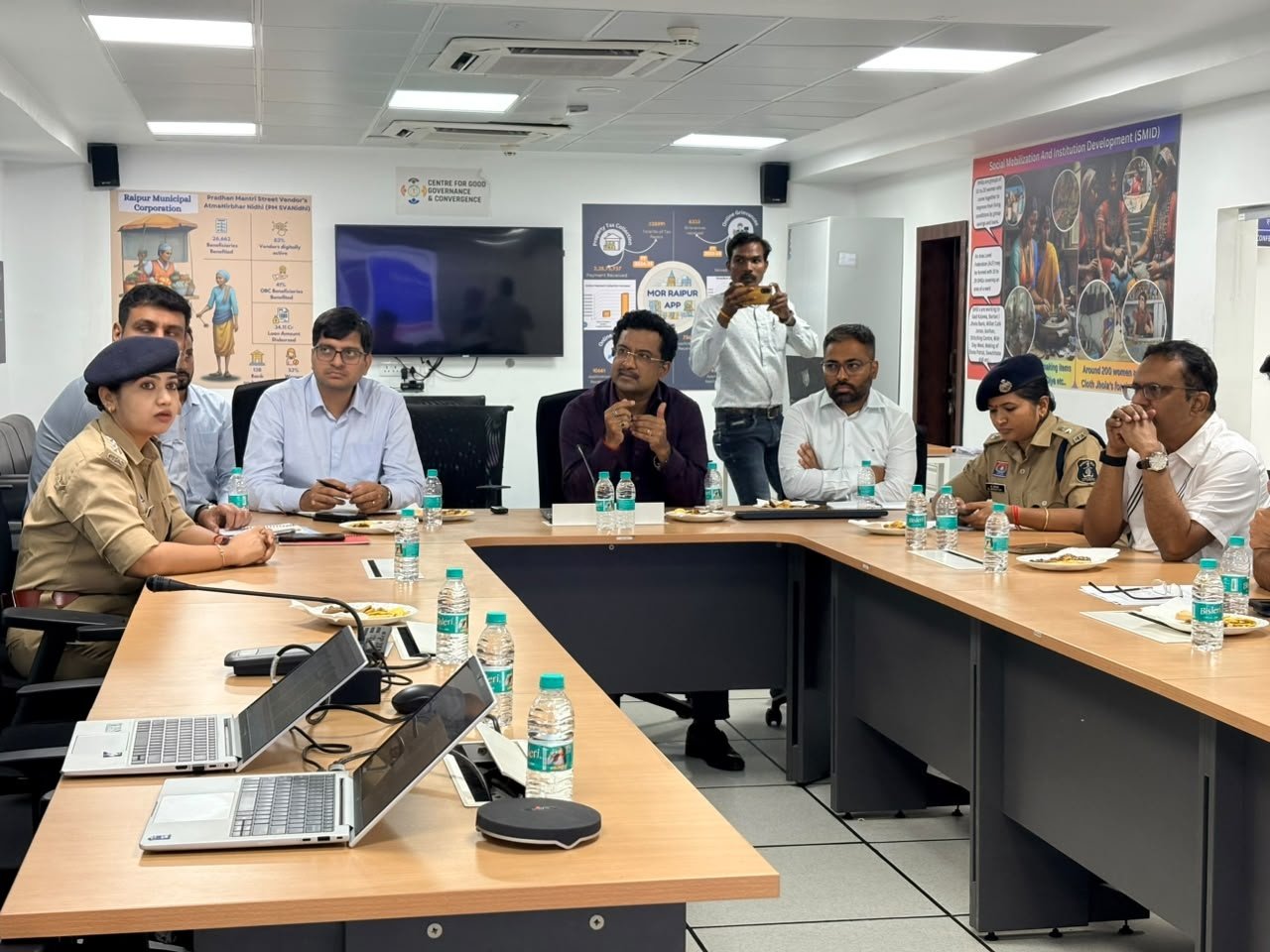
Principal Secretary of Urban Administration and Development Sonmoni Borah chairs a review meeting with senior municipal, administrative and police officials at the Integrated Traffic Management System War Room in Raipur on Friday, October 9, 2026, directing the preparation of an integrated action plan for traffic management, sanitation, women’s safety and improved urban governance. Photo: primelookindia.com via CG/DPR.
Urban Administration Principal Secretary calls for an integrated action plan covering traffic management, women’s safety, sanitation, disaster preparedness and illegal construction, with technology and interdepartmental coordination at the centre of urban reforms.
Key Highlights
- Principal Secretary Sonmoni Borah inspects the Integrated Traffic Management System (ITMS) War Room at Jaistambh Chowk in Raipur.
- Directs officials to prepare a comprehensive action plan for developing the facility into a Centre for Good Governance.
- Calls for systematic assessment of traffic pressure and road capacity on major routes.
- Emphasises stronger sanitation monitoring, regular waste collection and prompt action at identified garbage hotspots.
- Reviews the use of surveillance infrastructure for women’s safety and emergency response.
- Seeks coordinated action against unauthorised excavation, illegal construction and unsafe building practices.
- Stresses public awareness and civic responsibility as essential elements of effective city management.
Technology Must Strengthen Urban Governance
Chhattisgarh’s Principal Secretary of Urban Administration and Development, Sonmoni Borah, has directed officials to develop a comprehensive and coordinated action plan for improving Raipur’s urban management, with particular emphasis on traffic regulation, sanitation, women’s safety, disaster preparedness and the effective use of technology.
During an inspection of the Integrated Traffic Management System (ITMS) War Room at Jaistambh Chowk on Friday, October 9, 2026, Borah reviewed the technological infrastructure, surveillance facilities and information-management systems available at the centre.
The facility operates from the third floor of the multilevel parking complex at Jaistambh Chowk.
Following the inspection, the Principal Secretary chaired a meeting of senior administrative, municipal and police officials to assess how the existing infrastructure could be used more effectively to address the city’s growing urban challenges.
“The ITMS War Room should be developed into a Centre for Good Governance, with an integrated action plan to strengthen urban management, departmental coordination and citizen services.” — Principal Secretary Sonmoni Borah, translated rendering of his directions
The review placed particular emphasis on using technology not merely for surveillance but also for identifying problems, coordinating responses and improving the quality of municipal services.
A Comprehensive Approach to Raipur’s Development
Borah called for urban development to be approached as a coordinated administrative responsibility rather than a collection of separate departmental activities.
Traffic congestion, sanitation deficiencies, unsafe construction practices and public safety concerns often involve multiple agencies.
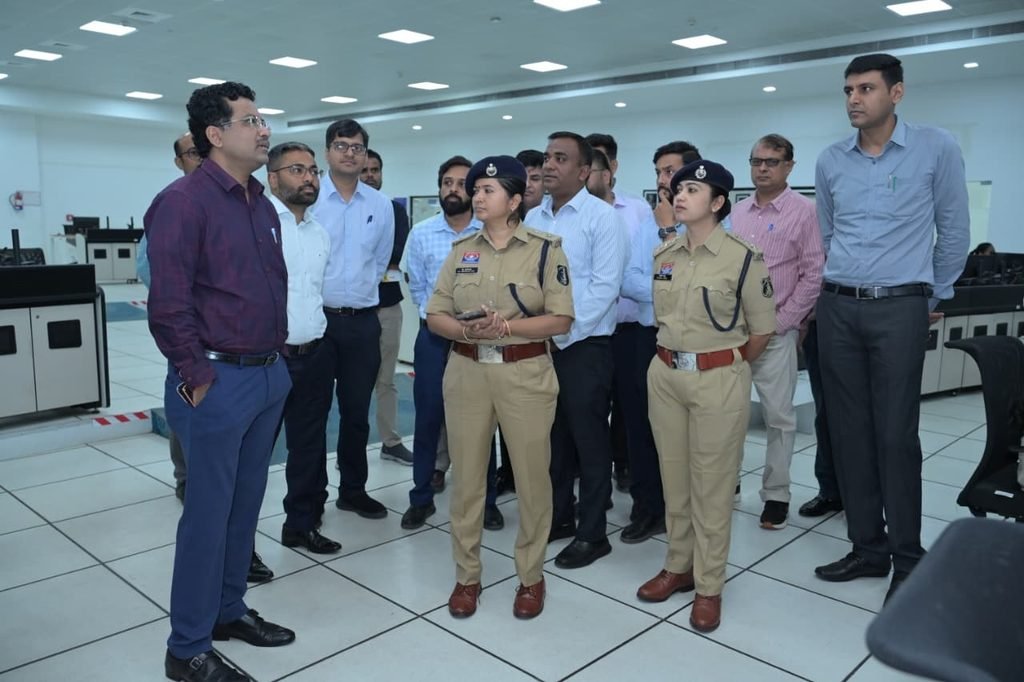
Principal Secretary Sonmoni Borah interacts with DCP Archana Singh, ACP Traffic Snehil Sahu and other senior officials during an inspection of Raipur’s Integrated Traffic Management System facility on Friday, October 9, 2026. He reviewed the available monitoring infrastructure and emphasised effective coordination among departments to strengthen public safety and civic services. Photo: primelookindia.com via CG/DPR.
The meeting therefore focused on improving coordination among the Raipur Municipal Corporation, traffic police, Regional Transport Office and other concerned departments.
Officials were asked to prepare an action plan that considers the interconnected nature of these issues and identifies practical measures for their resolution.
The Principal Secretary also examined how information available through the ITMS could support faster administrative decisions and more effective monitoring.
The proposed transformation of the facility into a Centre for Good Governance would require officials to link technological resources with clearly defined administrative responsibilities and follow-up mechanisms.
Major Roads to Be Assessed for Traffic Pressure
Improving traffic management was among the principal issues discussed during the review.
Borah emphasised the need to assess the vehicle-carrying capacity of major roads, the volume of traffic using them and the available road space.
Such assessments would help authorities identify congested stretches and determine where traffic-management interventions were necessary.
Regular inspections of major routes were also discussed to ensure that emerging problems could be identified before they became more serious.
“The capacity of major roads and the traffic pressure on them must be assessed regularly so that congestion and related problems can be identified and addressed through coordinated action.” — Sonmoni Borah, translated rendering of his directions
The meeting discussed forming joint teams involving the traffic police, Regional Transport Office and Municipal Corporation.
These teams would support coordinated traffic-management efforts while also promoting public awareness of road rules and responsible driving behaviour.
The review recognised that effective traffic management requires a combination of enforcement, planning, monitoring and cooperation from road users.
ITMS Monitoring to Support Cleaner Public Spaces
The Principal Secretary also reviewed Raipur’s sanitation arrangements, particularly the maintenance of major roads, markets and other public spaces.
He emphasised regular cleaning and more effective door-to-door waste collection.
Officials discussed using the monitoring facilities available through ITMS to identify locations where garbage accumulation and poor sanitation require immediate attention.
“Locations affected by poor sanitation should be identified through the ITMS monitoring system, and prompt corrective action must be ensured.” — Sonmoni Borah, translated rendering of his directions
The meeting also examined the need for stronger waste-management practices, routine supervision and improved coordination between the departments responsible for cleanliness.
Borah stressed the importance of public participation in keeping the city clean.
Awareness initiatives were discussed to encourage residents to adopt responsible waste-disposal practices and make cleanliness a regular part of everyday life.
The approach places responsibility on both civic agencies and citizens, recognising that sustainable improvements in sanitation require administrative efficiency as well as behavioural change.
Women’s Safety and Emergency Preparedness Receive Attention
Women’s safety formed another important part of the meeting.
Officials discussed the potential for using ITMS surveillance infrastructure and other technological resources to strengthen safety arrangements in public spaces.
The review also examined disaster-management preparedness and the importance of effective communication between departments during emergencies.
Borah emphasised the need to review existing arrangements and improve coordination so that authorities could respond promptly when urgent situations arise.
“Available surveillance systems and technological resources must be used effectively to strengthen women’s safety and improve coordination during emergencies.” — Sonmoni Borah, translated summary of his directions
The discussion highlighted the importance of ensuring that monitoring infrastructure is supported by operational readiness and clear departmental coordination.
Technology can help authorities detect or assess situations, but timely action remains dependent on the agencies responsible for responding.
Stronger Action Against Illegal Excavation and Construction
Unauthorised excavation and illegal construction were also identified as areas requiring more effective supervision.
The meeting examined the need to strengthen monitoring of construction activities and ensure compliance with prescribed safety standards.
Officials discussed coordinated action against construction work undertaken without adequate safety measures.
The objective is to reduce risks to pedestrians, motorists and residents while preventing disruptions to public spaces.
Borah emphasised that departments must work together to address violations rather than respond independently after problems arise.
“Construction activities must comply with prescribed safety standards, and departments should take coordinated action to prevent unsafe construction and unauthorised excavation.” — Sonmoni Borah, translated rendering of his directions
The review also underscored the need to monitor activities that could damage roads, obstruct public movement or compromise safety.
Civic Sense Must Become Part of Urban Development
Beyond infrastructure and enforcement, Borah placed emphasis on developing civic responsibility among residents.
The meeting discussed public awareness initiatives covering traffic discipline, protection of public property, sanitation and responsible behaviour in shared spaces.
Joint awareness campaigns involving the traffic police, RTO and Municipal Corporation were considered as part of the proposed action plan.
The objective is to encourage residents to recognise their role in maintaining a safe, orderly and clean city.
Civic awareness, the review suggested, should complement government enforcement and infrastructure improvements.
Without public cooperation, even well-designed urban management systems may struggle to deliver lasting results.
Centre for Good Governance Could Improve Departmental Coordination
The proposal to develop the ITMS War Room into a Centre for Good Governance represents a broader approach to using existing urban technology.
The facility could support coordinated monitoring of several municipal responsibilities rather than remaining focused primarily on traffic management.
Its effectiveness would depend on how well information gathered through the system is converted into decisions, departmental action and measurable improvements.
The review called for an integrated plan covering surveillance, traffic management, sanitation, women’s safety, disaster preparedness and civic awareness.
Such an approach could help reduce administrative fragmentation and enable authorities to respond more systematically to urban problems.
However, the meeting outlined directions and planning priorities; specific implementation timelines and measurable targets were not announced in the supplied information.
Senior Officials Participate in Review
The inspection and subsequent meeting were attended by several senior officials from the Urban Administration and Development Department, municipal administration and police.
Those present included Urban Administration and Development Director Neelesh Mahadev Kshirsagar, SUDA Chief Executive Officer Sumit Agrawal, Raipur Municipal Commissioner Sambit Mishra, Additional Director Pulak Bhattacharya, DCP Archana Singh, ACP Traffic Snehil Sahu, Joint Director S. K. Sundarani, Additional Commissioner Lokeshwar Sahu, Deputy Chief Executive Officer Sunil Agrahari and Superintending Engineer Pradeep Yadav.
Their participation reflected the range of departments involved in the proposed improvements.
The meeting concluded with an emphasis on preparing a coordinated action plan and ensuring effective departmental follow-up.
Towards a More Responsive Urban Administration
The review at Raipur’s ITMS War Room brought together several issues that directly affect everyday urban life.
Traffic congestion, poor sanitation, unsafe construction and public safety concerns cannot be addressed through isolated measures alone.
By calling for stronger departmental coordination and better use of technological resources, Borah has placed the focus on improving how urban administration responds to citizens’ needs.
The next challenge will be translating the proposed action plan into consistent monitoring, timely intervention and visible improvements across the city.
For Raipur, the objective is not simply to expand technological surveillance but to make urban governance more coordinated, accountable and responsive to the people it serves.

YOU MAY LIKE THIS