Reg No. - CHHBIL/2010/41479ISSN - 2582-919X

The Silence That Speaks-By- Kumar Bahukhandi ( Editorial)
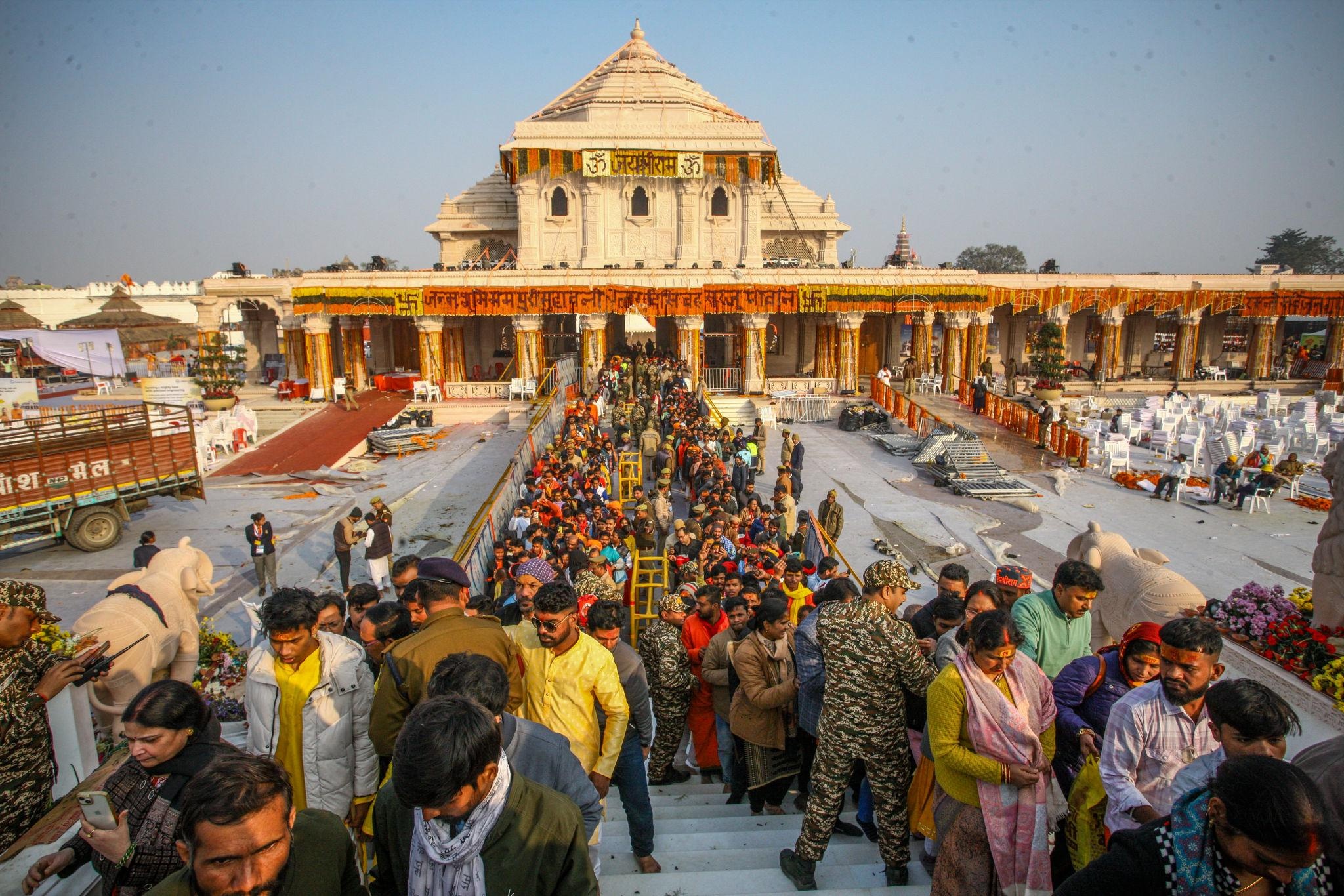
Thousands of devotees continue to visit the Ram Mandir, reflecting its deep spiritual and cultural significance.-Photo Credit-channel24india.com
As allegations swirl around the Ram Temple project, the BJP leadership’s restraint raises questions about accountability, political messaging, and public trust.
The Ram Mandir is more than a place of worship. For millions of Indians, it symbolises faith, cultural identity, and the culmination of a movement that shaped the country’s political landscape for decades. For the Bharatiya Janata Party, it represents perhaps its most significant ideological and electoral milestone. That is precisely why any controversy connected with the temple attracts extraordinary public attention.
In recent days, allegations and counter-allegations relating to aspects of the Ram Temple project have dominated political discourse. Opposition parties have demanded explanations, while public debate has intensified across television studios and social media platforms. Yet amid the growing noise, one feature stands out—the conspicuous silence of the BJP’s highest leadership.
Neither Prime Minister Narendra Modi nor several of the party’s senior national leaders have made detailed public remarks addressing the controversy. For observers, this silence is as noteworthy as the allegations themselves.
Political silence is rarely accidental. It can reflect a deliberate communication strategy. Governments and political parties often avoid commenting while facts are being established, investigations are underway, or legal processes are active. Speaking prematurely may unintentionally prejudice inquiries or create further political complications.
At the same time, prolonged silence can create an information vacuum. In the absence of authoritative clarification, speculation tends to flourish. Competing narratives gain traction, and public confidence may suffer—not necessarily because allegations are proven, but because uncertainty remains unresolved.
The Ram Mandir occupies a unique position in India’s public life. Unlike ordinary infrastructure projects, it carries immense religious, historical, emotional, and political significance. Every development associated with it is scrutinised not merely through administrative or financial lenses but also through the prism of national sentiment.
This makes transparency especially important.
Public trust in landmark national projects depends not only on successful execution but also on openness when questions arise. If allegations lack merit, timely clarification can dispel misinformation. If irregularities exist, prompt corrective action reinforces institutional credibility. Either way, facts ultimately serve both governance and democracy.
The BJP also faces a distinctive political challenge. Having consistently presented the Ram Mandir as a defining achievement of its governance, it naturally bears a heightened responsibility to address concerns associated with the project. Political ownership of success often brings equal ownership of scrutiny.
However, the issue should not become another arena for partisan confrontation alone. Institutions entrusted with oversight, auditing, and investigation must be allowed to function independently and professionally. Conclusions should emerge from evidence rather than political rhetoric.
The Opposition, too, carries responsibilities. Legitimate questions strengthen democracy; unverified accusations risk deepening polarisation without contributing to accountability. Political competition should encourage transparency, not replace it.
Ultimately, India’s democratic institutions are strengthened when governments communicate openly, investigations proceed impartially, and citizens receive verified information instead of speculation.
The Ram Mandir stands as one of independent India’s most consequential public projects. Protecting its legacy requires more than magnificent architecture—it requires integrity, accountability, and public confidence.
Sometimes silence reflects prudence. But when a project carries immense national significance, timely communication can become as important as the project itself.