Reg No. - CHHBIL/2010/41479ISSN - 2582-919X

Sai Announces Ambikapur Engineering College’s Renaming After Baba Kartik Oraon
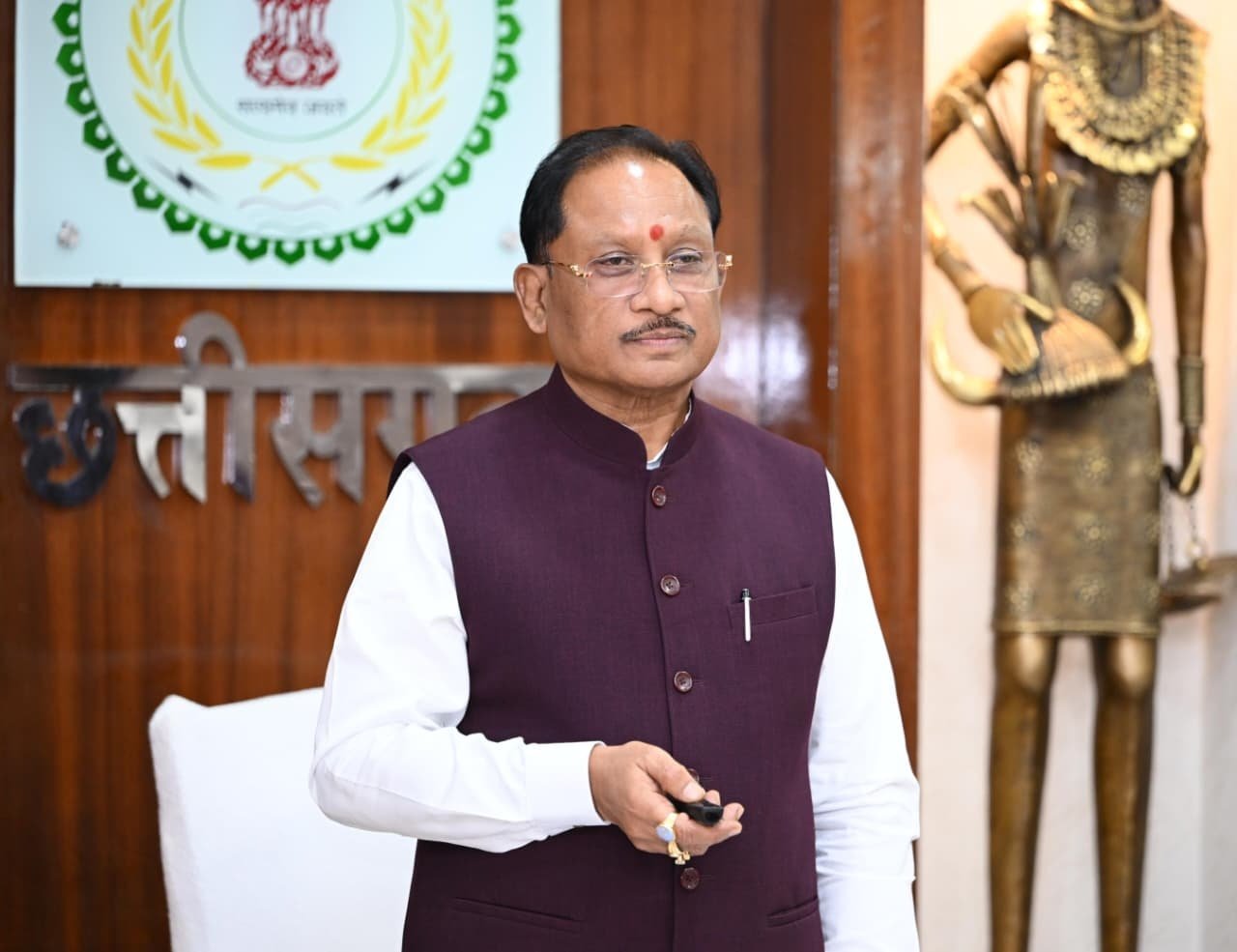
Chhattisgarh Chief Minister Vishnu Deo Sai participates in the virtual unveiling of Baba Kartik Oraon’s life-size statue from his residence office in Raipur on Thursday, October 29, 2026. Sai also announced the renaming of Government Engineering College, Digma, Ambikapur, after the tribal leader and engineer. Photo: primelookindia.com via CG/CMO
Chief Minister virtually unveils tribal leader’s statue, launches ₹28 crore-plus road project in Sitapur and inaugurates police accommodation
Key Highlights
- Government Engineering College at Digma, Ambikapur, will be named “Abhiyanta Baba Kartik Oraon Chhattisgarh Institute of Technology, Ambikapur”.
- Sai virtually unveiled a life-size statue of Baba Kartik Oraon during commemorative celebrations in Surguja.
- A 3.82-kilometre four-lane road from Sontarai to Soor will be developed at a cost exceeding ₹28 crore.
- Police infrastructure inaugurated includes a women’s non-gazetted officers’ mess and residential accommodation in Udaipur and Sitapur.
- Sai highlighted Oraon’s contribution to education, tribal rights and cultural identity.
Raipur: Chief Minister Vishnu Deo Sai announced that Government Engineering College at Digma in Ambikapur would be renamed “Abhiyanta Baba Kartik Oraon Chhattisgarh Institute of Technology, Ambikapur”, while participating virtually in commemorative celebrations for the tribal leader on Thursday, October 29, 2026. Joining the programme from his residence office in Civil Lines, Raipur, Sai also unveiled Oraon’s life-size statue, laid the foundation stone for a four-lane road in Sitapur and inaugurated police infrastructure in Surguja.
Paying tribute to the engineer and former parliamentarian, Sai described his life as an inspiring example of education, perseverance, social awareness and commitment to the dignity of tribal communities.
“Baba Kartik Oraon showed tribal society the path of progress through education, organisation and social awareness,” Sai said.
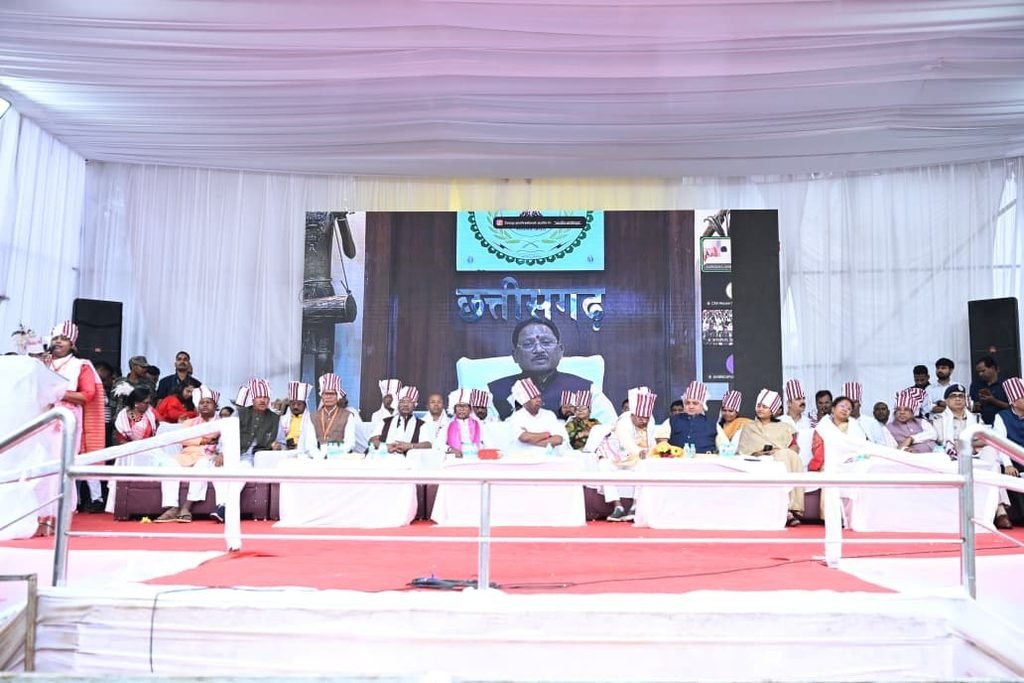
Public representatives and community members attend the commemorative programme for Baba Kartik Oraon in Ambikapur, Surguja, as Chief Minister Vishnu Deo Sai joins through videoconferencing from Raipur on Thursday, October 29, 2026. Photo: primelookindia.com via CG/CMO
The Chief Minister said Oraon’s achievements would continue to encourage young people to pursue education and dedicate their knowledge to society and the nation.
Sai announced that the state government had accepted the request made by the tribal community and the area’s Member of Parliament to name the engineering college after Oraon.
He said the decision carried particular significance because Oraon was himself an accomplished engineer who pursued higher studies, including education abroad, at a time when opportunities for tribal students were limited.
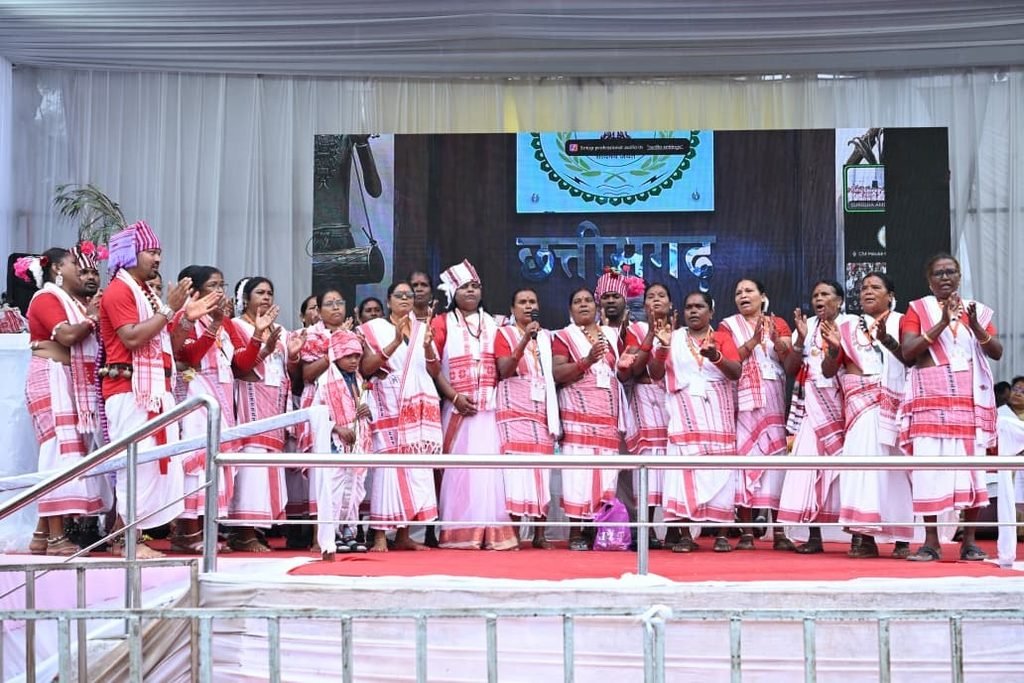
Participants in traditional attire present a cultural performance during the commemorative celebrations for Baba Kartik Oraon in Ambikapur, Surguja, on Thursday, October 29, 2026. Photo: primelookindia.com via CG/CMO
The institution’s new name, he said, would connect technical education with the memory of a leader whose academic achievements and public service remained a source of inspiration.
Sai said the renamed institution would remind students of Oraon’s struggles, educational accomplishments and dedication to society, while encouraging them to contribute to Chhattisgarh’s and India’s development.
He added that the government was working to expand access to quality higher and technical education, particularly for students from remote and tribal areas.
Sai described Oraon as a visionary thinker and a vigilant advocate of tribal rights who devoted his life to education, social organisation and the preservation of cultural identity.
He said Oraon regarded education as a means of bringing about social change, rather than merely securing individual advancement. His emphasis on knowledge, awareness and collective organisation helped tribal communities assert their rights and seek a dignified place in development.
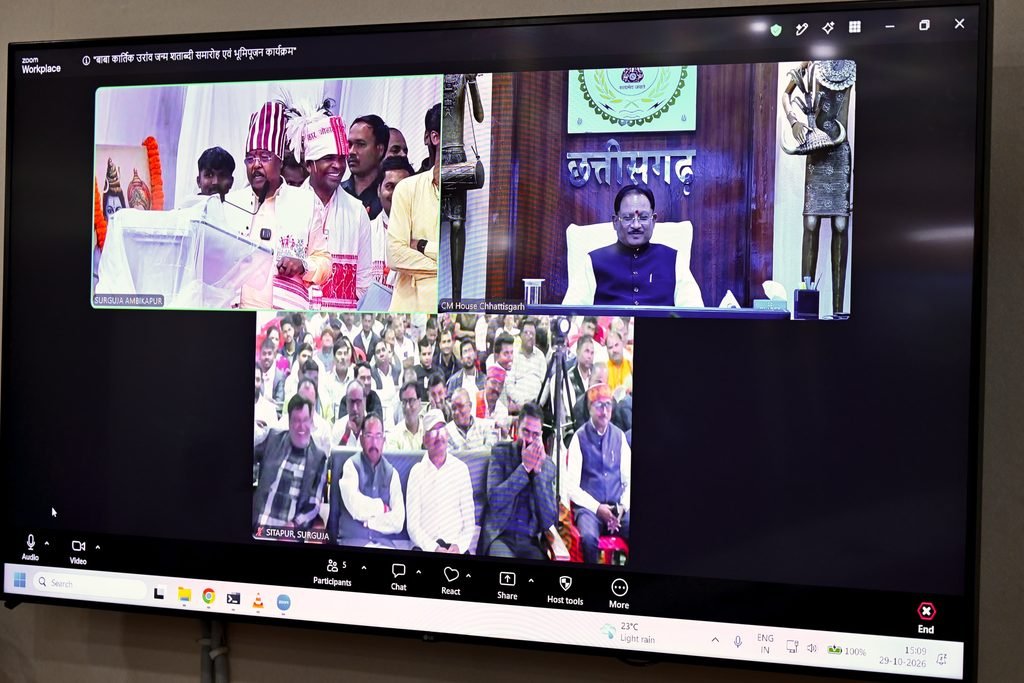
A videoconference screen shows Chief Minister Vishnu Deo Sai joining participants in Ambikapur and Sitapur during the commemorative programme and development project ceremonies on Thursday, October 29, 2026. Photo: primelookindia.com via CG/CMO
Recalling Oraon’s parliamentary work, Sai said the former MP raised tribal communities’ concerns and constitutional rights at the national level. He also referred to Oraon’s interventions concerning eligibility for tribal reservation and other constitutional benefits following religious conversion.
The Chief Minister said protecting traditions and cultural heritage should go hand in hand with access to modern education, technology and opportunities.
“Baba Kartik Oraon’s contribution to protecting tribal society’s self-respect, cultural identity and rights will always be remembered,” Sai said.
Welcoming the completion of the statue project, Sai recalled that its foundation ceremony had taken place a year earlier. He appreciated the efforts of Ambikapur Mayor Manjusha Bhagat, public representatives, officials, employees and residents.
He said memorials to public figures should serve as continuing reminders of their ideas, struggles and contributions.
Sai also referred to the unveiling, a day earlier, of a statue of former Union minister and tribal leader Kaka Larang Sai at his native village, Chirai Jaswantpur.
Sai said the government remained committed to preserving the legacy of tribal leaders and ensuring that younger generations understood their contribution to public service and social empowerment.
During the programme, the Chief Minister laid the foundation stone for widening approximately 3.82 kilometres of the national highway between Sontarai and Soor into a four-lane road. The project will cost more than ₹28 crore.
He said the improvement would ease traffic through much of Sitapur’s urban area and benefit residents of surrounding villages who travel to the town for education, healthcare, government services, trade and local markets.
Better connectivity, he added, would improve access to markets and support commercial activity and employment opportunities.
Sai said infrastructure development should benefit small towns and rural communities alongside major cities, with safer and more convenient travel available to all.
The Chief Minister also inaugurated facilities constructed by the Chhattisgarh Police Housing Corporation. These included a women’s non-gazetted officers’ mess building, 12 quarters for non-gazetted officers and 12 quarters for head constables and constables in Udaipur, and 12 quarters for head constables and constables at Sitapur police station.
Acknowledging the demanding conditions in which police personnel work, Sai said providing suitable accommodation and essential facilities was an important responsibility of the government.
He expressed confidence that the new buildings would improve living conditions for personnel and their families and support their morale.
Speaking about Bastar, Sai said progress in operations against Maoist violence had created opportunities to expand development in remote areas.
He credited coordinated efforts by the Centre and the state, under Prime Minister Narendra Modi and Union Home Minister Amit Shah, along with the work of security personnel.
According to the Chief Minister, areas where violence had obstructed development were now seeing an expansion of roads, electricity, drinking water, education, healthcare and communication facilities.
Sai said the government’s aim was to ensure that every village in Bastar received basic services and that residents had better access to education, healthcare, employment and livelihoods.
He also praised Bastar’s communities for preserving their culture and traditions through difficult circumstances and encouraged young people to use emerging opportunities.
Describing Chhattisgarh’s forests, minerals, agricultural land and industrial potential as important strengths, Sai said its greatest asset remained its hardworking and talented people.
He said their warmth, perseverance and social harmony would help the state contribute to the vision of a developed India.