Reg No. - CHHBIL/2010/41479ISSN - 2582-919X

Preventive Detention or Preventive Governance?
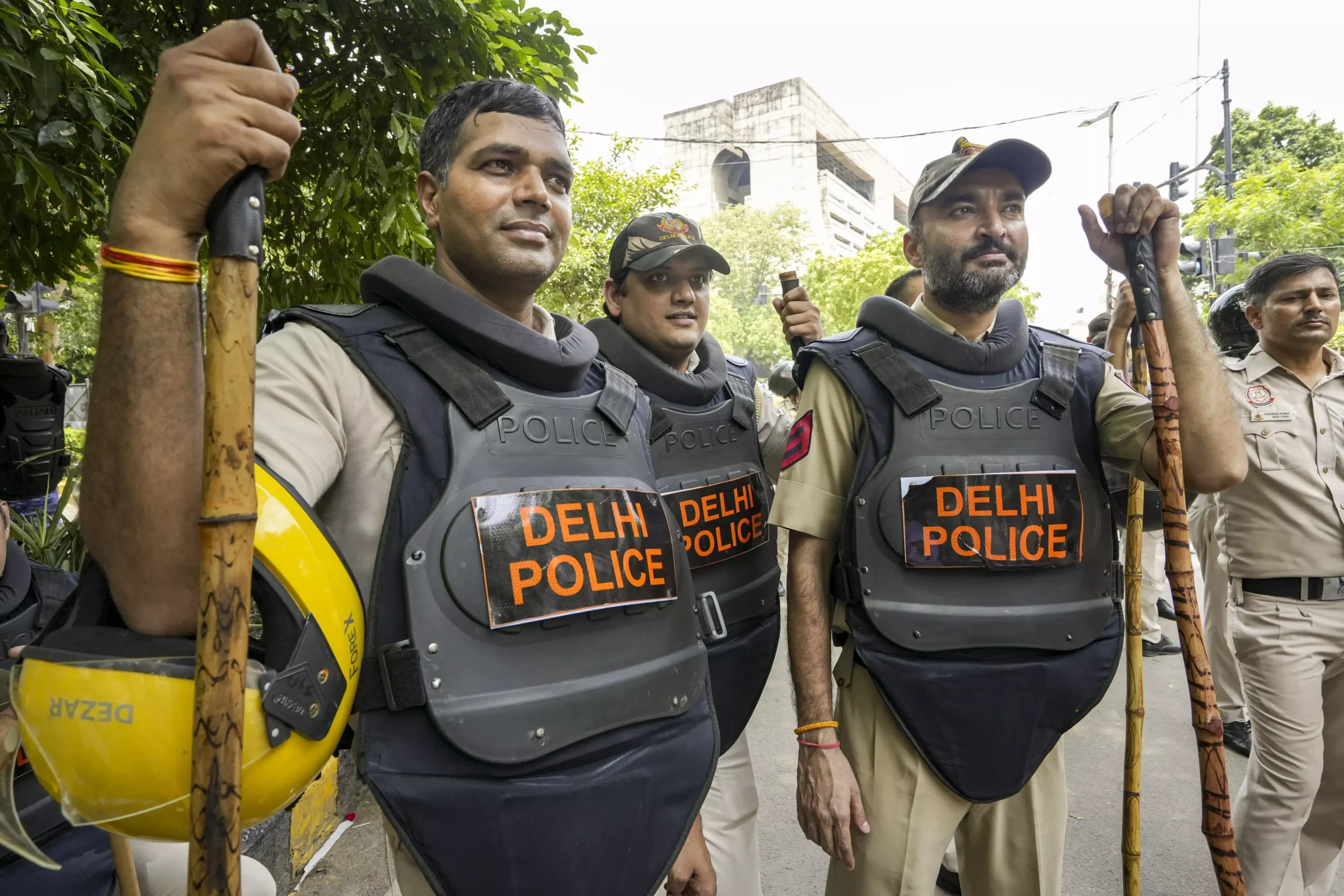
Delhi Police personnel in protective gear stand guard at Jantar Mantar amid protests over alleged NEET-UG examination irregularities, as the extension of preventive detention powers under the National Security Act draws public and legal scrutiny on Thursday July 23, 2026 -Photo Credit- Arrangements
In Short
- Delhi Police’s preventive detention powers under the NSA have been extended until October 18.
- Authorities describe the extension as a routine administrative renewal, approved on July 7.
- Questions have arisen because the extension overlaps with ongoing CJP protests over alleged NEET-UG examination irregularities.
- Preventive detention laws are intended to avert threats to public order but require careful and proportionate use.
- Peaceful protest is a constitutional right, while maintaining public order is a legitimate responsibility of the State.
- Public confidence depends on transparent, restrained and lawful use of extraordinary powers.
- The true test lies not in the extension itself, but in how these powers are exercised during public demonstrations.
Delhi Police’s Extended NSA Powers Raise Questions on Liberty, Security and Public Trust
The extension of preventive detention powers under the National Security Act (NSA) to the Delhi Police until October 18 has once again brought the perennial debate between national security and civil liberties into sharp focus. While the Delhi Police has clarified that the extension is a routine administrative measure, the timing—coming just before the Cockroach Janta Party (CJP) protests over the alleged NEET-UG examination irregularities—has inevitably attracted public scrutiny.
Governments across the world possess extraordinary legal powers to prevent threats to public order. India is no exception. The NSA empowers authorities to detain individuals preventively when they believe that public order or national security could be threatened. The law is preventive rather than punitive—it allows detention not for what has already been proven in court, but for what authorities believe may occur.
That very feature makes it one of the country’s most debated legislations.
The Delhi Police maintains that the extension was approved on July 7, well before the CJP demonstrations gained momentum, and therefore should not be linked to any particular protest. If this is factually correct, the official explanation deserves consideration. Administrative extensions of delegated powers are not uncommon in governance.
However, perception matters as much as procedure.
When extraordinary powers coincide with large public demonstrations—especially those involving students demanding accountability over examination failures—the government carries an additional responsibility to reassure citizens that such powers will not be used to suppress peaceful dissent.
India’s Constitution guarantees both the right to protest peacefully and the responsibility of the State to maintain public order. Neither right is absolute. Protesters cannot be allowed to resort to violence or disrupt essential public life. Equally, governments cannot equate every large protest with a security threat.
The distinction between a peaceful protest and an unlawful assembly must remain clear.
The concern is not merely about the existence of preventive detention laws but about how they are exercised. History has repeatedly shown that exceptional legal powers require exceptional restraint. Their legitimacy depends less on the wording of the law than on their careful, transparent and proportionate application.
If preventive detention is invoked only in genuinely exceptional circumstances supported by credible intelligence, public confidence is likely to remain intact. But if such provisions are perceived—even mistakenly—as tools to discourage criticism or dissent, trust in institutions begins to erode.
The NEET controversy has already generated deep frustration among students and parents. Many young people feel that repeated examination irregularities have compromised years of hard work. In such an environment, the government’s primary response should be dialogue, transparency and accountability rather than allowing suspicion to grow around extraordinary policing powers.
The Delhi Police has stated that media reports linking the extension directly to the CJP protests are “out of context.” That clarification is important. Yet reassurance cannot come only through official statements. It must also come through measured conduct on the ground.
The coming weeks will therefore be closely watched—not simply to see whether law and order is maintained, but to observe whether constitutional freedoms are respected alongside public safety.
A mature democracy is ultimately judged not by how it treats those who agree with the government, but by how it protects the rights of those who peacefully disagree.
Security and liberty are not opposing ideals. Good governance requires preserving both.

YOU MAY LIKE THIS