Reg No. - CHHBIL/2010/41479ISSN - 2582-919X

Piyush Goyal Invites Canadian Companies to Make India a Global Manufacturing, Innovation and Export Hub
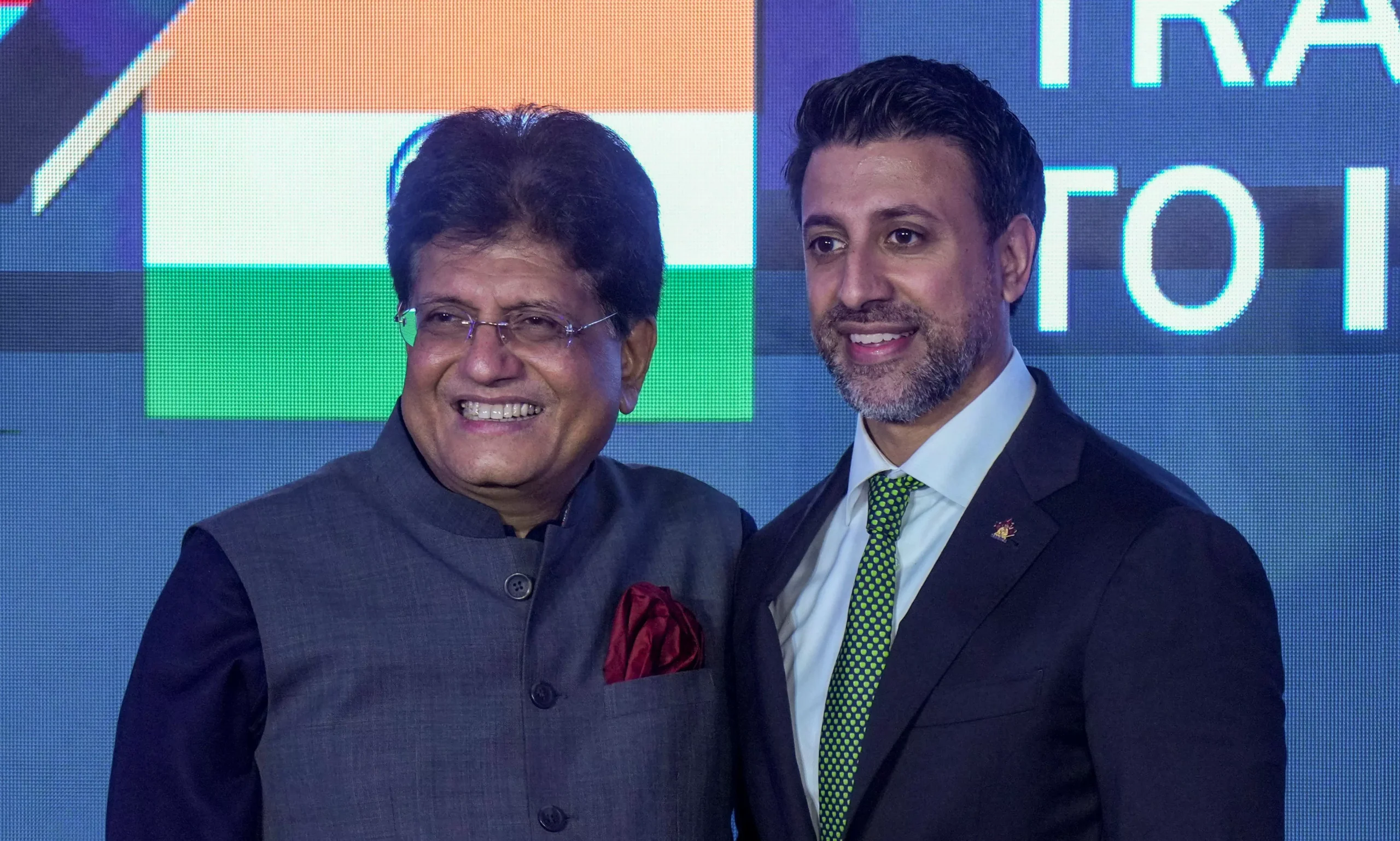
Union Commerce and Industry Minister Piyush Goyal poses with Canada’s Minister of International Trade Maninder Sidhu during a reception for the Team Canada Trade Mission to India in Mumbai. At the event, Goyal encouraged Canadian companies to establish manufacturing, innovation and design operations in India and use the country as a base for serving global markets. The engagement was reported on Thursday, October 15, 2026, as nearly 300 Canadian delegates participated in the trade mission .Photo: Shashank Parade / PTI
At the Team Canada Trade Mission reception in Mumbai, the Commerce and Industry Minister urges Canadian businesses to look beyond India’s domestic market and harness its skilled workforce, design capabilities and expanding international trade opportunities.
Key Highlights
- Union Commerce and Industry Minister Piyush Goyal urges Canadian companies to establish manufacturing, innovation and design operations in India.
- Minister encourages Canadian businesses to use India as a production and export base for international markets.
- Nearly 300 delegates accompany Canadian Minister of International Trade Maninder Sidhu on the trade mission.
- India’s skilled workforce and expanding preferential trade access highlighted as competitive advantages.
- Business engagement signals opportunities for stronger India–Canada commercial partnerships.
- Manufacturing, innovation, exports and long-term industrial cooperation emerge as major areas of discussion.
Mumbai: India has extended a fresh invitation to Canadian businesses to become partners in its expanding manufacturing and innovation ecosystem, with Union Commerce and Industry Minister Piyush Goyal urging companies from Canada to establish production, design and technology operations in India and use the country as a base for serving global markets. Addressing a reception organised during the Team Canada Trade Mission to India, Goyal highlighted India’s skilled workforce, growing industrial capabilities and expanding preferential trade access as important advantages for international companies seeking to strengthen their global competitiveness.
The minister’s remarks reflected India’s ambition to position itself not merely as a major consumer market but as an important international centre for manufacturing, research, innovation and exports.
The reception in Mumbai brought together representatives of the two countries’ business communities and provided an opportunity to explore deeper commercial engagement.
Canadian Minister of International Trade Maninder Sidhu led a substantial business delegation to India, underscoring the importance attached to strengthening bilateral economic relations.
Nearly 300 Canadian Delegates Signal Growing Business Interest
Goyal said that nearly 300 delegates had accompanied Canadian International Trade Minister Maninder Sidhu to India.
The size of the delegation, he indicated, reflected the potential for greater economic engagement and stronger partnerships between businesses in the two countries.
The participation of such a large group also provided an opportunity for Canadian enterprises to assess India’s manufacturing ecosystem, industrial capabilities and investment prospects.
Business missions can play an important role in connecting companies with prospective suppliers, customers, investors and technology partners.
For India, engagement with Canadian companies presents opportunities to attract international investment, strengthen industrial collaboration and encourage the development of export-oriented enterprises.
For Canadian businesses, India offers access to a large workforce, manufacturing capabilities and an expanding commercial network.
India Offers More Than a Large Domestic Market
A central message of Goyal’s address was that Canadian companies should look beyond India’s domestic consumer base.
India’s population and expanding economy make it an attractive destination for businesses seeking customers, but the minister emphasised its potential as a production centre for international markets.
His invitation encouraged Canadian enterprises to consider how manufacturing operations established in India could support their global business strategies.
The approach reflects a wider shift in international investment planning, where companies increasingly evaluate countries not only according to local demand but also according to their ability to support production, innovation and exports.
India’s industrial infrastructure, engineering capabilities and workforce are important considerations in this assessment.
However, the commercial viability of individual projects will continue to depend on sector-specific requirements, investment conditions, logistics and market access.
Manufacturing, Innovation and Design at the Centre of India’s Proposal
Goyal’s emphasis on manufacturing, innovation and design highlighted the government’s interest in attracting a broader range of international business activities.
Modern industrial competitiveness increasingly depends on the integration of production facilities with research, product development, engineering and technology.
By inviting Canadian companies to establish such activities in India, the minister presented the country as a potential location for multiple stages of the global value chain.
Manufacturing partnerships could involve production facilities, component sourcing and industrial services, while innovation and design cooperation could support product development and technological improvements.
The precise sectors and investment opportunities arising from the trade mission will depend on subsequent discussions between participating companies and institutions.
Skilled Workforce a Major Competitive Advantage
India’s talent pool was among the strengths highlighted by the Commerce and Industry Minister.
The availability of engineers, technical professionals, designers and other skilled workers can be an important factor in investment decisions involving manufacturing and technology.
International companies evaluating production locations frequently consider workforce availability alongside infrastructure, regulatory conditions, logistics and operating costs.
India’s educational institutions, technical training systems and industrial workforce provide a foundation for developing international business partnerships.
At the same time, continued investment in skills, advanced manufacturing capabilities and industrial training will be important for meeting the requirements of increasingly sophisticated global industries.
Preferential Trade Access Could Support Export-Oriented Investment
Goyal also highlighted India’s expanding preferential trade access as an opportunity for companies seeking to improve their international competitiveness.
Trade arrangements can influence investment decisions by affecting the conditions under which goods enter different markets.
For companies establishing production operations in India, access to international markets may strengthen the commercial case for manufacturing and exporting from the country.
However, the benefits available under individual trade agreements depend on their specific provisions, product coverage, rules of origin and applicable customs requirements.
Canadian companies considering India as an export base would therefore need to assess the relevant trade arrangements and compliance conditions for their products.
The minister’s broader message was that India’s international economic relationships could provide opportunities beyond sales within the Indian market itself.
Team Canada Trade Mission Opens Opportunities for Deeper Cooperation
The Team Canada Trade Mission represents an important platform for business engagement between the two countries.
Trade delegations allow participating companies to develop direct relationships and better understand commercial conditions in prospective markets.
The Mumbai reception offered an opportunity for Indian and Canadian representatives to discuss areas of mutual economic interest.
Such engagement can help businesses identify potential partnerships in manufacturing, technology, design and other commercial activities.
Nevertheless, the participation of a business delegation does not automatically establish that investment agreements or manufacturing projects have been finalised.
The actual outcomes will become clearer as companies evaluate opportunities and pursue further negotiations.
India–Canada Business Relations and the Importance of Economic Engagement
India and Canada possess economic strengths that can support mutually beneficial commercial cooperation.
India offers a substantial manufacturing and services ecosystem, while Canadian businesses bring expertise and capabilities across a range of industrial and technological activities.
Greater cooperation could create opportunities for investment, technology partnerships and stronger commercial links.
The presence of Canadian International Trade Minister Maninder Sidhu and the accompanying delegation provided an opportunity to advance these discussions through direct engagement.
Economic partnerships of this nature are built not only through government-level dialogue but also through sustained interaction between companies, investors and industry organisations.
From Investment Destination to International Production Platform
Goyal’s invitation also reflects India’s broader objective of strengthening its role in global manufacturing networks.
As international businesses reassess production strategies, countries with suitable infrastructure, skilled workers and access to markets can become attractive destinations for industrial expansion.
India’s ability to secure such investments will depend on maintaining competitive production conditions and supporting efficient movement of goods.
Canadian companies exploring opportunities in India will need to evaluate supply chains, operational requirements and the long-term prospects of particular industries.
For Indian enterprises, international partnerships may offer access to new technologies, customers and business practices.
The potential benefits could extend to suppliers, service providers and workers associated with new industrial activities.
Trade Mission Could Lay Foundation for Long-Term Partnerships
The presence of nearly 300 Canadian delegates demonstrates the scale of business engagement surrounding the mission.
For both countries, the immediate challenge will be to convert commercial discussions into practical cooperation.
Investment decisions, joint ventures, sourcing arrangements and technology partnerships require detailed negotiations and careful assessment.
Goyal’s message at the Mumbai reception was that India should be viewed as a location from which Canadian companies can manufacture, innovate, design and compete internationally.
The invitation places industrial cooperation and global market access at the centre of the emerging business dialogue.
As the trade mission progresses, attention will turn to whether the discussions result in concrete partnerships and sustained commercial engagement.
For India, the opportunity lies in attracting international enterprises that contribute to manufacturing, innovation, employment and exports. For Canada, the opportunity lies in exploring how India’s industrial capabilities can support broader international business ambitions.

YOU MAY LIKE THIS