Reg No. - CHHBIL/2010/41479ISSN - 2582-919X

Nakti Encroachment: Compassion Has Its Place, But the Law Must Apply Equally to Everyone
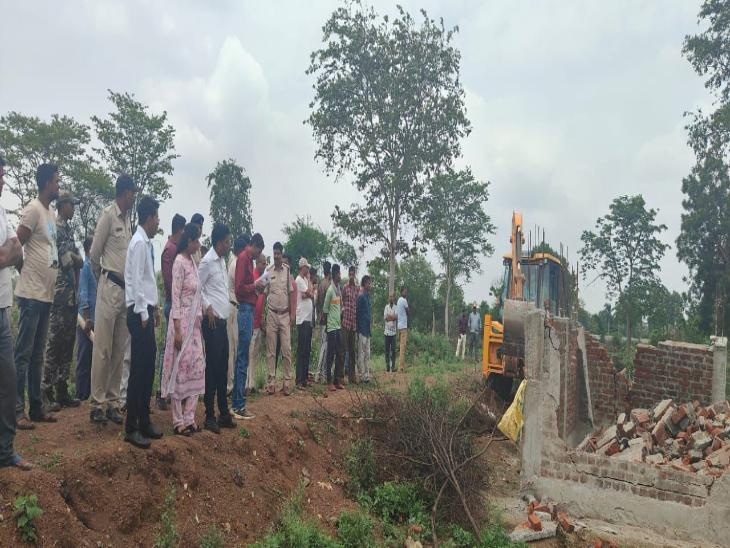
Demolition drive on government land in Nakti village, Nava Raipur, sparked an intense debate across Chhattisgarh-Photo Credit -channel24india.com
Key Factor
Whether the encroacher is poor or wealthy, a politician, businessman, or ordinary citizen, public land belongs to the people, and the law should apply equally to all, the Chhattisgarh Government believes .
Raipur: The demolition of alleged encroachments on government land in Nakti village, Nava Raipur, has triggered a statewide debate, raising difficult questions about the balance between humanitarian concerns and the rule of law.
Images of grieving families watching bulldozers demolish homes have understandably evoked sympathy. For any family, losing a house built and occupied over many years is deeply painful. Yet, beyond the emotional aspect lies another equally important issue—the protection of public land and the equal enforcement of the law.
According to official information, the eviction drive was not sudden. Authorities had reportedly issued repeated notices over nearly two years, giving occupants multiple opportunities to vacate the land voluntarily. Despite these warnings, many individuals allegedly continued to occupy government property.
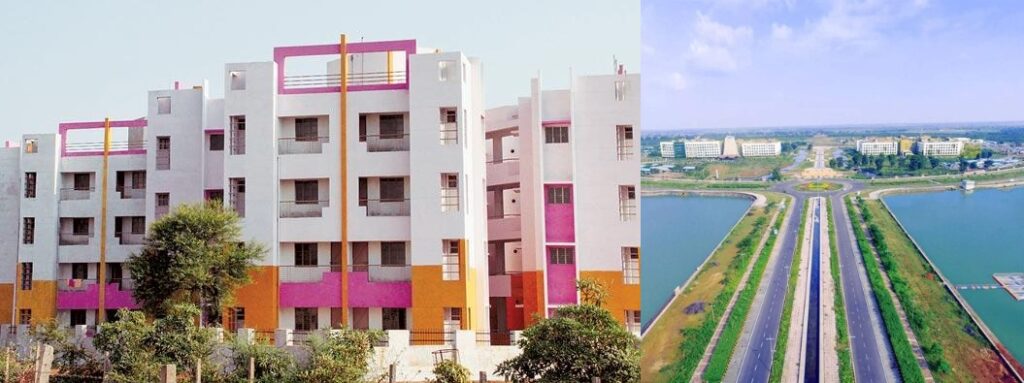
Families affected by the eviction are being shifted to housing in Sector-30, Nava Raipur, as part of the rehabilitation process, however the disputed land lies in the rapidly developing Nava Raipur region, where government land has significant commercial value.-Photo Credit -channel24india.com
Administrative records indicate that the encroachments were not limited to small residential plots. Several individuals were found occupying thousands—and in some cases nearly 30,000 square feet—of government land. Among the largest reported encroachments were 29,700 sq ft, 29,600 sq ft, 19,800 sq ft, 18,500 sq ft, and 18,300 sq ft, while many others allegedly occupied parcels ranging from a few hundred to more than 15,000 square feet.
Officials further stated that some occupants claimed the land belonged to their families. However, after examining historical land records, the administration reportedly found no evidence that the land had ever been privately owned by their ancestors.
Land Worth Crores
The disputed land is located in the rapidly developing Nava Raipur region, where local market estimates place land values at around ₹5,000 per square foot. At that rate, a single encroachment measuring 29,700 square feet would have an estimated market value of nearly ₹14.85 crore.
This has intensified public debate over whether government land worth crores of rupees can remain under private occupation for years without legal consequences!
Government Land Reserved for Public Use
According to available revenue records, the land is reported to be government bhata/grazing (gauchar) land, which is legally reserved for public purposes such as schools, hospitals, community facilities, or cattle shelters.
Whether the government eventually uses the land for legislators’ housing or any other public project is a separate policy issue and a matter for political debate. However, that question does not determine the legality of occupying government land without authorisation.
Rehabilitation Measures
The administration has stated that affected families are being rehabilitated in Sector-30, Nava Raipur, where residential flats are being allotted with ownership rights. These flats, reportedly valued at around ₹8 lakh under normal housing board schemes, are being provided to eligible displaced families. Similar arrangements are also being made for beneficiaries of the Pradhan Mantri Awas Yojana whose houses were affected.
At the same time, rehabilitation extends beyond housing. Ensuring livelihood opportunities, uninterrupted education for children, access to healthcare, and arrangements for livestock will be crucial to the long-term success of the resettlement process.
The Larger Question of Justice
The controversy has also revived a broader question of fairness.
A middle-class family often spends decades repaying bank loans to purchase a modest 800–1,000 square-foot plot, while complying with taxes, utility bills, and every legal requirement. Against that backdrop, many citizens question whether occupying thousands of square feet of government land for years can be justified solely on humanitarian grounds.
There have also been discussions suggesting that some occupants had constructed expensive houses and possessed substantial financial resources and livestock. If such claims are accurate, the issue extends beyond poverty alone. While many daily-wage earners and genuinely vulnerable families may have lived on the land, not every occupant necessarily belonged to that category.
Equality Before the Law
Perhaps the most significant concern arising from the Nakti episode is the perception that demolition drives often target the poor quickly, while influential individuals allegedly occupying valuable public land continue to escape scrutiny.
If governments seek to reinforce the rule of law, they must ensure that enforcement is impartial. Illegal occupation should be judged by its legality—not by the wealth, social status, or political influence of the occupant.
Whether the encroacher is poor or wealthy, a politician, businessman, or ordinary citizen, public land belongs to the people, and the law should apply equally to all, the Chhattisgarh Government believes .

YOU MAY LIKE THIS