Reg No. - CHHBIL/2010/41479ISSN - 2582-919X

IGKV Paper Leak: Professor Among Six Arrested Within 36 Hours, Two Still on the Run
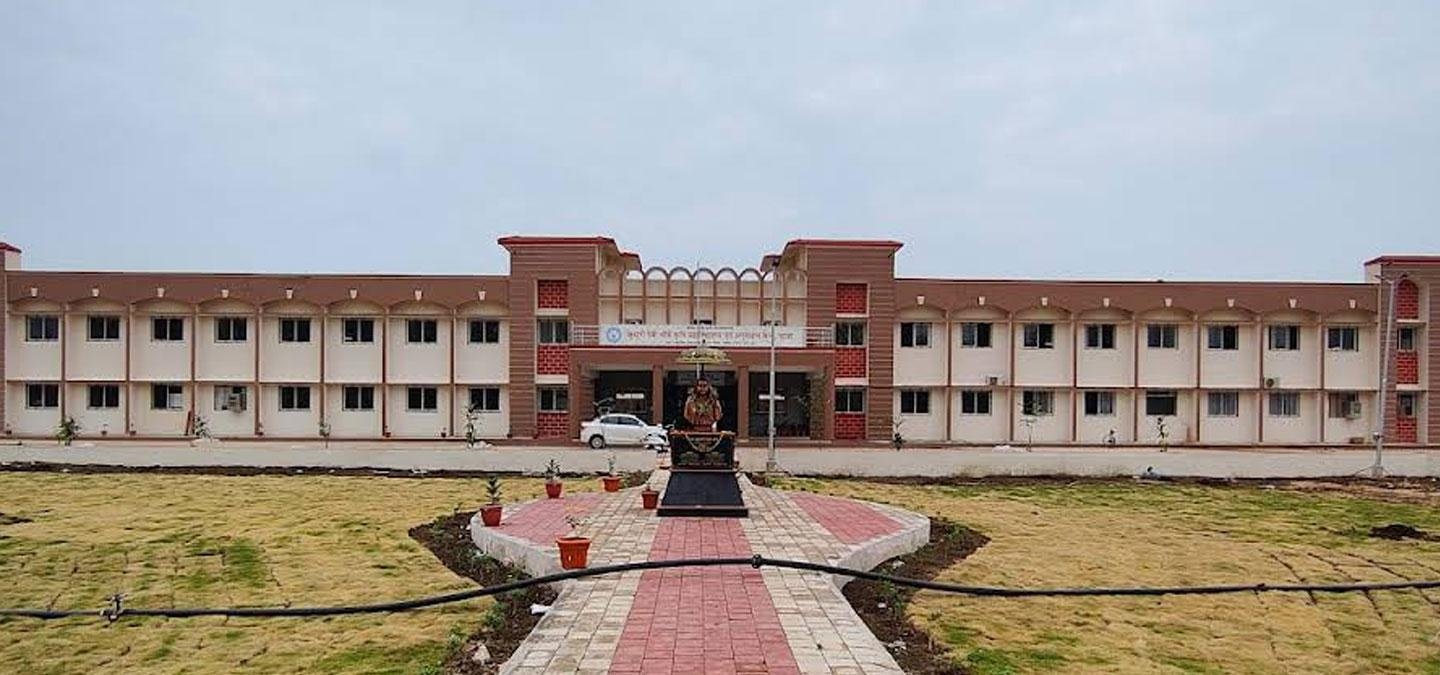
Indira Gandhi Krishi Vishwavidyalaya (IGKV) in Krishak Nagar, Raipur. Police on Monday, August 24, 2026, announced the arrest of six people, including a professor, in connection with the alleged leak of the B.Sc. Agriculture second-year Entomology examination question paper. (Photo: IGKV/Representational)
Police say the sealed Entomology question paper was secretly filmed through a tiny hole in the envelope and sold to a student for ₹11,000
Key Highlights
- Six people, including a professor and five students, have been arrested in the IGKV B.Sc. Agriculture examination paper leak case.
- Police have identified Professor Yogesh Sonkesariya as the alleged mastermind.
- Investigators allege the sealed question-paper envelope was pierced with a needle/sharp implement and the paper recorded on a mobile phone.
- The leaked material was allegedly sold for ₹11,000 before spreading among students and through social-media groups.
- Six mobile phones, recording equipment, ₹11,000 cash and other material have been seized; two more accused remain absconding.
Raipur: The police have arrested six people, including a professor, in connection with the leak of the B.Sc. (Agriculture) second-year Entomology (AGCH-221) examination question paper of Indira Gandhi Krishi Vishwavidyalaya (IGKV), claiming to have cracked the case within 36 hours.
The arrests follow the controversy over the August 20 examination, which had prompted Chief Minister Vishnu Deo Sai to order strict action over the alleged irregularity.
According to the police account, the alleged mastermind is Yogesh Sonkesariya, 38, a professor at Bharti Agricultural College in Durg.
Police allege that Sonkesariya had for about a year been entrusted with depositing answer sheets at the College of Agriculture in Raipur and collecting question papers for forthcoming examinations.
Tiny Hole in Sealed Envelope Allegedly Used to Film Paper
Investigators say Sonkesariya collected question papers for forthcoming examinations on August 17 and subsequently took the sealed envelope containing the Entomology paper scheduled for August 20 to his residence.
Instead of opening the envelope normally, he allegedly used a needle and another pointed implement to make a small hole in it and recorded the question paper using a mobile-phone camera.
Police allege that the material was then sold for ₹11,000 to Ajay Nayak, a student at the same college, after which it circulated among other students and on social-media groups.
Information about the leaked paper reached the email account of the Agriculture College in Kawardha and senior officials shortly before the examination began on August 20.
Following a complaint by senior scientist and examination in-charge Dr N. R. Rangare, Telibandha Police registered Crime No. 360/26.
The investigation was carried out jointly by the Anti-Crime and Cyber Unit and Telibandha Police. Digital trails, including WhatsApp and social-media activity, were analysed and searches conducted in Raipur, Durg, Kabirdham and Bilaspur, according to the police statement.
The investigation reportedly led police first to Durg resident Anuj Minj, whose questioning helped investigators trace the alleged chain through which the question paper had circulated.
Police said they seized ₹11,000 in cash, six mobile phones, a video-recording device, cables, mobile connectors, a needle, pointed implement and adhesive, among other material.
The case has been registered under Sections 4, 5 and 10 of the Chhattisgarh Public Examination Act, 2008, along with Section 316 of the Bharatiya Nyaya Sanhita (BNS).
Those arrested have been identified as Yogesh Sonkesariya, Ajay Nayak, Tridev Patel, Nitin Pandey, Anuj Minj and Aditya Sahu.
Two other accused remain at large and police said efforts are continuing to trace them.
The arrests mark a significant development in a case that raised questions about the security of university examination papers. The alleged method described by investigators also points to a vulnerability beyond digital security: according to police, the leak began with physical access to a sealed question-paper packet entrusted for transportation.
With arrests now made, the focus is likely to shift to the university’s internal examination-security procedures and whether safeguards governing the custody and transportation of confidential papers require strengthening.

YOU MAY LIKE THIS