Reg No. - CHHBIL/2010/41479ISSN - 2582-919X

From Seva Sankalp to Poshan Sankalp: Cut Junk Food Spending, Put Nutrition on Children’s Plates
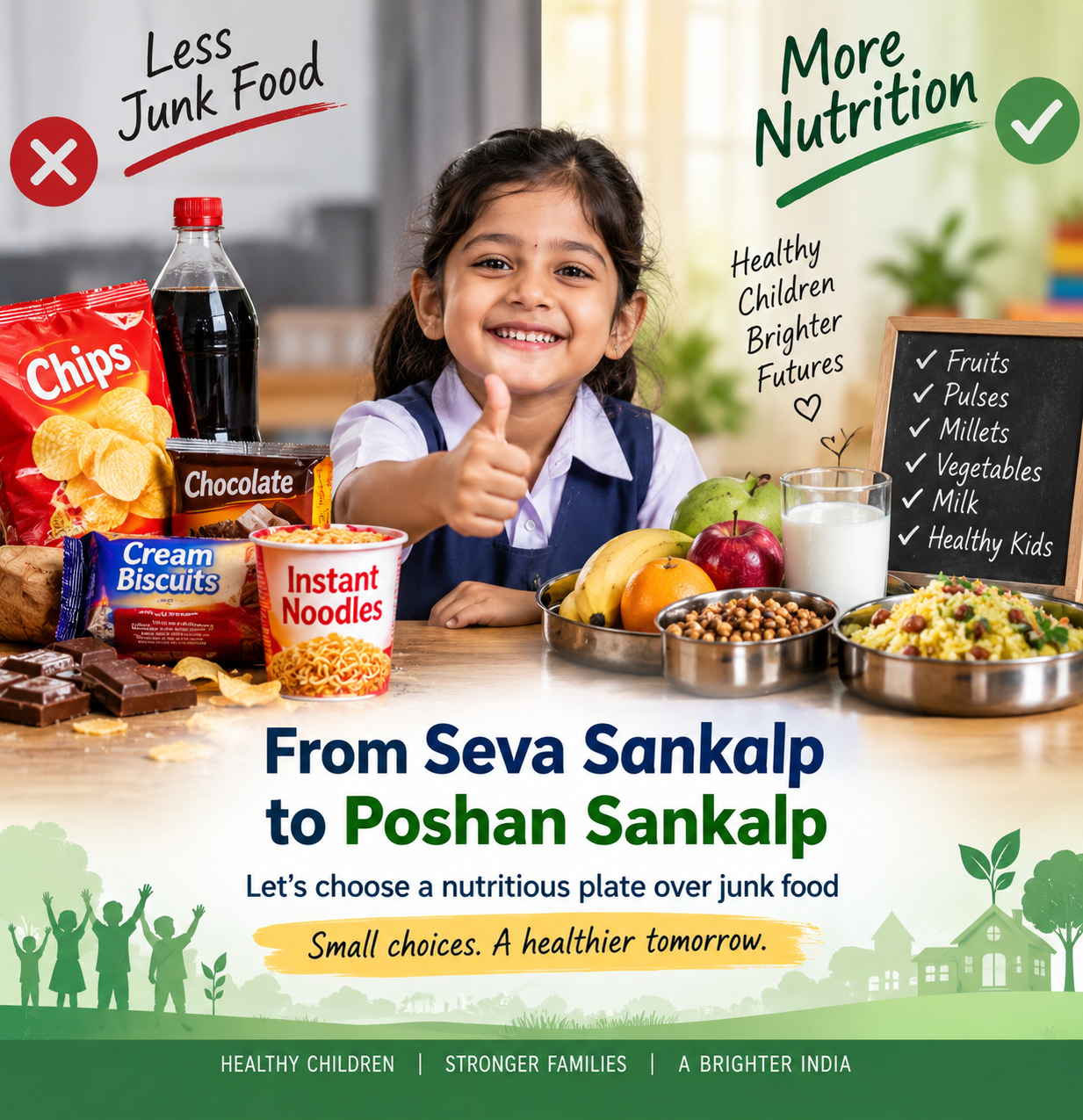
From packets to plates — replacing frequent junk-food purchases with fruits, pulses, millets, vegetables, milk and wholesome homemade foods can turn the spirit of Seva Sankalp into a family commitment to better nutrition for children. Representational image: AI-generated for primelookindia.com
State Nutrition Adviser Yamini Tiwari says small changes in household spending can help families build healthier food habits among children
Service is not only about helping someone in need; it also means recognising a shared responsibility towards the health and well-being of society. Linking this idea with children’s nutrition can turn the spirit of the Seva Sankalp Abhiyan into a practical commitment beginning at home, State Nutrition Adviser Yamini Tiwari has said.
Tiwari has called upon families to reconsider the money routinely spent on junk food and use the same amount to introduce more nutritious options into children’s diets.
Chips, packaged namkeen, cream biscuits, chocolates and sugary drinks have increasingly become common choices among children. While spending ₹20 to ₹30 a day on such items may appear insignificant, the amount can add up to ₹600 to ₹900 in a month.
The same expenditure, if planned differently, could be used for locally available foods such as roasted gram, peanuts, bananas, seasonal fruits, poha, upma, milk and homemade snacks.
The issue, Tiwari emphasised, is therefore not merely how much a family spends on food, but how much nutrition a child receives from that spending.
From Packets to Plates
Changing children’s eating habits cannot happen overnight. A gradual shift from packaged snacks towards nutritious alternatives can make the transition easier and more sustainable.
Families can, for instance, offer roasted gram and peanuts instead of chips, homemade poha or chivda instead of packaged namkeen, banana and gram in place of cream biscuits, and milk or buttermilk instead of sugary beverages. Vegetable-rich poha or upma can also provide an alternative to frequently consumed instant noodles.
The approach is not about declaring a particular food completely “bad”, but about increasing the proportion of local, diverse and nutritious foods in a child’s regular diet.
Healthy eating also need not be expensive. Gram, peanuts, pulses, soyabean, ragi and other millets, green vegetables, seasonal fruits, milk, curd and eggs can help make meals more varied and nutritious while remaining affordable for many households.
Simple additions can make a difference. Vegetables and peanuts can be added to poha, sprouted gram or moong can become part of breakfast, while seasonal fruits can be incorporated into children’s daily meals.
Tiwari also stressed the importance of how parents communicate with children about food. Rather than simply saying, “Don’t eat chips,” a more constructive approach could be: “Let us spend the same amount on something that is tasty and also gives you strength.”
Such everyday conversations can help children gradually understand the value of nutrition and make healthier choices themselves.
Families, meanwhile, can play a central role in giving the Seva Sankalp Abhiyan a wider participatory character. Adding a fruit to a child’s plate, providing a nutritious breakfast, giving preference to home-cooked food and reducing unnecessary expenditure on junk food are small but meaningful forms of service within the household.
The message is simple: the commitment to service can also become a commitment to nutrition.
By reducing unnecessary spending on junk food, prioritising locally available nutritious ingredients and developing healthy eating habits at home, families can contribute directly to the health of the next generation.
As Tiwari puts it, “One packet less and one nutritious option more is a small but meaningful step towards a child’s healthy future.”
Article Credit: Yamini Tiwari, State Nutrition Adviser

YOU MAY LIKE THIS