Reg No. - CHHBIL/2010/41479ISSN - 2582-919X

Children’s Day in India : Remembering Chacha Nehru and listening to children
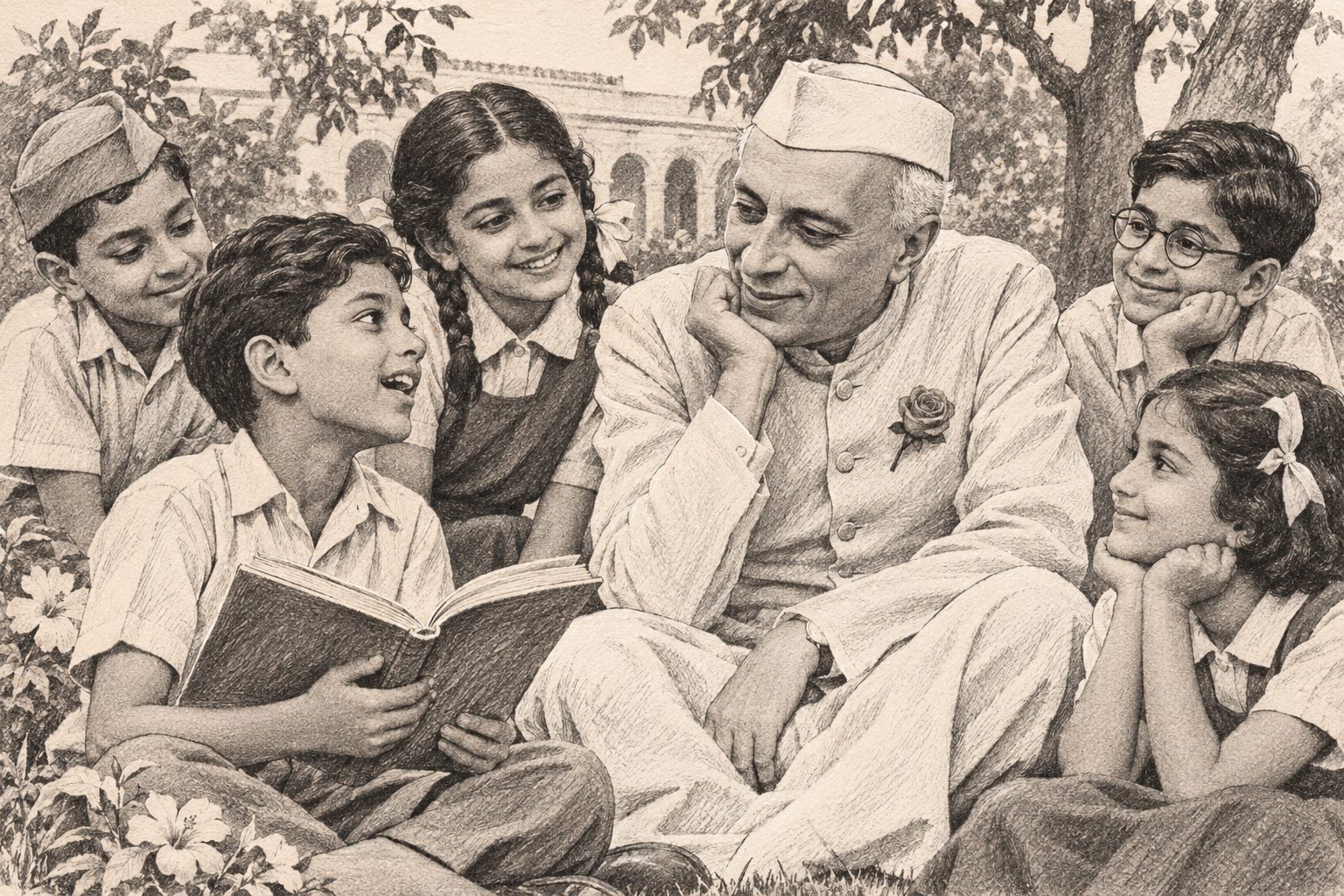
Jawaharlal Nehru listens to a schoolchild holding an open book in this AI-generated illustration for primelookindia.com’s Children’s Day feature, 14 November 2026.
India observes Bal Diwas on 14 November, the birth anniversary of its first Prime Minister, Jawaharlal Nehru. The occasion celebrates children’s curiosity and draws attention to their right to learn, play and be heard
India marks Children’s Day on 14 November, the 137th birth anniversary of Jawaharlal Nehru. Affectionately remembered as Chacha Nehru, he wrote directly to children and helped create spaces where they could explore interests beyond the school curriculum.
In a letter to children in 1949, Nehru recalled how much he had disliked being lectured by adults when he was a boy. He wrote about playing with children during his travels and noticing how much they had in common. He also told them about a letter from children in Japan who asked him to send an elephant. He sent one from Mysore on behalf of the children of India. Thousands of children came to see it when it reached Tokyo
The observance dates back to Nehru’s lifetime. A black-and-white photograph from 14 November 1957 records him at a Children’s Day celebration at the National Stadium in New Delhi. His idea of giving children room to follow their interests took institutional form in the National Bal Bhavan, which he envisaged as a place where children could choose activities outside school. Its National Children’s Assembly and Integration Camp brings together children from different states.
The date is distinct from World Children’s Day, observed on 20 November. That global observance marks the adoption of the UN Convention on the Rights of the Child in 1989. In India, Article 21A of the Constitution provides for free and compulsory education for children aged six to 14
One way to mark Bal Diwas is to give children a say in the celebration itself. Ask them what they would change about their school, what they wish they had more time to learn, or where they feel safe to play. Their answers can tell adults where a promise made on Children’s Day needs attention on an ordinary school day.