Reg No. - CHHBIL/2010/41479ISSN - 2582-919X

Chhattisgarh Takes Kosa ‘Local to Global’ as CM Sai Launches Premium Handloom Brand ‘Koshal Fab’
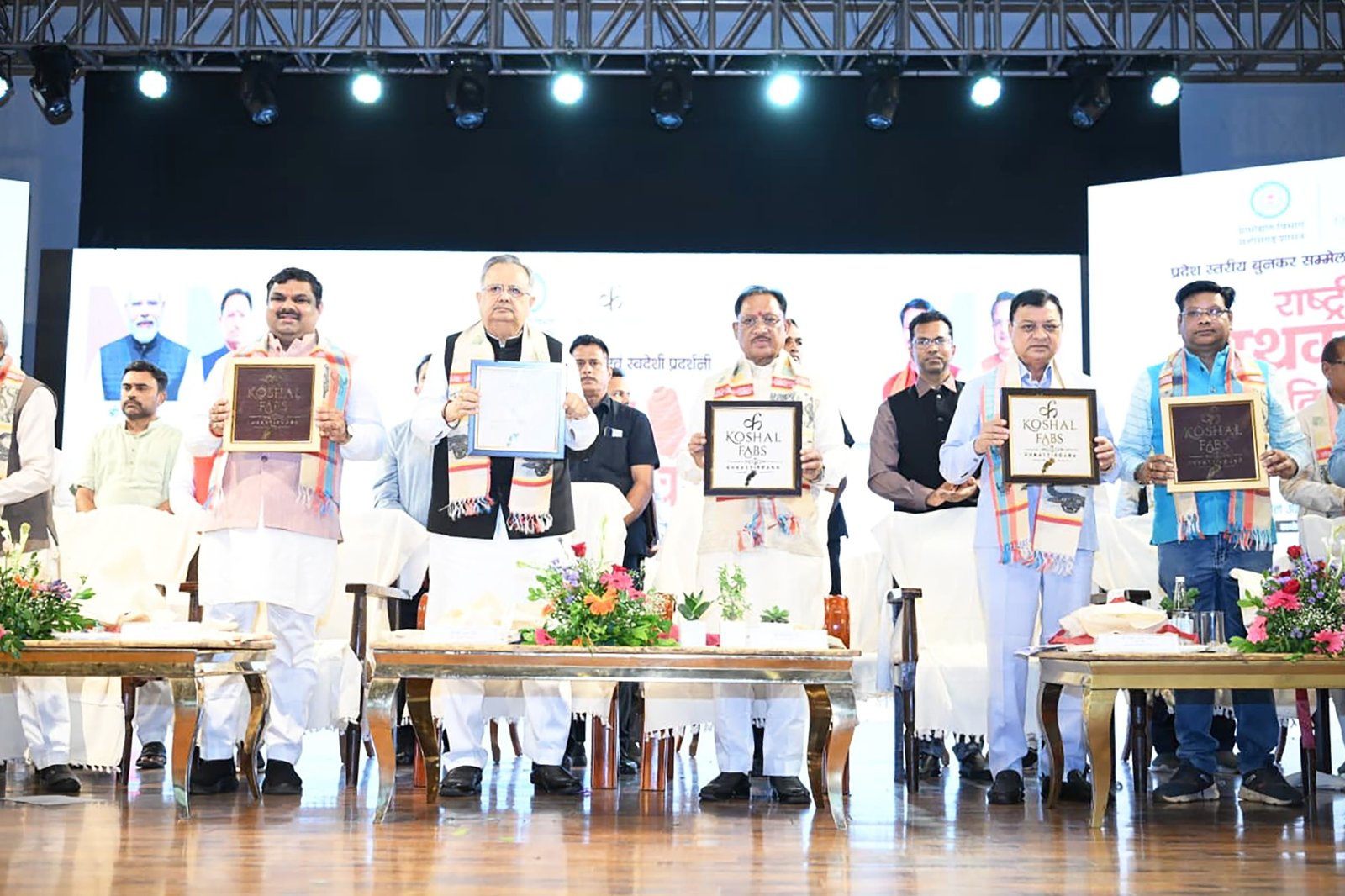
Chief Minister Vishnu Deo Sai, Assembly Speaker Dr Raman Singh, Industry Minister Lakhan Lal Dewangan and other dignitaries unveil ‘Koshal Fab’, Chhattisgarh’s new premium handloom brand, during the State-level Weavers’ Conference and Swadeshi Exhibition at Pandit Deendayal Upadhyay Auditorium, Raipur, on Friday, August 7, 2026-Photo Credit: primelookindia.com via CG/PR
National Handloom Day showcases a wider transformation — ₹10.90 crore support for weavers and artisans, new digital tools for the sector, and surrendered women from Bastar walking the ramp in traditional handloom attire.
Key Factors
- CM Vishnu Deo Sai launches premium handloom brand ‘Koshal Fab’, built around the concept ‘Loom to Luxury’
- More than ₹10.90 crore distributed as assistance and awards to beneficiaries, students, weavers and artisans
- Government pushes Chhattisgarh’s Kosa, Bastar weaves and traditional crafts towards national and global markets
- Five airport showrooms planned to give the State’s handloom and handicraft products wider visibility
- First garment unit in Nava Raipur expected to create more than 4,500 employment opportunities
- Surrendered women from Bastar take part in a handloom fashion presentation, reflecting a changing social landscape
- CM purchases a Kosa saree with immediate payment, making his appeal for supporting local products personal
- New inventory management software introduced to strengthen transparency and marketing
Raipur: Chhattisgarh’s celebrated Kosa silk and traditional handloom heritage received a fresh branding push on Friday, August 7, 2026, as Chief Minister Vishnu Deo Sai launched ‘Koshal Fab’, the State Handloom Weavers’ Cooperative Federation’s new premium brand, at the State-level Weavers’ Conference and Swadeshi Exhibition held at Pandit Deendayal Upadhyay Auditorium in Raipur.
The launch on National Handloom Day was more than the unveiling of a new label. It brought together Chhattisgarh’s traditional weaving skills, modern branding, technology and livelihood initiatives under an effort to take the State’s indigenous products from “local to global.”
Sai unveiled the brand’s logo and catalogue and also launched an inventory management software developed with technical support from NIT. The digital system is intended to improve management of stocks, marketing and distribution of handloom products.
“Our Kosa, Bastar weaving and traditional handloom products are creating their own identity in the country and abroad. Our aim is to give them a stronger ‘local to global’ identity,” the Chief Minister said.
₹10.90 Crore Support Reaches Weavers, Artisans and Students
The government used the occasion to combine promotion of traditional crafts with direct economic support. More than ₹10.90 crore in grants, incentives and awards was distributed among beneficiaries associated with silk, handloom, handicrafts, Khadi and village industries, besides meritorious students.
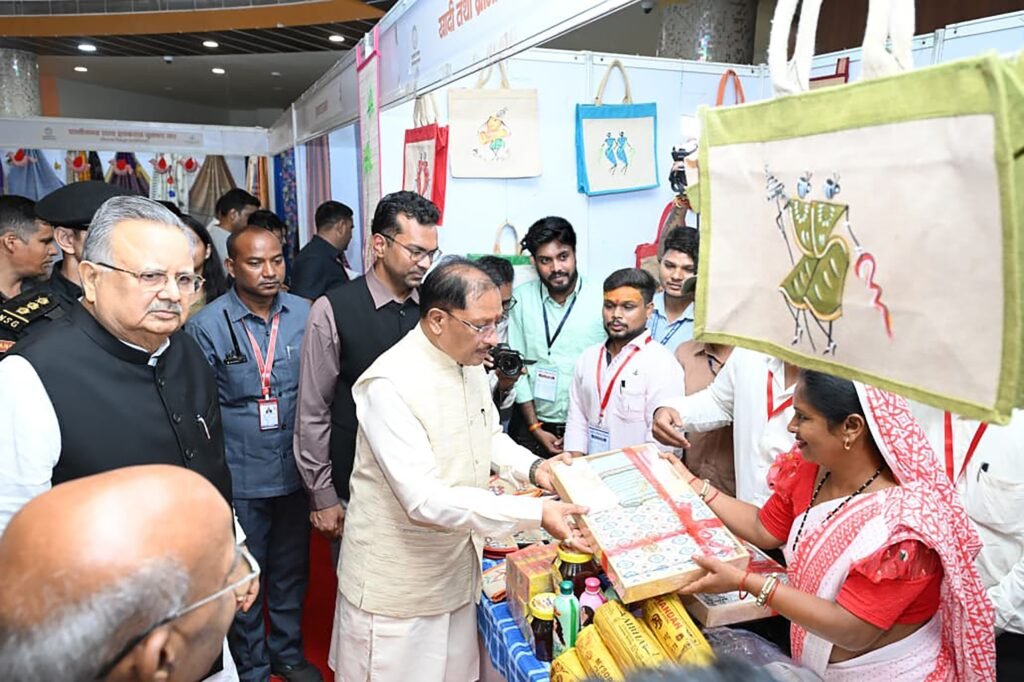
Chief Minister Vishnu Deo Sai examines handcrafted products at the Swadeshi Exhibition in Raipur on Friday, August 7, 2026, as Assembly Speaker Dr Raman Singh looks on. The Chief Minister later purchased a Kosa saree, making an immediate payment while encouraging citizens to support locally produced handloom and handicraft products.
Photo Credit: primelookindia.com via CG/PR
Sai said the State’s approach was not confined to preserving traditional crafts as cultural symbols. The government was working on design development, skill enhancement, training, branding and market access so that weaving could remain an economically sustainable occupation.
According to figures presented at the programme, 469 homeless weaver families have received approval for weaver shed-cum-houses during the past two-and-a-half years. Forty-seven exhibitions during the period generated handloom sales of around ₹10 crore.
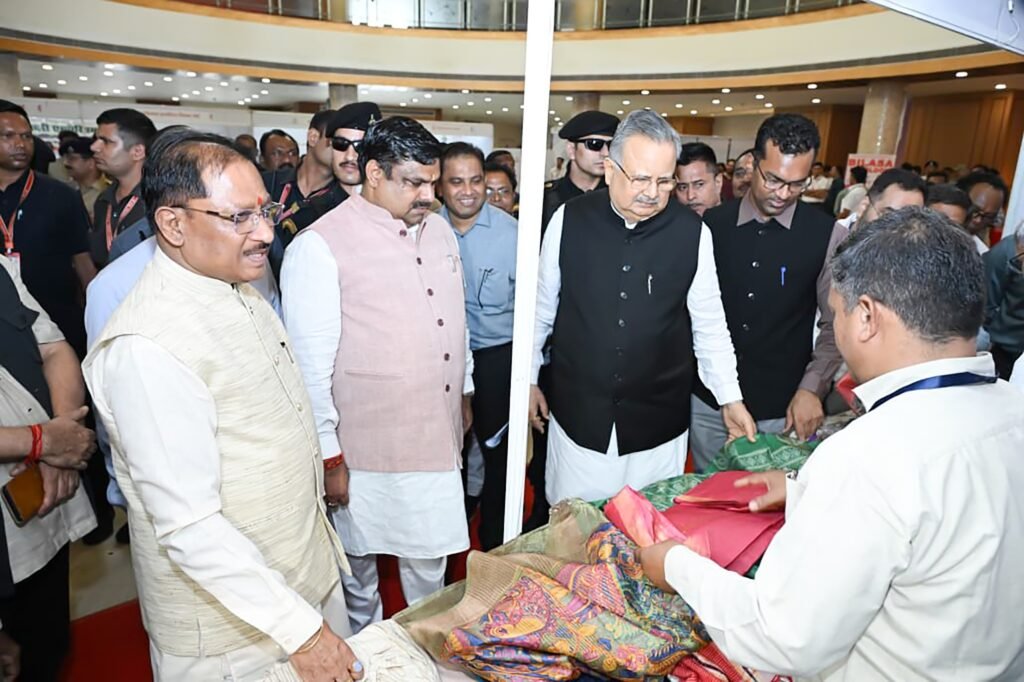
Chief Minister Vishnu Deo Sai, accompanied by Assembly Speaker Dr Raman Singh and Gramodyog Minister Gajendra Yadav, visits a stall at the Swadeshi Exhibition during the State-level Weavers’ Conference at Pandit Deendayal Upadhyay Auditorium, Raipur, on Friday, August 7, 2026. The exhibition showcased Chhattisgarh’s Kosa, handloom, handicraft, Khadi and other traditional products. Photo Credit: primelookindia.com via CG/PR
Women are an important part of this economy. More than ₹68 crore has been paid as stitching remuneration to 2,001 women’s self-help groups during the period.
The Chief Minister said handloom products worth around ₹436 crore made by weavers had also been procured for government requirements, providing an assured market to producers.
From Chhattisgarh’s Looms to Airports
A significant element of the government’s strategy is to take traditional products beyond their conventional markets. Showrooms displaying Chhattisgarh handloom and handicraft products are proposed at five major airports, while the Unity Mall under construction in Raipur is expected to provide another modern marketing platform.
The proposed garment unit at Nava Raipur is expected to generate employment for more than 4,500 people, while the establishment of the National Institute of Fashion Technology (NIFT) is expected to connect young designers and textile professionals with the State’s traditional craft ecosystem.
Assembly Speaker Dr Raman Singh, encouraging citizens to support the sector through their purchasing choices, appealed to people to buy at least one handloom product every year.
CM Turns the Swadeshi Message into a Purchase
Sai later visited stalls displaying Kosa, Khadi, handicrafts, pottery and other indigenous products. Rather than limiting his interaction to inspection, the Chief Minister purchased a Kosa saree and made the payment on the spot.
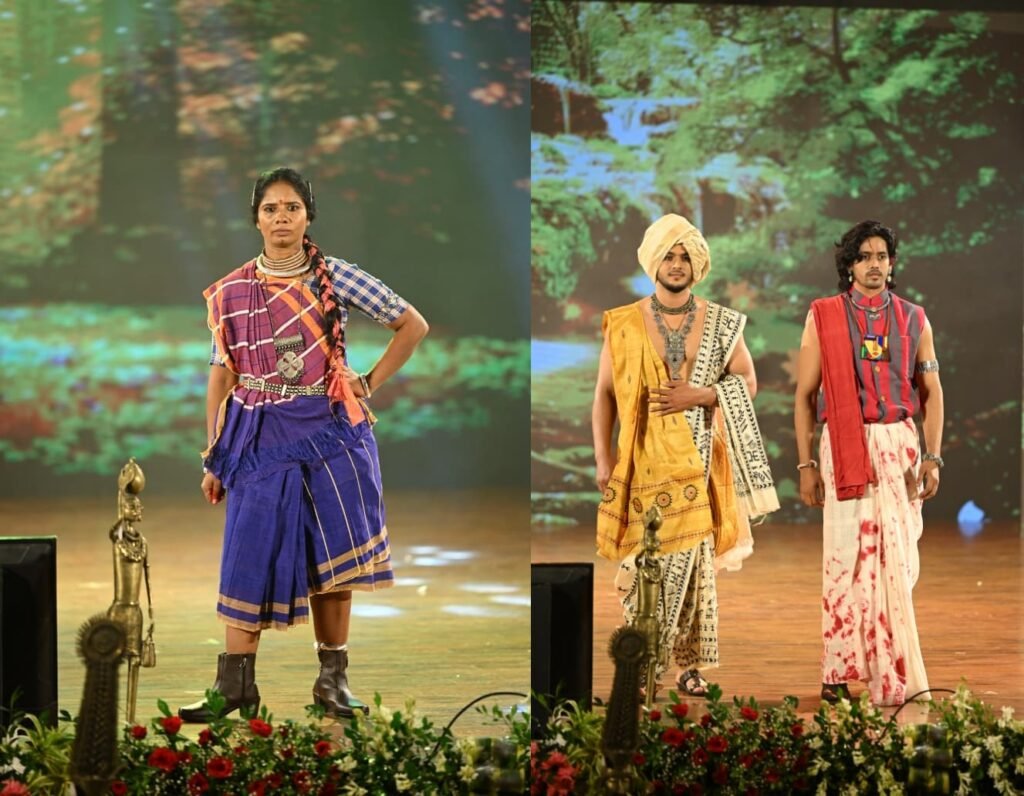
A woman from Bastar joins other participants on the ramp showcasing traditional Kosa silk and Chhattisgarhi handloom attire during the National Handloom Day programme at Pandit Deendayal Upadhyay Auditorium, Raipur, on Friday, August 7, 2026. The presentation offered a vibrant glimpse of Chhattisgarh’s handloom heritage and the changing face of Bastar. Photo Credit: primelookindia.com via CG/PR
The gesture reinforced one of the central messages of the programme — that the survival and growth of traditional craftsmanship ultimately depend not merely on exhibitions and government schemes, but also on consumers choosing locally made products.
Sai consequently urged citizens to participate in the ‘Selfie with Swadeshi’ campaign by buying indigenous products and sharing photographs with them on social media.
A Different Picture of Bastar on the Ramp
One of the most striking moments of the programme came away from official speeches and statistics.
Surrendered women from Bastar walked the ramp wearing traditional Chhattisgarhi handloom attire, presenting a dramatically different image of a region that has frequently entered national headlines because of Maoist violence.
For several of the participating women, according to the government release, it was their first visit to Raipur.
Their appearance turned the fashion presentation into something larger than a display of textiles. It represented rehabilitation, confidence and an opportunity to reconnect with mainstream society through culture and livelihood.
‘Loom to Luxury’
The newly launched Koshal Fab seeks to position Chhattisgarh’s premium handloom products in a market where heritage craftsmanship increasingly competes on design, presentation and branding.
Its “Loom to Luxury” positioning is therefore significant. Kosa and the State’s other traditional textiles already carry cultural value; the challenge is to convert that recognition into higher economic value for the people producing them.
Industry Minister Lakhanlal Dewangan, Chhattisgarh State Handloom Weavers’ Federation Chairman Bhojram Dewangan, Khadi and Village Industries Board Chairman Rakesh Pandey, Chhattisgarh Handicrafts Development Board Chairperson Shalini Rajput, officials, public representatives, weavers and artisans attended the programme.
National Handloom Day commemorates the Swadeshi Movement launched on August 7, 1905. More than a century later, the message in Raipur was recognisably similar, though expressed in contemporary terms: preserving indigenous craftsmanship will require not only pride in tradition, but better design, technology, branding, markets and sustainable incomes for the hands behind the loom.

YOU MAY LIKE THIS