Reg No. - CHHBIL/2010/41479ISSN - 2582-919X

Chhattisgarh Builds New Worker-Welfare Framework with Digital Access, DBT and Social Security-By -Chhagan Lal Lonhare
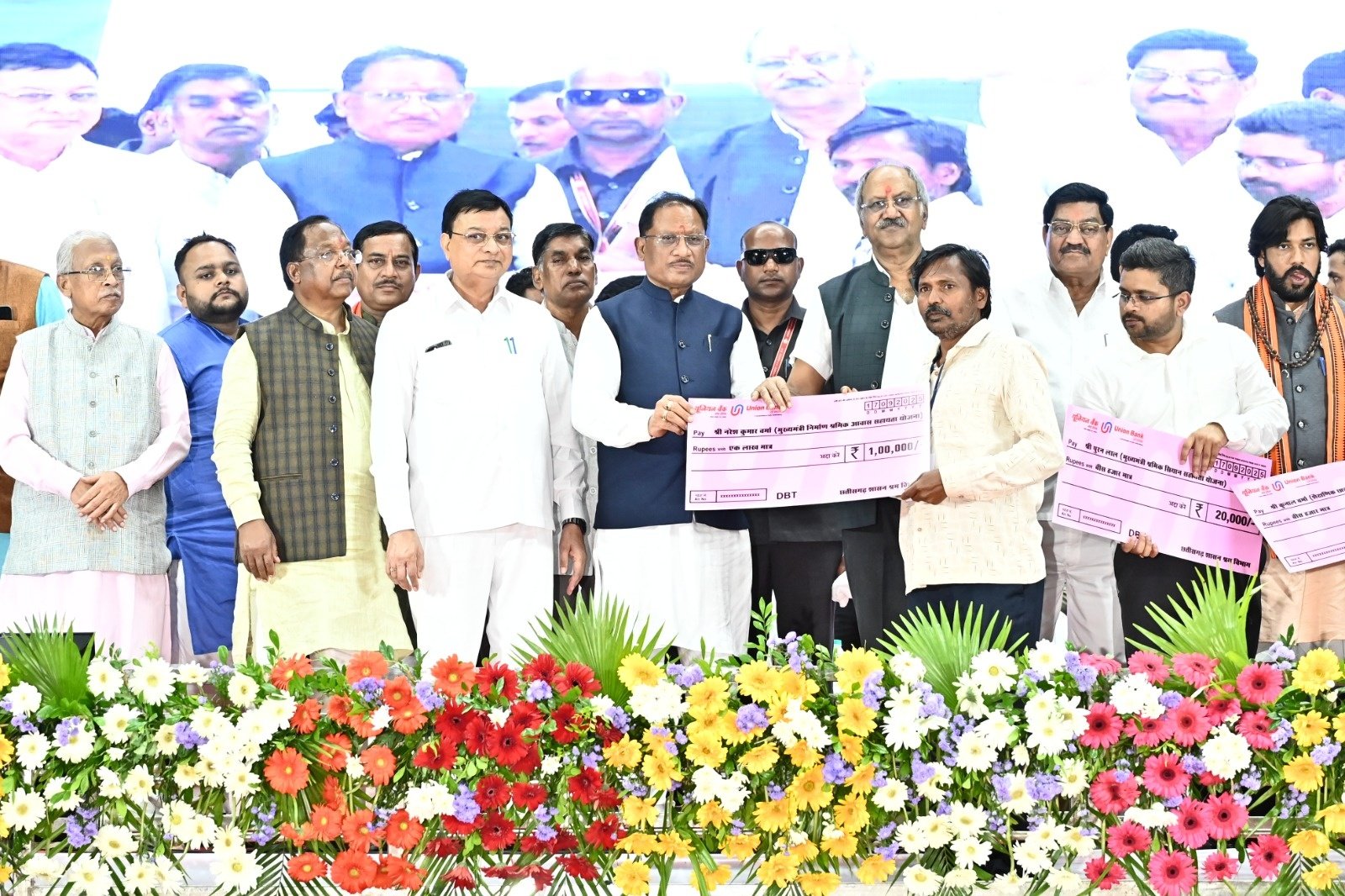
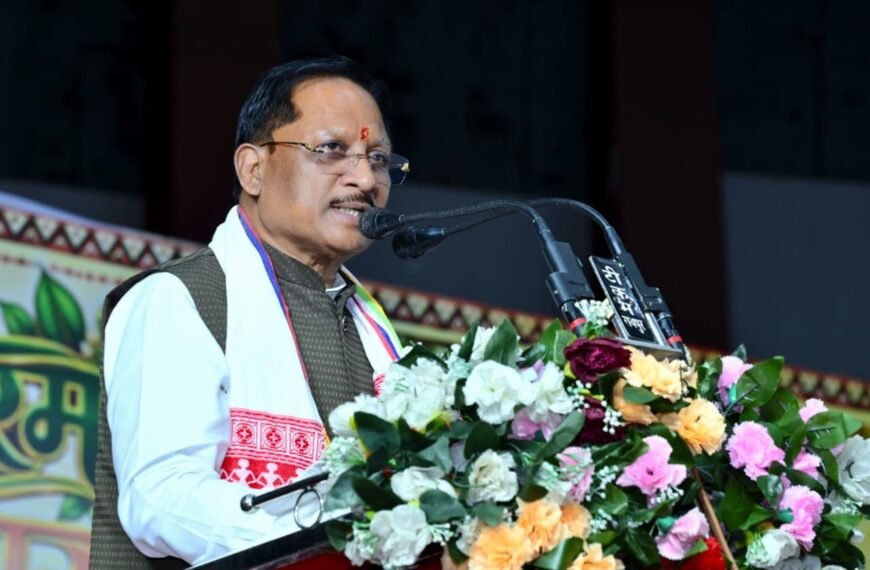
Chief Minister Vishnu Deo Sai and Raipur MP Brijmohan Agrawal jointly hand over financial assistance to a beneficiary during a labour welfare programme in Raipur, Chhattisgarh, on Friday , August 7, 2026, as Labour and Industries Minister Lakhan Lal Dewangan looks on.-Photo Credit:: primelookindia.com via CG/PR
Key Factors
- Around 12.65 lakh new workers registered between January 1, 2024 and June 30, 2026.
- Approximately 17.82 lakh workers benefited from various welfare schemes.
- 67 welfare schemes are being operated for different categories of workers.
- Labour administration now has a presence in all 33 districts.
- Housing assistance for eligible construction workers increased to ₹1.50 lakh.
- More than 1.60 lakh women workers received maternity assistance.
- Registered workers are being provided nutritious meals for ₹5 under the Shaheed Veer Narayan Singh Shram Anna Yojana.
- Digital services and DBT are being used to improve accessibility and transparency.
Over 17.82 lakh workers benefited from welfare schemes in two-and-a-half years as the state expands registration, maternity support, affordable meals, education assistance and district-level labour services
Chhattisgarh’s approach to labour welfare has undergone a significant expansion over the past two-and-a-half years, combining traditional social-security measures with digital delivery, direct benefit transfers and easier access to government services.
Under Chief Minister Vishnu Deo Sai, the state has sought to bring organised, unorganised and construction workers within a wider welfare network. Labour and Industries Minister Lakhan Lal Dewangan has overseen the department’s implementation of programmes covering financial assistance, housing, maternity benefits, education and affordable meals.
The numbers released by the Labour Department provide an indication of the scale. Between January 1, 2024 and June 30, 2026, around 12.65 lakh new workers were registered, while approximately 17.82 lakh workers received benefits under different welfare programmes.
67 Schemes Under Labour Welfare Network
At present, 67 welfare schemes are being implemented through different labour welfare boards for organised, unorganised and construction workers.
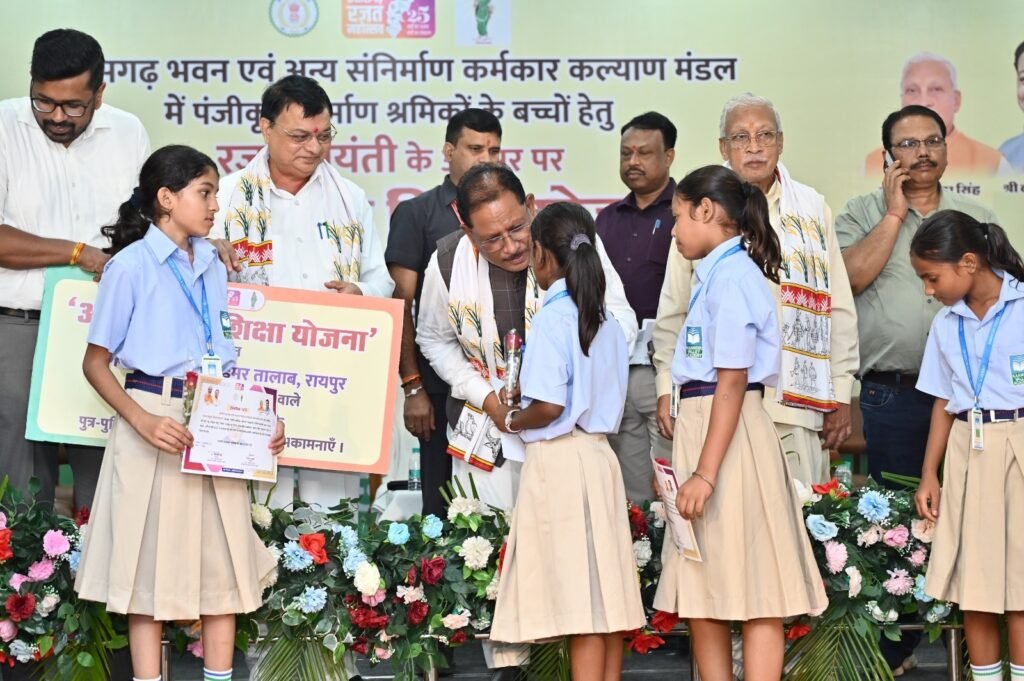
Chief Minister Vishnu Deo Sai interacts with children of registered construction workers during a labour welfare programme in Raipur, Chhattisgarh, on Thursday, August 7, 2026. The state is extending educational support to children from worker families as part of its wider social-security initiatives-Photo Credit:primelookindia.com via CG/PR
A notable shift has been towards digital access. The department has developed the Shramev Jayate mobile application and a user-friendly online platform through which workers can undertake registration, submit applications and access related services without depending entirely on physical offices.
The introduction of Direct Benefit Transfer (DBT) has also moved financial assistance directly into beneficiaries’ accounts, reducing intermediary layers in welfare delivery.
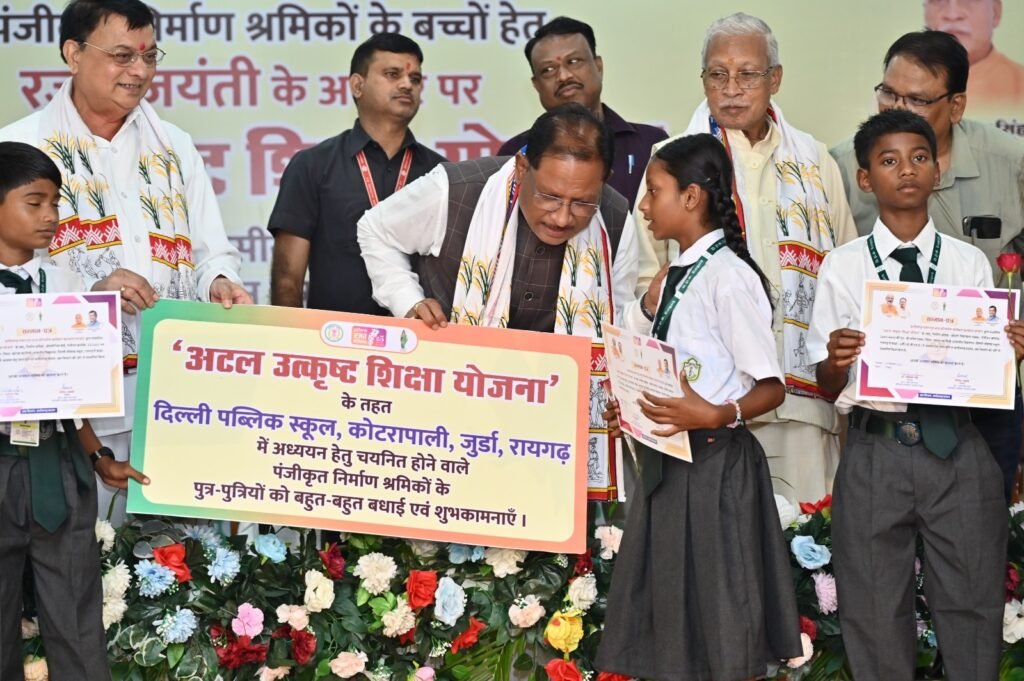
Chief Minister Vishnu Deo Sai poses with children of registered construction workers during a labour welfare programme in Raipur, Chhattisgarh, on Thursday, August 7, 2026, highlighting the government’s focus on linking worker welfare with educational opportunities for their families-Photo Credit: primelookindia.com via CG/PR
According to departmental figures, assistance running into hundreds of crores of rupees has been extended to workers during the period, including substantial support to construction and unorganised-sector workers.
Labour Offices Now Across All 33 Districts
Administrative reach has also expanded.
New labour offices have been provided for the recently created districts of Mohla-Manpur-Ambagarh Chowki, Khairagarh-Chhuikhadan-Gandai, Sarangarh-Bilaigarh, Manendragarh-Chirmiri-Bharatpur and Sakti, along with the creation of additional posts.
With Assistant Labour Commissioner offices operating in 10 districts and Labour Officer offices in another 23, the department says labour administration now has a presence across all 33 districts of Chhattisgarh.
The state has simultaneously introduced changes intended to balance employment generation with worker protection, including measures concerning fixed-term employment, night work for women subject to prescribed safeguards, factory licensing and implementation of laws governing shops and establishments.
24×7 Assistance and Services Closer to Workers
Accessibility remains particularly important for workers in remote areas, where travelling repeatedly to government offices can itself impose a financial burden.
The Mukhyamantri Shramik Sahayata Kendra provides assistance around the clock, while mobile camps have been used for worker registration, renewal of records and resolution of application-related difficulties.
Housing assistance for registered construction workers has also been strengthened. Under the Mukhyamantri Nirman Shramik Awas Sahayata Yojana, housing assistance has been increased to ₹1.50 lakh.
Other interventions provide assistance in cases of death and disability and support the education of workers’ children.
More Than 1.60 Lakh Women Receive Maternity Assistance
Women workers constitute an important part of the state’s welfare programme.
Under the Minimata Mahtari Jatan Yojana, more than 1.60 lakh women workers from the construction and unorganised sectors have received maternity assistance, according to the department.
Meanwhile, the Shaheed Veer Narayan Singh Shram Anna Yojana provides nutritious meals to registered workers for ₹5, addressing an everyday requirement that can have a direct bearing on the household expenses of low-income workers.
Education is another part of the welfare framework. Scholarships, merit-based educational assistance and support for competitive-examination coaching are intended to ensure that the economic circumstances of worker households do not automatically restrict opportunities available to their children.
From Welfare Benefits to Long-Term Mobility
The broader significance of worker welfare lies not simply in how many schemes exist, but in whether registered workers can actually access them.
Registration, digital applications, DBT, district-level offices and mobile assistance camps therefore become as important as the monetary benefits themselves. For workers in informal occupations—where income can be uncertain and formal employment protections limited—timely access to maternity assistance, housing support, education or compensation can make a considerable difference to family security.
The state’s next challenge will be to ensure that this expanding administrative and digital infrastructure consistently reaches workers at the grassroots, particularly migrant workers, daily-wage earners and people employed in remote areas.
Chhattisgarh’s experience over the past two-and-a-half years suggests an effort to move worker welfare beyond isolated financial assistance towards a broader system combining social protection, accessibility, technology and economic security.
Ultimately, however, the measure of such a system will not be the number of schemes announced but the number of eligible workers who can obtain their benefits without delay, complexity or exclusion.
Original Author Chhagan Lal Lonhare is Joint Director, Public Relations, Chhattisgarh
English Adaptation & Editorial Presentation: Kumar Bahukhandi-Ediot-primelookindia.com

YOU MAY LIKE THIS