Reg No. - CHHBIL/2010/41479ISSN - 2582-919X

Charges Against Justice Yashwant Varma ‘Proved’, Parliamentary Inquiry Panel Finds
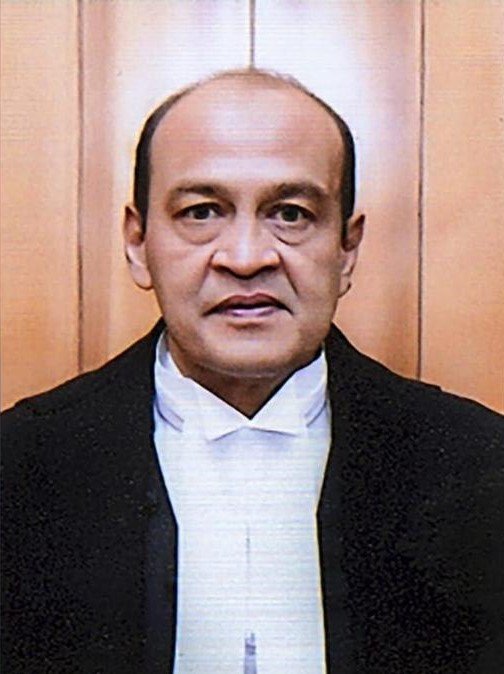
Justice Yashwant Varma, against whom a three-member Judges Inquiry Committee has found the charges relating to the cash-at-residence controversy proved. The committee’s report was laid before Parliament on Wednesday, August 12, 2026-Photo Credit-primelookindia.com (File Photo)
Three-member committee terms former judge’s explanation over cash found in storeroom “evasive and unsatisfactory”; report placed before both Houses of Parliament
A three-member Judges Inquiry Committee has found the charges against Justice Yashwant Varma “proved”, marking a significant development in the controversy triggered by the alleged discovery of burnt currency at his official residence in New Delhi following a fire in March 2025.
The statutory committee, headed by Supreme Court Justice Aravind Kumar, concluded that Justice Varma had failed to provide a satisfactory explanation regarding the presence and ownership of the cash discovered in a storeroom at his residence. The panel described his explanation as “evasive and unsatisfactory”.
The findings were laid before both Houses of Parliament on Wednesday, bringing the committee’s conclusions formally into the parliamentary record.
According to the inquiry findings, all three charges examined by the committee were proved. The panel, however, did not find direct evidence establishing that Justice Varma himself had personally removed currency from the premises.
The committee said it was submitting its report, together with the proceedings, documents, exhibits and other material collected during the inquiry, for further action in accordance with law.
The voluminous report comprises two volumes and includes oral and documentary evidence recorded during the investigation.
Fire at official residence triggered controversy
The controversy dates back to the night of 14 March 2025, when a fire broke out at Justice Varma’s official residence in New Delhi. During the firefighting operation, burnt currency was allegedly discovered in a storeroom on the premises.
Justice Varma was then serving as a judge of the Delhi High Court. Following the controversy, he was transferred — or repatriated — to his parent High Court, the Allahabad High Court.
The episode subsequently led to an in-house judicial inquiry as well as proceedings in Parliament.
An in-house committee constituted by then Chief Justice of India Sanjiv Khanna had earlier concluded that Justice Varma exercised “active or tacit control” over the storeroom in question.
Justice Varma consistently denied any connection with the cash and disputed allegations of wrongdoing.
More than 200 MPs backed removal motion
In July 2025, more than 200 Members of Parliament signed a motion seeking Justice Varma’s removal.
Lok Sabha Speaker Om Birla subsequently constituted the three-member Judges Inquiry Committee on 12 August 2025 under the Judges (Inquiry) Act, 1968.
Besides Justice Aravind Kumar of the Supreme Court, the committee included Justice Shree Chandrashekhar, Chief Justice of the Bombay High Court, and senior advocate B.V. Acharya.
After conducting its inquiry, the committee formally submitted its report to Speaker Om Birla at Parliament House on 18 May 2026.
The report has now been placed before Parliament.
What happens after Justice Varma’s resignation?
The case has acquired an unusual constitutional dimension because Justice Varma tendered his resignation while the parliamentary process was under way.
His resignation effectively raises questions over the continuation of proceedings intended specifically to remove a sitting judge from office.
Under the constitutional framework, a High Court or Supreme Court judge may resign by submitting a written resignation to the President. Such a resignation does not operate in the same manner as an ordinary government resignation requiring discretionary acceptance.
The parliamentary inquiry report, however, retains significance because it records the findings of a statutory committee constituted to examine serious allegations against a constitutional office-holder.
With the committee finding the charges proved, attention will now turn to what further action, if any, may legally follow after the resignation and how the findings are dealt with by the competent authorities.
The case has consequently moved beyond the original controversy surrounding the alleged cash discovery. It has become an important test of the mechanisms available for ensuring judicial accountability while preserving the constitutional independence of the judiciary.

YOU MAY LIKE THIS